 Environment

Ping An Digital Bank Completes HKMA’s Second GenA.I. Sandbox Cohort
1.
 |
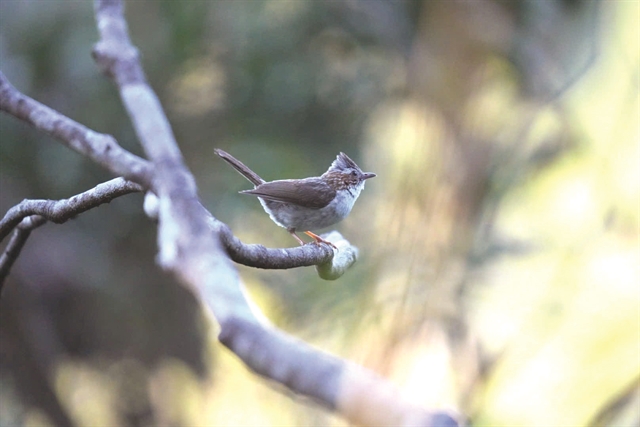
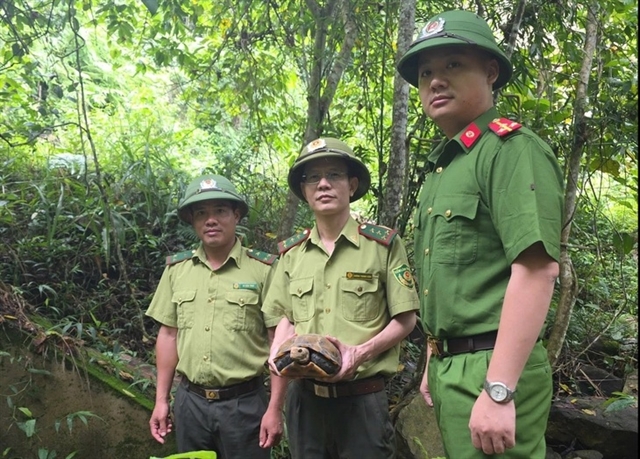
| Pheasants in Bạc Mã National Park in Huế City. VNA/VNS Photo |
HÀ NỘI — The Ministry of Agriculture and Environment (MAE) has recommended that it continue to manage four inter-provincial national parks based on current legal frameworks and opinions from localities.
The ministry recently submitted a report to the Government and the Prime Minister on the study of transferring national parks to local management.
Based on a review of legal regulations, practical assessments, international experience and a synthesis of opinions from localities and conservation organisations, the ministry recommended maintaining a unified management model for the four inter-provincial national parks of Cúc Phương, Tam Đảo, Bạch Mã, and Yok Đôn.
According to the ministry, the laws on Forestry and Biodiversity and current guiding decrees stipulate that the MAE is responsible for state management of the system of special-use forests nationwide and directly organises the management of special-use forests and national parks with areas located in two or more provinces or cities.
Centralised management aims to ensure the integrity of the ecosystem, maintain habitat connectivity, conserve biodiversity and protect strategic and national interests beyond the scope of each locality.
Currently, there are 167 special-use forests nationwide, including 36 national parks.
Most national parks are managed by local authorities. Only five inter-provincial national parks which are directly managed by the MAE are Tam Đảo, Cúc Phương, Bạch Mã, Yok Đôn and Cát Tiên with a total area of nearly 270,000ha.
In addition, Ba Vì National Park has been transferred to the Hà Nội People's Committee for management according to the provisions of the 2026 Capital City Law; Cát Tiên National Park will be managed by the Đồng Nai People's Committee.
The report emphasises that inter-provincial national parks are not only the assets of each locality, but are also exceptionally important natural assets of the nation.
They are home to the genetic resources of thousands of rare animal and plant species; they play a role in regulating water resources, mitigating natural disasters, absorbing and storing carbon, and contributing to the commitment of net zero emissions by 2050.
National parks are also centres for scientific research, environmental education, wildlife rescue, and international cooperation; and they create a foundation for the development of ecotourism, forest environmental services, and sustainable livelihoods for people in the buffer zones.
After more than 60 years of development, Cúc Phương National Park - Việt Nam’s first national park - has become a symbol of nature conservation, a leading centre for wildlife rescue, scientific research, environmental education and international cooperation.
The report also states that Cúc Phương National Park contains the Con Moong Cave archaeological site, which is being considered by UNESCO for inclusion in the World Heritage List; therefore, management needs to be implemented uniformly across the entire ecological space.
To support the research, the MAE consulted 10 provinces and cities with inter-provincial national parks.
The results showed that seven out of 10 localities, including Tuyên Quang, Phú Thọ, Thanh Hoá, Đà Nẵng, Đắk Lắk, Lâm Đồng and Thái Nguyên, chose to continue maintaining the current the MAE’s management model.
Three localities of Đồng Nai City, Ninh Bình Province and Huế City proposed taking over the entire area of the national parks.
For Cúc Phương National Park, Ninh Bình Province proposed taking over the entire area, while Thanh Hoá and Phú Thọ provinces both requested continued management by the ministry.
Similarly, Huế City wanted to take over Bạch Mã National Park, while Đà Nẵng City proposed maintaining the current management model.
Based on a comprehensive assessment, the MAE has put forward six management principles, emphasising the assurance of ecosystem integrity, the preservation of conservation effectiveness, the maintenance of the national core role in scientific research and wildlife rescue, international cooperation and prioritising long-term national interests. — VNS
Environment
 Environment
 Environment
 Environment
 Environment
 Environment
 Environment
 Environment
 Environment
 Environment
 Environment
 Environment
 Environment
 Environment
 Environment

.jpeg)