 Economy


AIMCONNECT 2026 Held in Singapore, Bringing Global Automotive Leaders Together to Explore the Future of AI, Trust and Connected Mobility
1.
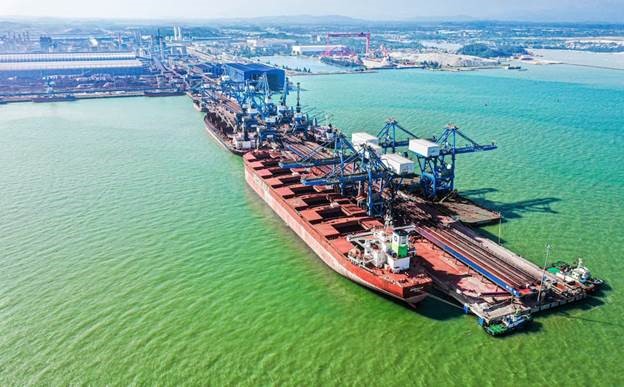 |
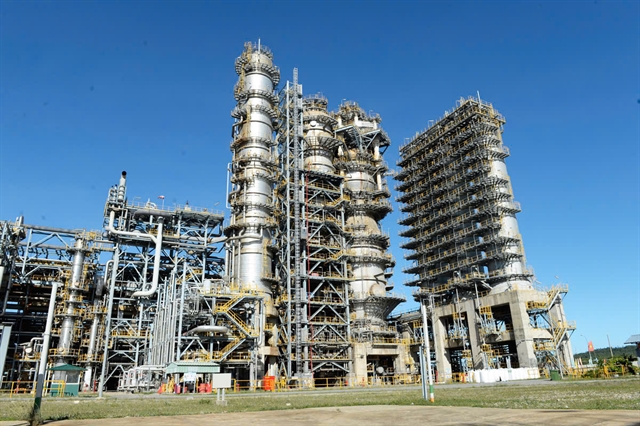
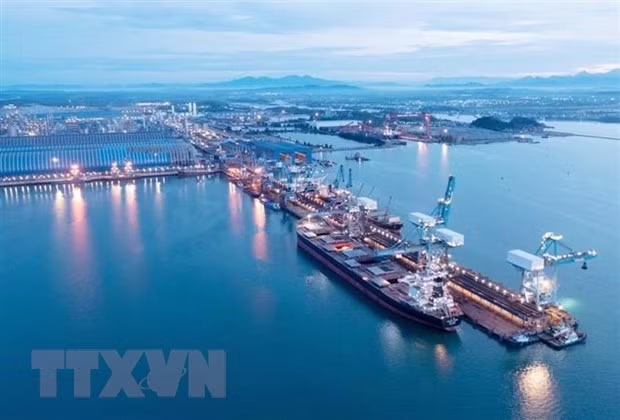
| Hoà Phát Wharf inside the Dung Quất Economic Zone. —Photo courtesy of Hoà Phát |
QUẢNG NGÃI — The Dung Quất Economic Zone and Quảng Ngãi industrial parks have so far attracted 441 projects worth around US$19.4 billion, according to the Dung Quất Economic Zone and Quảng Ngãi Industrial Parks Authority (DEZA).
The DEZA now has 350 projects run by 293 companies, employing nearly 81,700 workers, while about 20,000 additional experts, engineers and workers are building mega projects, according to data presented at a workshop marking the authority’s 30th anniversary recently.
According to Assoc. Prof. Dr. Lưu Thế Anh from the Institute of Natural Resources and Environment under the Vietnam National University, Hà Nội, aligning Dung Quất with green economy planning is essential to ensure sustainable development, reduce environmental pressure and use resources efficiently. It also presents major opportunities to improve growth quality, burnish investment appeal, sharpen business competitiveness and build a green industrial brand for Quảng Ngãi.
Quảng Ngãi has all the conditions needed to develop green growth models based on ecological industry, circular economy, clean energy and green logistics. The Dung Quất EZ is the most important bedrock for local green transition.
The province already has a relatively developed industrial base spanning oil refining and petrochemicals, metallurgy, mechanical engineering, shipbuilding, energy and processing and manufacturing, plus ample potential for renewable energy. Its strategic location and modern seaport infrastructure give it particular edges in green logistics and low-carbon supply chains.
To develop a green economy under DEZA planning through 2045, he urged Quảng Ngãi to complete mechanisms and policies that incentivise green investment, accelerate technological innovation, digital transformation and sci-tech, develop a quality workforce, invest in green and integrated infrastructure, drive international cooperation and raise green finance.
Vice Chairman of the provincial People’s Committee Đỗ Tâm Hiền said environmental and carbon emission standards, energy transition, digital transformation and circular economy were becoming mandatory requirements for development. Science, technology and innovation were no longer merely supporting factors, but decisive drivers of competitiveness for countries, localities and businesses.
Hiền highlighted four issues that need attention, including development orientations, drivers, resources and implementation mechanisms.
According to DEZA head Lương Kim Sơn, economic and industrial zones in general, and the Dung Quất Economic Zone in particular, must shift their model from growth based on expanding land area to in-depth development founded on science, technology, innovation and comprehensive digital transformation.
Lý Đình Quân, General Director of the Songhan Incubator and Vice Chairman of the National Startup and Innovation Advisory Council, suggested establishing the Dung Quất Economic Zone innovation centre with six key roles, including enhancing business capacity, incubating and accelerating industrial startups, connecting firms with research institutes and universities, transferring and commercialising technologies, driving international cooperation and connectivity, and building an innovation ecosystem. — VNS
Economy
 Economy
 Economy
 Economy
 Economy
 Economy
 Economy
 Economy
 Economy
 Economy
 Economy
 Economy
 Economy
 Economy
 Economy