 Environment

OPPO Find X10 Pro Max to Debut Globally with MediaTek’s 2nm Flagship Dimensity 9600 Pro
1.
|
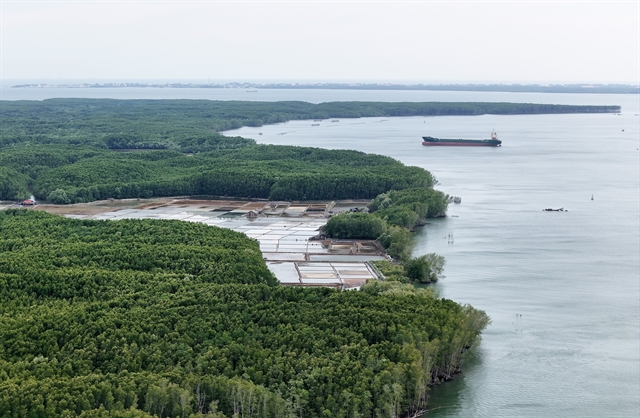
| The Cần Giờ mangrove forest is regarded as a vital natural asset for reducing greenhouse gas emissions and supporting the development of Việt Nam's future carbon credit market. — VNA/VNS Photo |
HCM CITY — HCM City has officially launched its first ecotourism project in the Cần Giờ protected forest, marking a significant step towards promoting green tourism while safeguarding one of Việt Nam's most valuable mangrove ecosystems.
The project is expected to create new financial resources for sustainable forest management, attract green investment and generate jobs for local communities.
The launch was marked by the signing of an agreement on Monday between the city's Protected and Special-use Forest Management Board and Cần Giờ Tourism Urban JSC to implement the city's Ecotourism, Resort and Recreation Scheme for Cần Giờ protected forest through 2030.
Speaking at the ceremony, Director of the municipal Department of Agriculture and Environment Nguyễn Toàn Thắng stressed that ecotourism development must follow the principle of "conservation for development and development for conservation", ensuring that economic benefits are not achieved at the expense of the environment or biodiversity.
He said the project aligns with the city's strategy to promote a green and circular economy while making more effective use of natural resources.
It is also expected to provide additional funding for forest protection, attract investment in green industries and improve local livelihoods.
Thắng noted that the city's Party Congress Resolution for the 2025–30 term identifies tourism as one of HCM City's key growth drivers.
Following the approval of the ecotourism scheme, the department has completed sustainable forest management plans and necessary administrative procedures to put the project into operation.
He urged relevant agencies to continue supporting investors, while requiring the forest management board to closely supervise project implementation.
Investors must strictly comply with forestry, environmental protection and biodiversity conservation regulations while developing high-quality ecotourism products.
According to the city's Protected and Special-use Forest Management Board, this is the first project implemented under the ecotourism scheme approved by the municipal People's Committee.
The investor selection process followed legal procedures, including technical assessments, public invitations for registration, capacity evaluation and appraisal of investment proposals.
Cần Giờ Tourism Urban JSC was selected to develop the project across more than 26,214 hectares of protected forest.
The company will lease the forest environment for 30 years and pay an annual forest-environment leasing fee equivalent to 1.5 per cent of total revenue after the first 24 months of operation.
The company said it would develop the site under a strictly controlled ecotourism model centred on mangrove ecosystem conservation, biodiversity restoration and environmental education.
It also pledged to use renewable energy, ensure waste treatment meets environmental standards, strengthen forest protection and fire prevention efforts, and prioritise employment opportunities for local residents.
Huỳnh Đức Hoàn, director of the city's Protected and Special-use Forest Management Board, said the board would fulfill its responsibilities as forest manager by closely monitoring project implementation and coordinating with relevant authorities and the investor to ensure full legal compliance.
He added that the board would integrate ecotourism development with forest protection, fire prevention and biodiversity conservation while supporting the livelihoods of local communities involved in forest protection.
The first project is expected to serve as a model for expanding forest-environment leasing for ecotourism development in the future. — VNS
Environment
 Environment
 Environment
 Environment
 Environment
 Environment
 Environment
 Environment
 Environment
 Environment
 Environment
 Environment
 Environment
 Environment
 Environment