 Environment

Project to build big-data legal database approved
1.
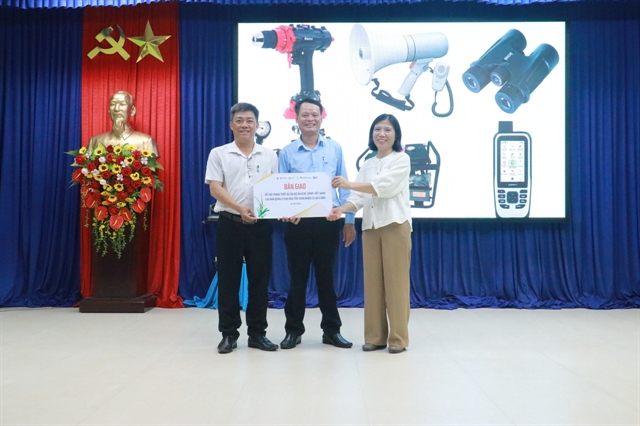 |
| Representatives of WWF Việt Nam and the Chàm Islands - Hội An World Biosphere Reserve exchange an equipment support package to support a sea grass restoration project in the reserve. — Photo courtesy of Tạ Thanh Thảo |
ĐÀ NẴNG — The World Wide Fund for Nature (WWF) Việt Nam has handed over to the management board of the Chàm Islands–Hội An World Biosphere Reserve a package of equipment to help with seagrass restoration.
The move was made as part of an initiative called the ‘Pilot Seagrass Restoration Project Combined with Livelihood Improvement’ in the Chàm Islands Nature Reserve.
WWF Việt Nam also presented tools and facilities to support the Mộc Chàm Cooperative in producing herbal tea and seaweed, helping to improve the livelihoods of community members through a sustainable business model.
The project will provide diving equipment, handheld GPS, binoculars, an underwater drilling machine and other tools serving seagrass plantations in the waters off the Chàm Islands.
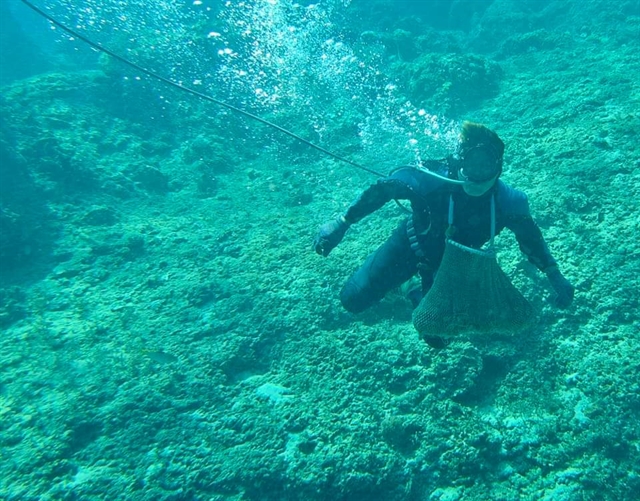 |
| A diver collects garbage at sea off the Chàm Islands in central Việt Nam. The islands are the first location in Việt Nam to successfully ban plastic bag use for both islanders and tourists. — Photo courtesy of Đào Đặng Công Trung |
The management board of the Chàm Islands – Hội An World Biosphere Reserve said the project aims to restore more than 15ha of seagrass meadows, while boosting income for island residents through sustainable green livelihoods and ecotourism.
Meanwhile, community members will make their living through the sustainable exploitation of natural ingredients, including seaweed and herbs found in local forests and waters, to improve their incomes by selling unique products to tourists visiting the islands.
The Chàm Islands, which include seven islets – Lao, Lá, Dài, Tai, Mồ, Khô, and Cụ – and the main Chàm Island with 2,400 inhabitants, are one of the most popular destinations in central Việt Nam.
The world biosphere reserve, which was recognised by UNESCO in 2009, covers more than 33,000ha of tropical forests and ocean area and boasts a wide range of marine flora and fauna.
Located 20km off the coast of Hội An, the Chàm Islands Marine Protected Area was rebranded as the Chàm Islands Nature Reserve last year.
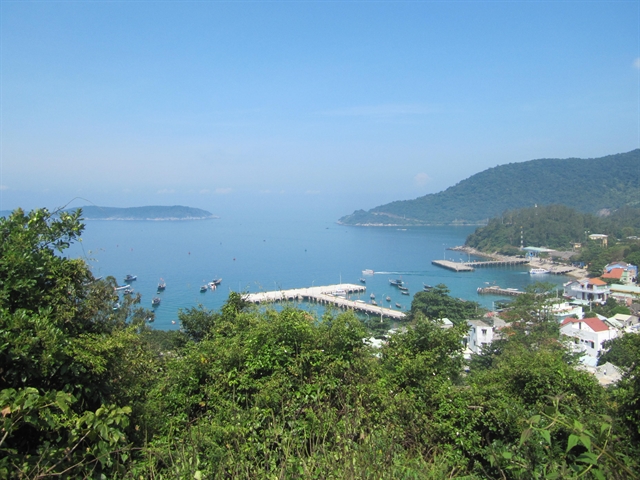 |
| The Chàm Islands, located 20km off the coast of Hội An ancient town, is an ideal eco-tourism site in central Việt Nam. VNS Photo Công Thành |
Including the Chàm Islands themselves as well as the nipa palm forest of Cẩm Thanh and the low-lying river area of Hội An ancient town, the reserve has hosted 1.84 million tourists in the first six months, earning more than VNĐ129 billion (US$4.9 million) in revenue.
According to WWF Việt Nam CEO Văn Ngọc Thịnh, who spoke during a working visit to the Đà Nẵng People’s Committee, the central city should look into a five-year cooperation deal to promote nature conservation and help build a green and sustainable future.
WWF-Việt Nam has been working on various projects under a longstanding partnership with Đà Nẵng in biodiversity conservation, forest restoration and environmental protection.
These projects include the Elephant Species Habitat Conservation Area, the Green Annamites project, saola conservation reserves and the first phase of the Forest Restoration and Livelihood Development Project.
Đà Nẵng (which now includes the former Quảng Nam Province) has multiple conservation areas with ecological systems known for their rich biodiversity, including Sông Thanh National Park and the UNESCO-recognised Chàm Islands – Hội An World Biosphere Reserve.
Other reserves in the central city help protect the rare saola and Ngọc Linh ginseng, as well as the protected landscapes of Sơn Trà, Bà Nà Núi Chúa and South Hải Vân.
The Chàm Islands, a destination known for environmental protection and eco-tourism services in central Việt Nam, have also been building the first zero-waste site in Việt Nam.
The area has successfully banned all plastic bags in daily use for both islanders and visitors. — VNS
Environment
 Environment
 Environment
 Environment
 Environment
 Environment
 Environment
 Environment
 Environment
 Environment
 Environment
 Environment
 Environment
 Environment
 Environment