 Environment

Project to build big-data legal database approved
1.
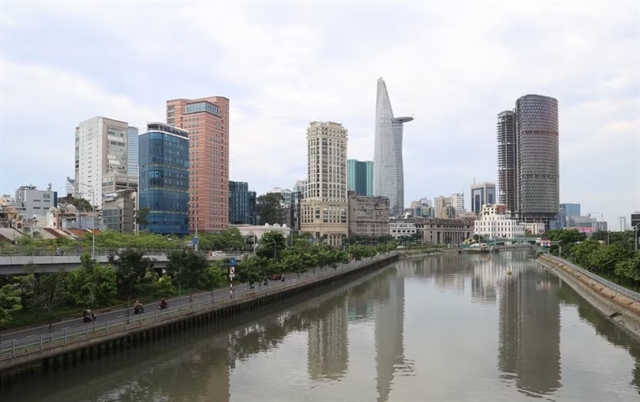 |
| Clear waters of the Tàu Hủ-Bến Nghé Canal reflect the modern high-rises of HCM City, as viewed from Calmette Bridge. — VNA/VNS Photo Hồng Đạt |
HCM CITY — The dramatic transformation of the Nhiêu Lộc-Thị Nghè and Tàu Hủ-Bến Nghé canals in HCM City from heavily polluted and slum-ridden waterways into vibrant green spaces epitomises the city’s urban revitalisation.
While new skyscrapers represent a developing metropolis, it is the city's canals that bear the truest witness to its journey of rebirth.
This effort aligns with the Politburo's Resolution No. 09-NQ/TW, which targets accelerating urban renovation and relocating makeshift housing to build a civilised, modern, and sentimental city.
Memories of the 'black water'
Today, mornings along Hoàng Sa and Trường Sa streets, and Võ Văn Kiệt Boulevard feature emerald waters and rows of green trees.
Yet, only a few decades ago, both routes were notorious "dead canals" synonymous with severe pollution, poverty, and suffocating makeshift settlements.
Residents who grew up along these waters remember the grim past vividly.
Tiền Thị Mỹ Tiên, 63, a local resident, said she grew up by the canal and witnessed people dumping rubbish and even animal carcasses straight into the water.
“It was pitch black. Both banks were crowded with squalid stilt houses. Every rainy season, the water rose into our homes, bringing garbage with it. The stench was absolutely horrific."
Beyond environmental degradation, life by the black water posed constant safety risks.
The water was black all year round, reeking in both sun and rain, Nguyễn Thị Kim Hoàn, 62, said.
“During rainy season blackouts, we had to walk on makeshift wooden planks. Many children fell into the canal, and there were heartbreaking cases of drowning."
While Nhiêu Lộc-Thị Nghè was defined by residential slums, the Tàu Hủ-Bến Nghé canal – once a bustling trade artery connecting Sài Gòn and Chợ Lớn – suffered severe encroachment that crippled its historic "floating markets".
Trần Văn Chín, a long-time rice trader from Tây Ninh Province, said when his boat docked at Bình Đông to deliver goods, no one dared to dip their feet into the water.
“We had to live with the foul smell, floating waste, and severe silt that narrowed the navigation channels."
Prof. Dr Lê Thanh Hải, director of Institute for Environment and Resources at the Việt Nam National University-HCM City (VNU-HCM), said these waterways were the most defining image of HCM City 30 years ago, acting as an environmental burden and a symbol of urban slums.
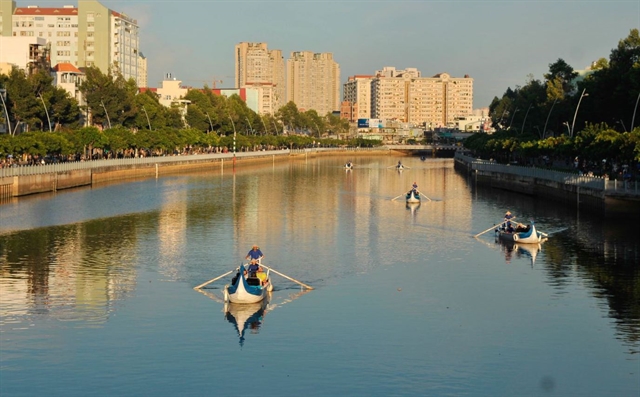 |
| A section of the Nhiêu Lộc-Thị Nghè Canal in HCM City. — VNA/VNS Photo An Hiếu |
A fresh lease on life
To remedy the crisis, the city launched one of its largest urban renovation programmes since national reunification.
At the Nhiêu Lộc-Thị Nghè canal, more than 7,000 households – comprising roughly 50,000 people – were relocated.
Millions of cubic metres of mud were dredged, wastewater collection systems installed, and concrete embankments completed, alongside the construction of Hoàng Sa and Trường Sa streets.
Similarly, the Tàu Hủ - Bến Nghé canal underwent massive water quality improvements and park construction. Crucially, the introduction of Võ Văn Kiệt Boulevard solved the East-West traffic bottleneck and catalysed the redevelopment of the entire riverside area into commercial and public spaces.
Key achievements
The city successfully relocated over 7,000 households, amounting to approximately 50,000 residents, from squalid stilt houses into safer, modern housing developments.
The project established vital East-West and riverside transit corridors by constructing the Hoàng Sa, Trường Sa, and Võ Văn Kiệt boulevards, which vastly improved urban connectivity.
Authorities revived the dead waterways by dredging millions of cubic metres of heavily polluted mud, installing modern wastewater collection systems, and building expansive riverside parks that serve as green lungs for the city.
Nguyễn Thị Như Ý, chairwoman of Phú Nhuận Ward’s People's Committee, said that in high-density areas, the revived canal has become a crucial space for residents to exercise and relax.
“What was once a dumping ground is now a treasured landscape protected by the community.”
Prof. Dr Lê Thanh Hải said areas which used to be the "backyard" of the city have now become its "new facade", boosting property values and commercial services.
Võ Văn Minh, deputy secretary of the municipal Party Committee and chairman of the municipal People's Council, said that renovating key canals and relocating canal-side slums does more than fix infrastructure – it directly elevates human dignity and unlocks sustainable space for the city to grow into a civilised, modern metropolis. — VNS
Environment
 Environment
 Environment
 Environment
 Environment
 Environment
 Environment
 Environment
 Environment
 Environment
 Environment
 Environment
 Environment
 Environment
 Environment