 Environment

Lotte, Phát Đạt combine strengths in Thu Thiem project
1.
|
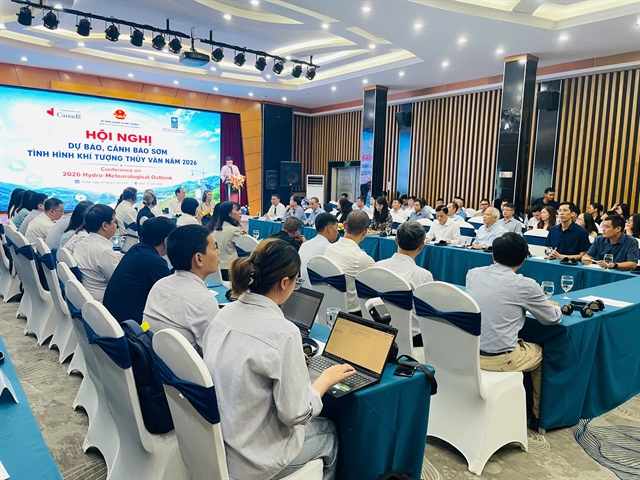
| Experts gather at a national conference on hydrometeorological forecasting. — VNS Photo Thu Trang |
HÀ NỘI — As climate change increases the uncertainty, severity and unpredictability of weather and other hydrometeorological events, enhancing forecasting, early warning and disaster prevention capacity has become increasingly urgent.
Experts agreed on this urgency during a national conference held on Tuesday by the Việt Nam Meteorological and Hydrological Administration under the Ministry of Agriculture and Environment, in collaboration with the United Nations Development Programme (UNDP) in Việt Nam.
The event was funded by Global Affairs Canada through the Việt Nam Climate Smart Coastal Communities Project.
Aiming to provide the latest insights on hydrometeorological trends for this year, the 2026 Hydrometeorological Outlook conference also helped ministries, sectors, local authorities and communities in developing plans for disaster prevention and risk mitigation.
Recent reports from the World Meteorological Organization (WMO) indicate that the global climate system continues to show signs of instability. With global average temperatures remaining at record highs, the world is witnessing major disruptions to rainfall patterns and water cycles, alongside more frequent and intense extreme weather events.
Việt Nam remains among the countries most vulnerable to these climate shifts, facing growing threats from heatwaves, drought, water shortages, salinity intrusion, extreme rainfall, floods and landslides.
The latest forecasts suggest that El Niño will play a major role in weather patterns through the rest of this year and early next year. Both international and Vietnamese climate models warn that this could be a severe event, comparable to the record-breaking 2015–2016 El Niño.
Such a situation poses an increased threat of extreme heat, drought and salinity intrusion, especially for central Việt Nam and the Mekong Delta.
These climatic shifts threaten to disrupt critical sectors, including agriculture, water and energy security, and the overall well-being of the population.
|
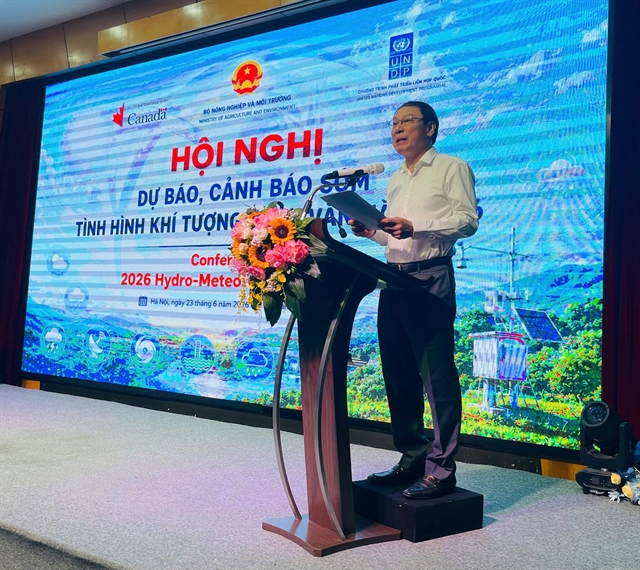
| Deputy Minister of Natural Resources and Environment Lê Công Thành gives a speech at the event. — VNS Photo Thu Trang |
In his address, Deputy Minister of Natural Resources and Environment Lê Công Thành underscored the role of technology and data in strengthening forecasting and early warning systems.
“We must accelerate the application of science and technology, digital transformation and artificial intelligence, while strengthening data sharing to improve the quality of our forecasts and warnings,” he said.
“This is essential to mitigating disaster-related losses, ensuring water and food security, stabilising the lives of our citizens and fostering sustainable socio-economic development,” he added.
The deputy minister also urged experts to focus on a comprehensive assessment of El Niño’s impacts, identify emerging risks early and propose tailored solutions for each sector and locality, thus developing response scenarios, ensuring water security, food security and stable socio-economic development.
Emilie Carrier, Senior Counsellor of the Canadian Embassy to Việt Nam, said: “By bringing Canadian experts together with Vietnamese counterparts, we are advancing practical, science-based solutions that protect lives and livelihoods. This partnership reflects our shared commitment to building a safer, more resilient future in which strong climate preparedness underpins sustainable development.”
Early warnings
The conference featured a collaborative exchange of experiences and best practices among experts from UNDP, Environment and Climate Change Canada, the Japan International Cooperation Agency and local counterparts.
Key topics included climate forecasting, multi-hazard early warning systems, forecast-based disaster management and strategies for bolstering community resilience to climate change.
A highlight of the event was the presentation of the UN-led Early Warnings for All initiative, which seeks to ensure universal access to life-saving, multi-hazard early warning systems by the end of next year.
This initiative is pivotal to connecting advanced meteorological insights with on-the-ground response efforts, providing direct support to Việt Nam’s hydrometeorological sector as it prepares for the challenges posed by the impending El Niño.
|
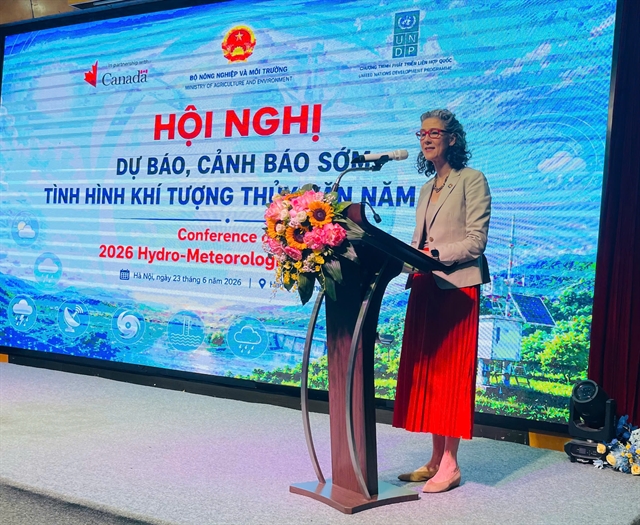
| Ramla Khalidi, UNDP Resident Representative in Việt Nam, speaks at the conference. — VNS Photo Thu Trang |
UNDP Resident Representative in Việt Nam Ramla Khalidi described climate change as an immediate and escalating challenge for Việt Nam.
“Việt Nam stands on the frontlines of climate change. From devastating typhoons, flooding and landslides in the north and central regions, to drought and saltwater intrusion across the Mekong Delta, climate impacts are no longer projections for tomorrow. They are realities of today, reshaping ecosystems, livelihoods and futures.”
She noted that these impacts have shown increasing volatility, with record-breaking heatwaves amid the projected shift to El Niño conditions later this year.
“The truth is climate extremes are the new normal, and our systems must adapt accordingly,” she said.
In Việt Nam, forecasts and warnings need to be tailored to the realities of mountain communities, coastal zones, the Mekong Delta and the Central Highlands, enabling action before disaster strikes.
“But data alone does not save lives," Khalidi said. "The most advanced forecasting model is only as powerful as its last mile. Through our work with smallholder farmers in the Central Highlands and coastal communities, we have learned that the critical gap is communication – turning complex meteorological data into simple, localised, gender-responsive messages that people can understand and act on in real time."
She added: “Nature itself is part of the solution. Resilience must also be inclusive. Poor, rural and ethnic minority communities – women in particular – bear the heaviest burden of water scarcity and crop failure. That is why women must have a voice at the table in water management, cropping decisions and emergency planning." — VNS
Environment
 Environment
 Environment
 Environment
 Environment
 Environment
 Environment
 Environment
 Environment
 Environment
 Environment
 Environment
 Environment
 Environment
 Environment