 Environment
Five fishermen rescued after boat catches fire in Quảng Trị
1.
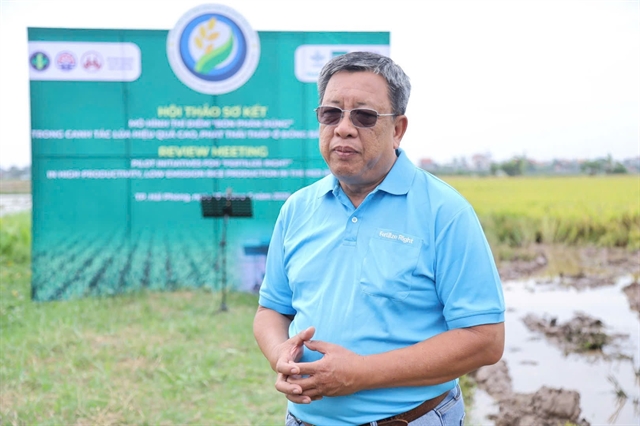 |
| Lê Thanh Tùng, vice chairman and secretary general of the Việt Nam Rice Sector Association. — VNS Photo Tố Như |
Việt Nam News reporter Trần Như speaks with Lê Thanh Tùng, vice chairman and secretary general of the Việt Nam Rice Sector Association (VIETRISA), about the initial results of low-emissions rice production models and the outlook for the rice industry in the next few years.
When did Việt Nam begin implementing low-emissions rice production models, and what are the objectives?
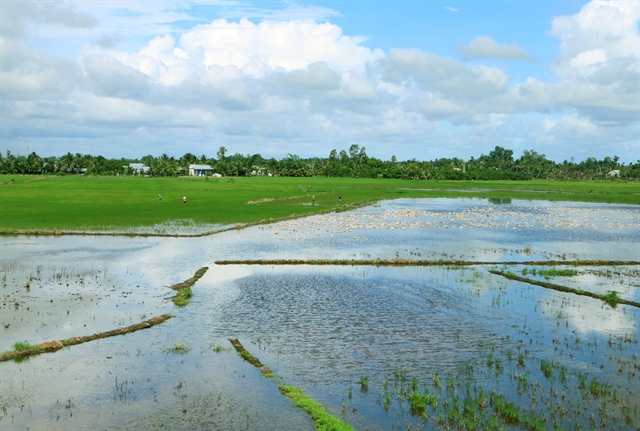
Measures to reduce emissions in rice cultivation have been researched and put into use by the agricultural sector for many years, through programmes such as 'Three Reductions, Three Gains', 'One Must, Five Reductions', alternate wetting and drying irrigation and improved nutrient management.
Emissions reduction gained stronger momentum in 2023, when the Government approved a project called 'The Sustainable Development of One Million Hectares of High-Quality, Low-Emissions Rice Associated with Green Growth in the Mekong Delta by 2030'.
Subsequently, the agricultural sector launched a crop production emissions reduction programme, laying the foundation for scaling up these models nationwide.
The objective is not only to reduce greenhouse gas emissions, but also to improve production efficiency, increase the value of rice and meet evolving requirements in international markets.
What results have been achieved so far?
The agricultural sector is currently implementing two major programmes related to emissions reduction in rice production: the one million hectare rice project in the Mekong Delta, and the crop emissions reduction project through 2035, which is being implemented in rice-growing regions.
After more than two years of implementing the one million hectare project and nearly one year of carrying out the crop emissions reduction project, the model has attracted strong interest from farmers, businesses and local authorities.
What is particularly noteworthy is the clear economic benefit. Initial results show that production costs have fallen by 20 to 30 per cent thanks to reduced seeding rates, more efficient fertiliser use and lower pesticide consumption.
At the same time, yields have not declined and, in many cases, have increased.
Many pilot models have reported yield gains of 10-20 per cent through the adoption of scientific farming practices.
In addition, greenhouse gas emissions have been reduced significantly. On average, each hectare can cut emissions by up to six tonnes of carbon dioxide equivalent, while some models have achieved reductions of up to 12 tonnes per hectare.
As a result, low-emissions rice production is generating multiple benefits: lower costs and higher incomes for farmers, better environmental protection, improved rice quality and greater access to markets that require compliance with green standards.
How do you assess the role of low-emissions production in enhancing the competitiveness of Vietnamese rice in international markets?
In the past, emissions reduction was often viewed primarily as an environmental responsibility or a commitment under international agreements. Today, however, it has also become a market issue.
Many importing countries are concerned not only with rice quality, but also with how the product is produced. They want to know whether production methods are environmentally friendly and whether they meet sustainability standards.
This means that green production is becoming part of a product’s value. If Việt Nam can demonstrate emissions reductions, ensure traceability and comply with international standards, its rice will enjoy a stronger competitive advantage in global markets.
Low-emissions farming models are thus not only helping reduce greenhouse gas emissions, but are also becoming a passport for Vietnamese rice to enter high-value markets such as the European Union, Japan, South Korea and North America.
What is the most important condition for ensuring the sustainable development of low-emissions rice production?
The key factor is reorganising production.
Rice cultivation in Việt Nam remains fragmented and small-scale. If farmers continue to operate individually, it will be difficult to apply technical standards consistently, maintain quality control and meet export market requirements.
Farmers therefore need to be brought together through cooperatives and cooperative groups. By participating in a common production organisation, farmers can apply uniform cultivation practices, build concentrated raw-material areas and generate sufficient output for businesses.
We need to shift from producing what we have to producing what the market demands.
If the market requires fragrant rice, then production zones must be organised accordingly.
If buyers require low-emissions products with traceability, production processes must be structured to meet those criteria.
When market demand drives production, farmers can sell not only rice, but also the added value embedded in the product. That is the path toward sustainably increasing incomes.
What role do cooperatives play in developing low-emissions rice production areas?
Cooperatives are a critical link in the process.
Some people believe that creating large-scale rice production requires reducing the number of farmers or consolidating landholdings. In my view, that is not entirely suitable for Việt Nam’s conditions.
Instead, Việt Nam should develop large production areas involving many farmers, but which are organised effectively through cooperatives. In this way, even though each household owns only a small plot of land, the entire production area can operate as a unified field.
Farmers can use the same rice varieties, follow common technical procedures, cultivate on the same schedule and meet the same quality standards. This is essential for mechanisation, cost reduction, quality control and the development of regional brands.
The EU has recently updated its list of fragrant rice varieties eligible for tariff preferences. How will this affect Việt Nam’s rice industry?
This is a positive signal for Việt Nam’s rice sector.
In recent years, research institutions have developed many new rice varieties with higher quality and stronger market appeal. The updated list will enable these varieties to gain broader access to the EU market.
However, opportunities can only be realised if local authorities, businesses and farmers proactively prepare qualified production areas.
The market will not wait for us. If orders are available but production areas fail to meet requirements, opportunities will be missed.
Conversely, if production is well organised and high-quality, low-emissions, traceable rice-growing regions are established, market changes will become a driving force for increasing value across the entire rice industry.
As green standards increasingly become a prerequisite in global agricultural trade, low-emissions rice production is not only improving economic returns for farmers, but also providing a foundation for Vietnamese rice to penetrate premium markets.
It is widely regarded as a key pathway for the rice sector to achieve sustainable development, increase value and strengthen its position in international markets. —VNS
Environment
 Environment
 Environment
 Environment
 Environment
 Environment
 Environment
 Environment
 Environment
 Environment
 Environment
 Environment
 Environment
 Environment
 Environment