 Environment
Swiss President Guy Parmelin arrives in Hà Nội, beginning official visit to Việt Nam
1.
|
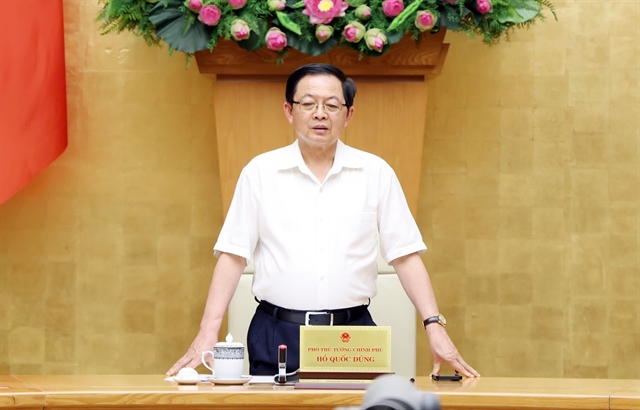
| Deputy Prime Minister Hồ Quốc Dũng chairs a meeting in Hà Nội on Wednesday to discuss the draft law amending and supplementing a number of articles of the Law on Environmental Protection. — Photo baochinhphu.vn |
HÀ NỘI — Deputy Prime Minister Hồ Quốc Dũng identified three major environmental challenges requiring particular attention while chairing a meeting in Hà Nội on Wednesday to discuss the draft law amending and supplementing a number of articles of the Law on Environmental Protection.
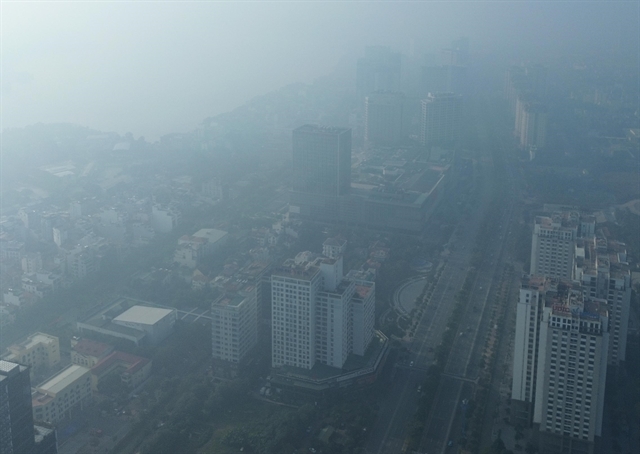
The pressing concerns comprise persistent environmental hotspots in industrial parks and industrial clusters; increasingly complex air and water pollution in major cities directly affecting public health; and shortcomings in waste management and wastewater treatment across river basins and rural areas that have yet to meet practical requirements.
Dũng stressed that the revised law should incorporate new approaches aligned with international trends and the country’s development needs.
These include promoting the circular economy model to reduce emissions and improve resource efficiency; establishing a legal framework for the development of Việt Nam’s carbon market; strengthening producer responsibility for product collection and recycling under the Extended Producer Responsibility (EPR) mechanism; and integrating environmental protection with water security, food security and climate change response efforts.
Emphasising that these are core issues requiring thorough study and discussion, the Deputy PM said the amendments must create an open and enabling legal framework for development while ensuring sustainability objectives are upheld.
He noted that since the 2020 Law on Environmental Protection came into effect, environmental governance has achieved positive outcomes and environmental violations have shown a clear downward trend.
However, serious incidents that have caused public concern still occur, indicating that results have yet to meet expectations and requiring more decisive, coordinated and effective solutions in the period ahead.
Reporting at the meeting, Deputy Minister of Agriculture and Environment Lê Công Thành said one of the key orientations of the draft law is to continue streamlining administrative procedures in the environmental sector, shifting from a pre-inspection approach towards stronger post-inspection mechanisms while proactively accepting controlled levels of risk.
The draft also proposes reducing unnecessary business and investment conditions and further decentralising environmental state management to local authorities.
In addition, it seeks to move from conventional administrative management towards modern environmental governance based on digital data, with science, technology and innovation serving as breakthrough drivers for advancing the green economy, circular economy and low-carbon economy.
At the same time, the draft law continues to refine regulations on environmental quality management in order to prevent pollution at source, strengthen forecasting and early warning systems, and improve public disclosure of environmental quality information, particularly those relating to water and air. — VNA/VNS
Environment
 Environment
 Environment
 Environment
 Environment
 Environment
 Environment
 Environment
 Environment
 Environment
 Environment
 Environment
 Environment
 Environment
 Environment