 Environment
Another 58 sets of martyrs’ remains recovered at Lê Thị Riêng Park
1.
|
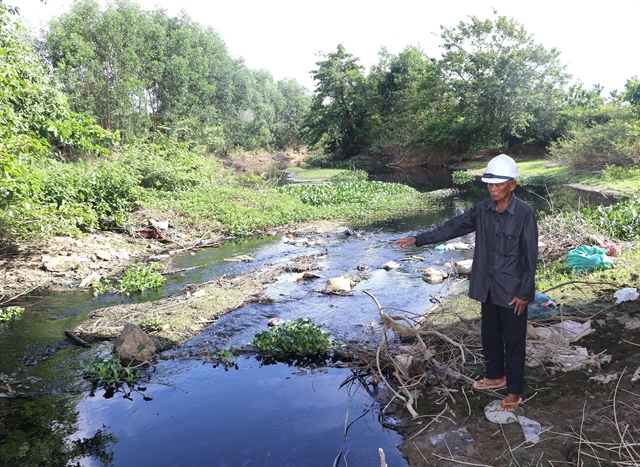
| A resident stands beside a heavily polluted canal in the south-central province of Quảng Ngãi, its water turned black by discharge from nearby factories. — VNA/VNS Photo |
HÀ NỘI — Việt Nam is overhauling its environmental protection law, citing deep shortcomings in pollution control, carbon markets and climate governance that officials say must be fixed as the country moves toward a greener economy.
Since the 2020 Environmental Protection Law took effect, the Ministry of Agriculture and Environment has identified a string of structural weaknesses.
Environmental permits are too narrowly drawn. Smaller projects are front-loaded by full environmental impact assessments. Wastewater discharge into irrigation systems remains poorly controlled.
And the legal overlap between the 2020 law and the 2015 Law on Marine and Island Resources and Environment has created conflicting mandates for pollution control and agency responsibilities.
Beyond those procedural problems, the legal ecosystem surrounding the law has not kept pace. Tax and fee rules have failed to give economic instruments enough bite to change business behaviour.
Technical standards for industrial solid waste reuse and treated water recycling have lagged behind the circular economy agenda and technological advances. The domestic carbon market, meanwhile, remains without the operational foundation needed to function.
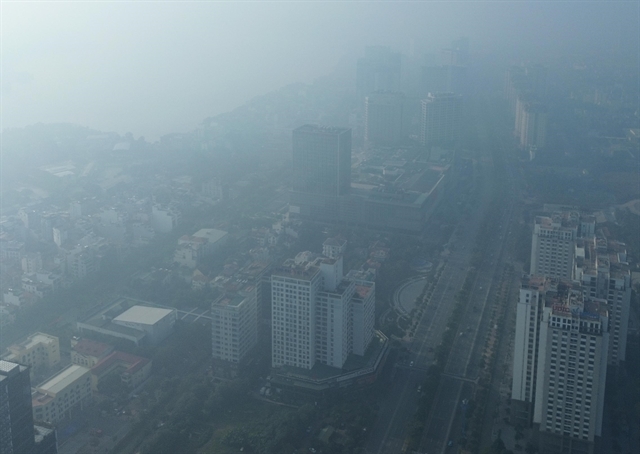
Air pollution has emerged as the most visible symptom. Hà Nội and HCM City have at times ranked among the most polluted cities in the world.
Hoàng Dương Tùng, chairman of the Vietnam Clean Air Partnership, said a foundational piece was still missing: a unified national emissions inventory.
Without it, he said, there would be no reliable data foundation at the national level, leaving environmental management and policymaking severely hampered.
He also called for clearer accountability in real-time environmental monitoring and the establishment of early-warning and forecasting systems.
Deputy Minister of Agriculture and Environment Lê Công Thành said the revision was built on a different legislative philosophy, one in which the law sets frameworks and principles rather than prescribing every detail, preserving flexibility as conditions evolve.
The draft centres on five areas of substantive administrative reform, including streamlining the procedures for environmental impact assessments and environmental permits and pushing more decision-making authority down to local levels.
Looser up-front procedures would be paired with tighter post-approval monitoring and clearer delineation of responsibility across agencies and government tiers.
The draft also proposes a conceptual shift in how Việt Nam treats waste, moving away from a disposal mindset toward treating waste as a resource.
|
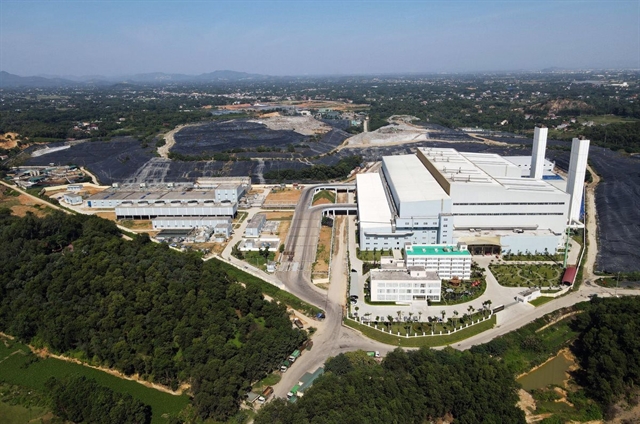
| The Sóc Sơn Waste-to-Energy Plant, Việt Nam's largest and the world's second-largest of its kind, has been feeding the national grid since July 2022, with a daily waste intake capacity of 5,000 tonnes and a power output of 90MW. — Photo hanoimoi.vn |
Other proposed changes include a pivot from reactive remediation to proactive prevention, tighter controls on pollution at the source and a push for digital transformation in environmental monitoring and governance.
On the carbon side, the draft aims to establish a functioning carbon credit market, turning environmental compliance and climate adaptation into economic incentives that push companies to upgrade their technology and sharpen their competitiveness.
Tăng Thế Cường, director general of the Environment Administration, framed the revision as a response to a deeper shift in Việt Nam's development model, away from quantity-over-quality growth and toward greener, lower-emissions expansion.
"Environmental protection is not a cost we pay for development; it is the foundation we build it on," he said.
He acknowledged that squaring that vision with Việt Nam's high growth targets was the central policy challenge, and said the draft attempted to strike that balance by simultaneously lowering barriers for business and improving oversight through more modern and transparent tools.
Environmental experts warn that the stakes of inaction are high. If the legal framework is not updated quickly, they say, the gap between policy and practice will keep widening, weakening environmental governance and slowing the country's green transition.
But if the revision succeeds in cutting through procedural bottlenecks, devolving authority sensibly and building a policy system flexible enough for a fast-changing landscape, it could do more than address today's pollution problems: it could lay long-term groundwork for a circular, low-carbon economy. — VNS
Environment
 Environment
 Environment
 Environment
 Environment
 Environment
 Environment
 Environment
 Environment
 Environment
 Environment
 Environment
 Environment
 Environment
 Environment