 Environment

Shorter Trips, Familiar Ways to Pay: How Airpaz Supports Flexible Booking with 100+ Payment Methods
1.
 |
| A man transports goods under the scorching heat in Đông Ba Market, Phú Xuân Ward, in the central city of Huế. — VNA/VNS Photo Nguyên Lý |
HÀ NỘI — The northern and central provinces are expected to face a widespread and severe heatwave this week, with temperatures forecast to surpass 40 degrees Celsius in some areas.
The National Centre for Hydrometeorological Forecasting (NCHMF) said the heatwave would peak midweek.
During the week, maximum temperatures across the northern region are forecast to rise sharply to between 37 and 39 degrees Celsius, with some mountain and urban areas likely to exceed 39 degrees.
Meteorologists forecast the most intense heat in the north to be concentrated in Hưng Yên and Ninh Bình provinces, as well as Hà Nội.
The central region, meanwhile, is expected to endure even harsher conditions.
Between Monday and Thursday, the region is expected to see a period of severe to exceptionally severe heat.
The area stretching from Thanh Hóa Province to Huế City is expected to become the country's hottest zone, with daytime highs ranging from 38 to 40 degrees Celsius. Temperatures in the mountainous western areas of the central region could exceed 40 degrees.
A western low-pressure heat system combined with strong Foehn winds is driving the extreme heat, pushing temperatures significantly higher across many areas.
Following the current heatwave, weather conditions nationwide are expected to remain highly volatile until late July.
Notably, further spells of severe and exceptionally severe heat are likely to occur intermittently throughout the coming month.
Nguyễn Đức Hòa, deputy head of the NCHMF’s Climate Forecasting Office, said average temperatures across the country in June were generally 0.5 to 1 degree above the long-term average, with some locations recording even higher anomalies.
Additional heatwaves may occur in the northern and central regions during the remainder of the month.
There remains a risk of severe and exceptionally severe heat affecting these regions, Hòa said.
Speaking at a conference on meteorological and hydrological forecasting and early warnings for 2026 on Tuesday morning, Deputy Director Hoàng Phúc Lâm said heatwaves are expected to persist from July to September.
The number of hot days is likely to exceed both the long-term average and levels recorded during the same period in 2025 across the northern region, the Thanh Hóa - Huế region and the south-central coastal provinces, he said.
From around early September, heatwave conditions are expected to gradually ease in the northern region, while the central region is likely to see relief from the second half of September onwards.
Temperatures from now until the end of this year are forecast to remain between 0.5 and 1.5 degrees Celsius above the long-term average, he added.
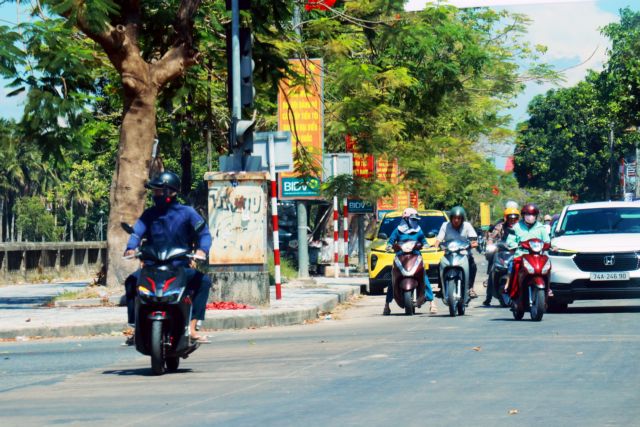 |
| People wear sun-protective clothing outside to avoid the sunlight in the central province of Quảng Trị. —VNA/VNS Photo Tường Vi |
Fire, health risks increase
Authorities warned that prolonged heat and low humidity levels could significantly increase the risk of fires and explosions in residential areas due to soaring electricity demand.
The risk of forest fires is also expected to rise.
Extended exposure to high temperatures may also cause dehydration and heat-related illnesses.
Health experts have advised people to avoid outdoor activities during the hottest part of the day, between 10am and 4pm.
Those who must go outside are urged to wear protective clothing, including hats, sunglasses and face masks, to minimise direct exposure to sunlight.
Residents are also advised not to work for extended periods outdoors or in excessively hot environments, and to avoid strenuous physical activity during heatwaves.
People working in hot conditions should drink at least 1.5 to two litres of water per day to prevent dehydration and electrolyte loss.
Failure to replenish fluids and electrolytes promptly may lead to reduced blood circulation, cardiovascular collapse and severe electrolyte imbalances.
Experts further recommend working in well-ventilated areas to prevent heat exhaustion and heatstroke.
When using electric fans, individuals should avoid prolonged direct airflow on the body to reduce the risk of catching a chill. — VNS
Environment
 Environment
 Environment
 Environment
 Environment
 Environment
 Environment
 Environment
 Environment
 Environment
 Environment
 Environment
 Environment
 Environment
 Environment