 Life & Style

Int’l cooperation helps address nuclear power workforce shortages
1.
|
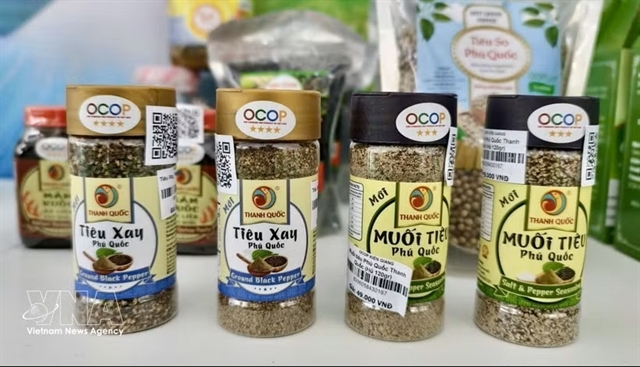
| Phú Quốc pepper products, granted three stars under the OCOP programme in An Giang Province, are displayed at an exhibition of outstanding OCOP products from the Mekong Delta. — VNA/VNS Photo |
AN GIANG — Better known as one of Việt Nam's premier island destinations, Phú Quốc is leveraging its “One Commune, One Product” (OCOP) programme to transform traditional specialities into internationally recognised products, integrating local agriculture, food processing and tourism to promote sustainable economic growth.
Beyond its marine tourism, the island is developing a "tourism – trade – agro-forestry-fisheries" ecosystem in which OCOP products play a central role in preserving local heritage, creating higher-value goods and strengthening the local economy.
Standardising local specialities
According to the agriculture and environment division of Phú Quốc special zone, the island currently has 68 valid OCOP products rated three stars or above from 18 producers, including 45 three-star, 14 four-star and nine five-star products. The achievements come as a result of a strong shift from selling raw materials to producing deeply processed goods accompanied by modern packaging.
Huỳnh Văn Đình, head of the division, said Phú Quốc boasts numerous advantages for developing OCOP products such as distinctive natural resources, long-standing traditional crafts, and a variety of seafood and farm produce. At the same time, tourism provides an effective platform for promoting local brands.
For Phú Quốc, he added, developing OCOP products means not only creating products but also enhancing the value of local specialities, improving residents' incomes, and gradually building the brand of the special zone.
Local pepper growers have adopted automated drip irrigation systems and organic farming practices meeting GlobalGAP and VietGAP standards.
Traditional fish sauce producers have also upgraded their production by adopting HACCP and ISO quality management systems and investing in advanced filtration and semi-automated bottling equipment, thereby producing best-quality products while preserving the essence of the centuries-old craft.
Khải Hoàn Trading JSC, one of the island's leading fish sauce producers, joined the OCOP programme in 2020. The firm's premium fish sauce products were awarded four-star and five-star OCOP certification in 2023. The company has maintained three five-star products and registered two additional premium products for five-star recognition this year.
Khải Hoàn Chairwoman Hồ Kim Liên said the OCOP programme not only recognises Phú Quốc's signature products but also helps improve transparency, strengthen consumer confidence and reinforce the cultural value of the island's traditional fish sauce.
Thanh Quốc Fish Sauce Co., Ltd has prioritised quality improvement by investing in environmental protection systems, wastewater treatment facilities and modern production equipment to meet OCOP standards, its Director Nguyễn Thị Tình said.
Meanwhile, the Huỳnh Khoa private enterprise has successfully commercialised salted mackerel preserved in premium fish sauce, transforming a traditional family recipe into a certified speciality through a strictly controlled production process.
“Cultural ambassadors” making Phú Quốc known globally
Nguyễn Lê Quốc Toàn, Vice Chairman of the People's Committee of Phú Quốc special zone, stressed that one of the island's strategic priorities is to integrate OCOP products into its tourism supply chain.
Visitors can now tour fish sauce factories, pepper farms, wild myrtle gardens and pearl farms, turning local specialities into immersive tourism experiences rather than simply souvenirs, he noted.
Local authorities support businesses in displaying OCOP products at airports, night markets, major retail outlets such as King Kong Mart and Long Beach Mart, and luxury resorts, helping introduce Phú Quốc's culture and heritage to international visitors, Toàn noted.
To boost exports to demanding markets such as Europe, the US, Japan and the Republic of Korea, authorities are promoting production standardisation, digital transformation and traceability. Producers are upgrading packaging, incorporating QR codes, strengthening brand identity and, at the same time, expanding sales through e-commerce platforms including Shopee, TikTok Shop and Lazada.
By combining traditional craftsmanship with a modern business mindset, Phú Quốc is enabling its signature products to reach global markets while building a sustainable and prosperous sea-based economy, Đình said.
In the time ahead, the island is set to continue improving the quality of existing OCOP items, develop new products based on local strengths and market demand, promote environmentally friendly production, expand agricultural tourism, enhance traceability, and strongly adopt digital marketing, thereby making its signature specialities not only commercial products but also “cultural ambassadors” that help elevate Phú Quốc's standing in global trade and tourism landscapes. — VNA/VNS
Life & Style
 Life & Style
 Life & Style
 Life & Style
 Life & Style
 Life & Style
 Life & Style
 Life & Style
 Life & Style
 Life & Style
 Life & Style
 Life & Style
 Life & Style
 Life & Style
 Life & Style