 Life & Style
AI data centres reshape industrial real estate market
1.
HƯNG YÊN — The network of historical sites and artefacts associated with cultural luminary Lê Quý Đôn's life preserves not only tangible traces of history but also the collective memory of an eminent scholar, according to Dr Lê Cẩm Ly from the Institute of Cultural Studies under the Vietnam Academy of Social Sciences.
Over time, these sites have evolved into 'spaces of memory', where communities continue to safeguard and pass on the values of knowledge, lifelong learning and culture that the celebrated scholar left to future generations.
Centrepiece
Presentations at the recent scientific conference, 'Cultural Luminary Lê Quý Đôn – Heritage and Contemporary Values', highlighted the Lê Quý Đôn Memorial Site as the centrepiece of the network of tangible heritage associated with the renowned polymath.
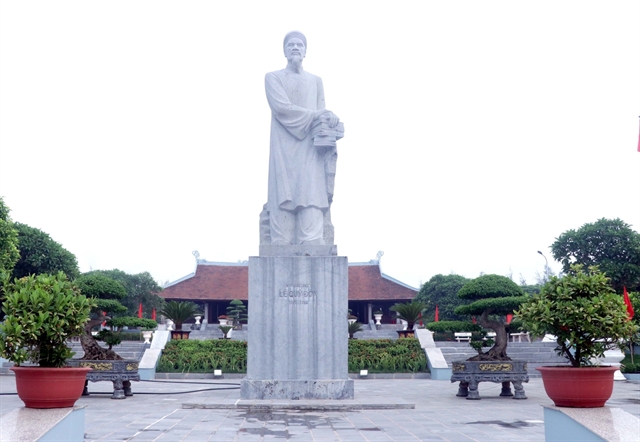 |
| The statue of Lê Quý Đôn at the memorial site. — VNA/VNS Photo Đinh Văn Nhiều |
Forty years ago, in 1986, the complex was designated a national historical and architectural-artistic relic, making it one of Việt Nam's most prominent memorial sites dedicated to a distinguished cultural figure.
At the heart of the complex is the Lê Quý Đôn Ancestral Hall, a site closely associated with the scholar's family lineage and birthplace.
Originally built during the Later Lê Dynasty (1428–1789) and restored several times over the centuries, it preserves a wealth of valuable artefacts.
Among the most notable are the calligraphic plaques reflecting the family's long-standing scholarly tradition, reverence for learning and deep respect for the character and achievements of its forebears.
Adjacent to the ancestral hall is the tomb of Doctorate holder Lê Phú Thứ, Lê Quý Đôn's father, along with several auxiliary structures. The memorial complex also features gardens, tree-lined grounds, internal pathways and Lê Quý Lake, creating a harmonious blend of architecture, natural scenery and traditional cultural space.
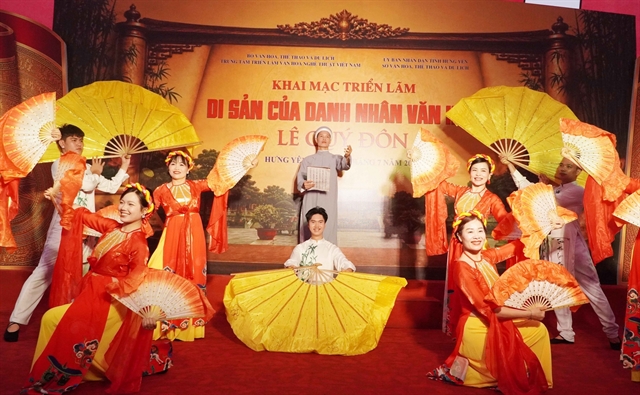 |
| An art performance at the opening ceremony of the exhibition celebrating cultural luminary Lê Quý Đôn's legacy. — VNA/VNS Photo Nguyễn Công Hải |
The site was expanded in 2019 with a new memorial area and public visitor facilities adjoining the original heritage complex, creating an integrated site covering nearly 20 hectares.
The newly developed memorial area features a library, a statue of Lê Quý Đôn, a reconstruction of a traditional imperial examination venue, a pavilion commemorating successful doctoral laureates, and exhibition spaces tracing the scholar's life and achievements.
Meanwhile, the original heritage site continues to preserve the ancestral hall, family tombs, clan library and other historic structures, while the public service area has been developed to receive visitors.
Extended legacy
Papers presented at the conference showed that Lê Quý Đôn's legacy extends far beyond his hometown, spanning many places associated with his life and career.
According to Assoc. Prof. Dr Đặng Văn Bài, former Vice Chairman of the National Cultural Heritage Council, this heritage network can be understood through three principal 'spaces'. The first is the 'space of origin' in Diên Hà, now Lê Quý Đôn Commune, where the renowned scholar was born and spent his childhood.
The second is the 'urban and scholarly space' of Hà Nội, formerly Thăng Long, where he lived, served as a mandarin, taught and produced most of his writings. Here, his legacy is embedded in the capital's historic landscape, from Temple of Literature–Imperial Academy, where his name is inscribed on a doctoral stele, to the city's historic urban quarters, where memories of his life and scholarship have become part of Hà Nội's cultural fabric.
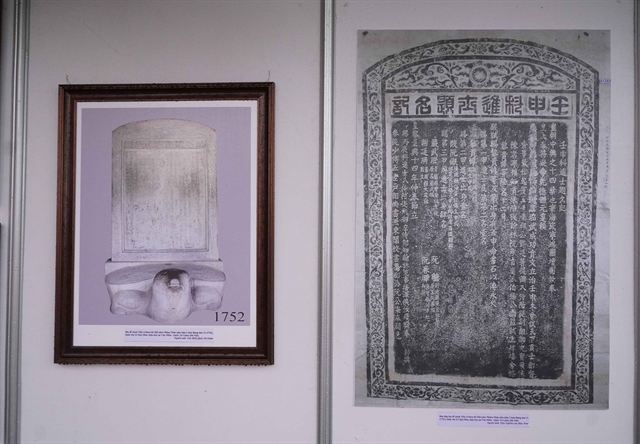 |
| Photographs showing Lê Quý Đôn's name inscribed on a doctoral stele at the Temple of Literature in Hà Nội. — VNA/VNS Photo Nguyễn Công Hải |
The third space, as identified more broadly by the specialist, is a 'space of influence' stretching across central Việt Nam. During his official inspection tours, Lê Quý Đôn left a lasting imprint through his geographical and cultural surveys, as well as his scholarly thought.
These journeys forged enduring links between different regions, creating a shared geo-cultural heritage that reflects both his intellectual legacy and the interconnectedness of the country's cultural landscape.
Bài noted that these three spaces form an integrated heritage network that reflects both Lê Quý Đôn's scholarly journey and the breadth of his influence.
He suggested that this interconnected network could, in the future, provide the foundation for thematic heritage routes, allowing visitors to explore Lê Quý Đôn's legacy through a coherent journey spanning the key places associated with his life, work and enduring contributions.
Heritage sites linked
According to Nguyễn Duy Hoan, Chairman of the People's Committee of Lê Quý Đôn Commune, Hưng Yên Province has continued to invest and expand the Lê Quý Đôn Memorial Site, with a focus on promoting its historical, cultural and educational values.
Alongside infrastructure upgrades, the site has maintained a wide range of activities, helping bring Lê Quý Đôn's legacy closer to the public and inspire greater appreciation of his enduring contributions.
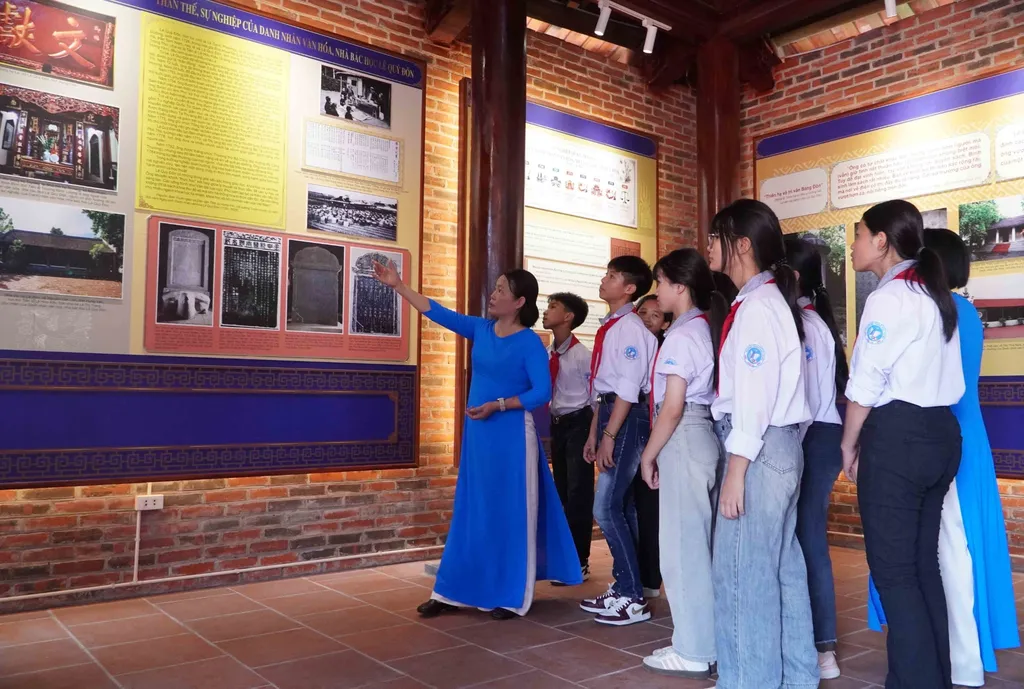 |
| Students from Hồng An Secondary School in Lê Quý Đôn Commune, Hưng Yên Province, visit Lê Quý Đôn's memorial site. — VNA/VNS Photo Nguyễn Công Hải |
The memorial site has stepped up the use of technology to improve both its management and the promotion of its heritage. An artificial intelligence (AI)-powered camera system has been introduced, while historical documents, artefacts, royal ordinations, stone steles, statues and key architectural features are being digitised.
At the same time, digital experiences, including AI-generated videos and a VR360 virtual tour, are under development, offering visitors new ways to engage with the site and its history.
Alongside these technological initiatives, the site's management board continues to organise annual commemorative ceremonies marking Lê Quý Đôn's birth and death anniversaries, heritage education programmes, extracurricular activities for students, academic conferences, and research visits by scholars from across Việt Nam and abroad.
Experts at the conference suggested linking the historical sites associated with Lê Quý Đôn's life and career across the country into a unified heritage trail.
According to them, such an integrated approach would reveal the connections between the places, events and ideas that shaped Lê Quý Đôn's intellectual legacy, offering a richer and more coherent interpretation of his enduring contributions.
Regarded as one of Việt Nam's greatest polymaths of the 18th century, Lê Quý Đôn (1726–84) left behind nearly 40 scholarly works spanning a wide range of fields, including history, philosophy, geography, literature, education and science.
Renowned for his profound scholarship, lifelong commitment to learning and advocacy of meritocracy, he became a symbol of Vietnamese intellect, leaving behind an enduring legacy that continues to enrich the nation's cultural and intellectual heritage. — VNS
Life & Style
 Life & Style
 Life & Style
 Life & Style
 Life & Style
 Life & Style
 Life & Style
 Life & Style
 Life & Style
 Life & Style
 Life & Style
 Life & Style
 Life & Style
 Life & Style
 Life & Style