 Environment

Sơn La holds second coffee festival, targeting stronger businesses in future
1.

|
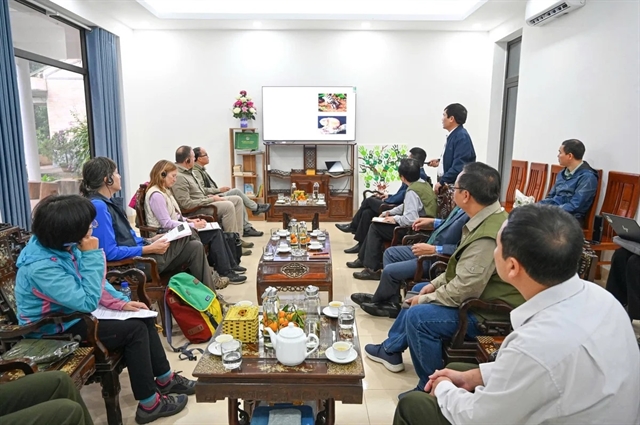
| A discussion panel on International Experiences in the Recognition and Management of Other Effective Area-Based Conservation Measures (OECMs) and Application in Việt Nam. VNS Photo Công Thành |
ĐÀ NẴNG — Việt Nam has been in a ‘golden’ time to turn research into action of Other Effective Area-Based Conservation Measures (OECMs), an effective and sustainable solution to reach the 30by30 target in 2030.
Đỗ Thanh Hào, from the World Wide Fund for Nature in Việt Nam (WWF-Viet Nam), made the remarks at the Dialogue on International Experiences in the Recognition and Management of Other Effective Area-Based Conservation Measures (OECMs) and Application in Việt Nam, stressing Việt Nam has a huge potential of OECMs that have been well conserved.
The 30by30 target aims to conserve at least 30 per cent of the Earth’s land and sea areas within the 2030 Target of the Kunming-Montreal Global Biodiversity Framework.
He said many OECMs in Việt Nam had achieved the sustainable conservation, and it needs a pilot project on recognition and reporting outstanding OECMs in the country.
|
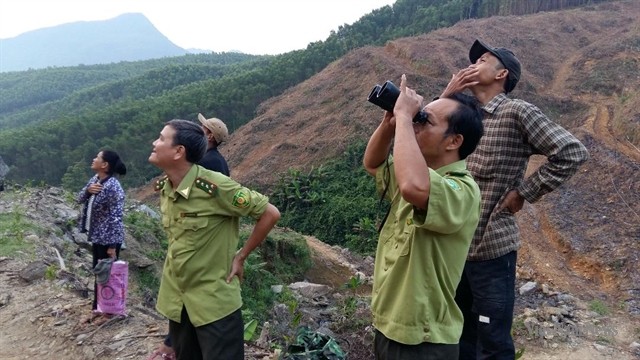
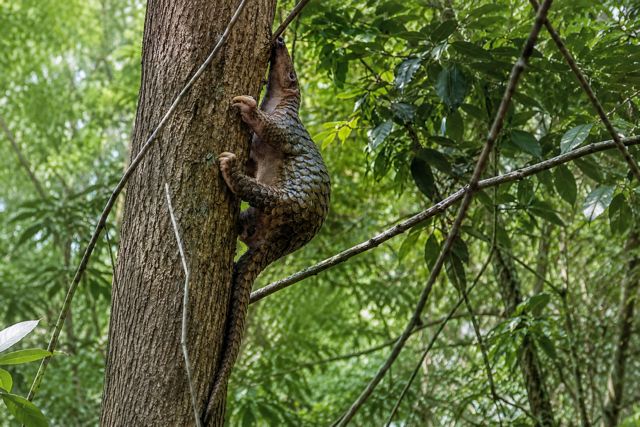
| A community-based patrol team check a site in a primary forest in Tam Mỹ Commune of Đà Nẵng City. The community has voluntarily protected a group of the Critically Endangered grey-shanked douc langurs (Pygathrix cinerea) for nearly 30 years. THe population of the langurs has increased from about 15 animals to 75 langurs. VNS Photo Công Thành |
“Việt Nam has plenty of well-managed OECMs, but an effective mechanism is needed for better promotion of nature conservation qualification and added value of eco-tourism,” Hào said.
“The recognition of OECMs should involve the private sector and businesses that have implemented conservation within a qualified ecological system,” he suggested.
Hào said that Tú Mỹ forest on 30ha in Tam Mỹ Commune of Đà Nẵng City has been conserved by the community since 1997.
The community has protected a group of the Critically Endangered grey-shanked douc langurs (Pygathrix cinerea) from about 15 animals before increasing to 75 langurs, he said.
He added the Tú Mỹ primary forest is really a community-based well-protected biodiversity value, and it’s a forerunner model of ecology qualified OECM in Việt Nam.
Bùi Chính Nghĩa, Director of the Nature and Biodiversity Conservation Agency, under the Ministry of Agriculture and Environment, said Việt Nam has 178 Nature Reserve sites including special-used forest, marine protected areas, wetlands and lagoons covering 2.67 million hectares.
The Government of Việt Nam has approved a plan on the expansion and establishment of 6 million hectares, about 6 per cent of natural area, to achieve the 30by30 Target in 2030.
The Nature and Biodiversity Conservation Agency reported that OECMs in Việt Nam have been partially integrated into the National Biodiversity Strategy to 2030.
|
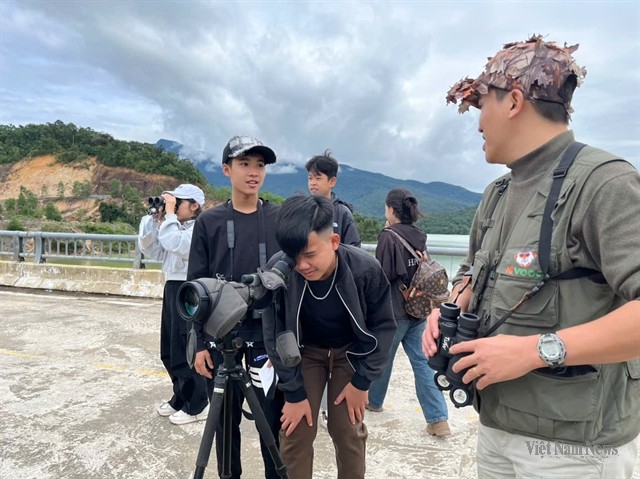
| A biologist guides school students on nature protection in an education course on wildlife and habitat conservation in central Việt Nam. The country has been building a project on recognition of Other Effective Area-Based Conservation Measures (OECMs). Photo courtesy of Bùi Văn Tuấn |
During 2023-25, the country initiated preliminary discussions on OECMs and conducted field surveys to assess potential sites in several localities, including Quảng Ninh, Huế, Quảng Trị (now Quảng Bình), Đà Nẵng, and the Mekong Delta.
Việt Nam's 178 nature reserves cover only about seven per cent of its land area and 2.6 per cent of its marine area, leaving a significant gap to the ‘30by30’ target. Meanwhile, more than 7,200 OECMs have been recorded globally.
Văn Ngọc Thịnh, CEO of WWF-Viet Nam stated: "Through years of working with partners in Việt Nam, particularly in the Central Annamites landscape, WWF-Viet Nam has observed that conservation is more effective when protected areas are linked to natural zones of high biodiversity value that are already well-managed by diverse actors.”
“OECMs are a crucial approach to expanding conservation effectiveness at a landscape scale while contributing to both national and international biodiversity goals. With the policy foundation already taking shape, the attention of management agencies and local authorities, and the commitment of many partners, we believe this is a highly favourable time for Việt Nam to gradually translate OECMs into practice."
Mohammad Khalid Sayeed Pasha, Regional Coordinator for Protected, Conserved, and Heritage Areas at IUCN Asia, shared that it needs stronger recognition of OECMs, legal permission and land-use rights in the sector.
|
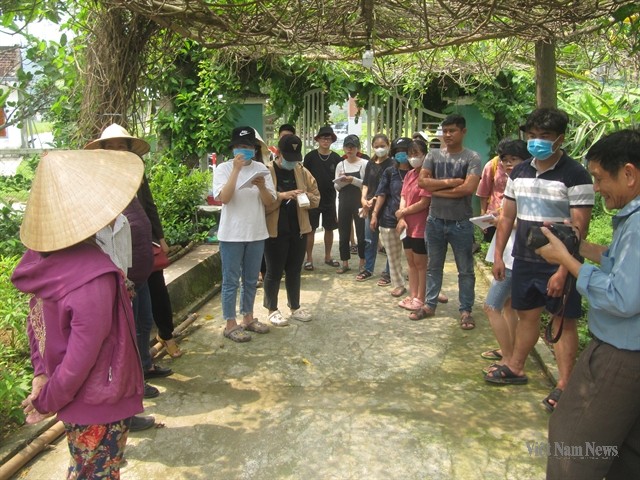
| A community-based farming experience session at Hòa Bắc commune of Đà Nẵng. Eco-tour service has emerged in combination with forest and wildlife protection in mountainous rural areas in Đà Nẵng. VNS Photo Công Thành |
Dr. Estradivari, who co-chairs the IUCN World Commission on Protected Areas (WCPA) Task Force on Fisheries and Conserved Areas and the IUCN WCPA Asia OECM Working Group, said it should be building multi-tier financing to support alternative livelihoods, community-based eco-tour service, One Commune-One Product (OCOP), sustainable seafood exploitation, business co-operation, and sponsorships as well as building pilot projects on biodiversity in recognition of OECMs in Việt Nam. — VNS
Environment
 Environment
 Environment
 Environment
 Environment
 Environment
 Environment
 Environment
 Environment
 Environment
 Environment
 Environment
 Environment
 Environment
 Environment