 Environment

AIMCONNECT 2026 Held in Singapore, Bringing Global Automotive Leaders Together to Explore the Future of AI, Trust and Connected Mobility
1.
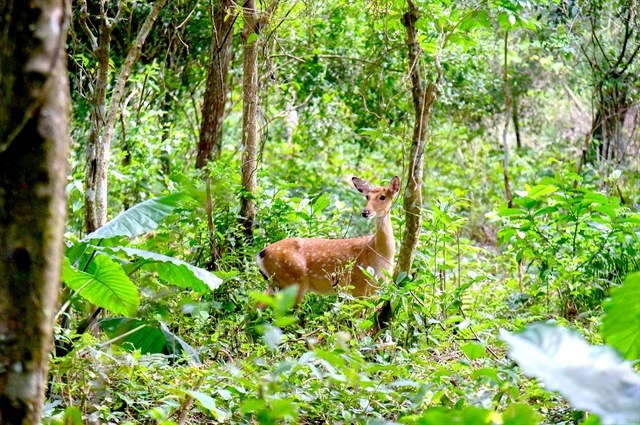 |
| A deer is seen in Cúc Phương National Park. — Photo courtesy of the national park |
NINH BÌNH — Cúc Phương National Park in the northern province of Ninh Bình has announced a large-scale rewilding programme that will gradually return around 60 deer to the park's core forest area.
The initiative marks a significant step in its 2026–35 Rewilding Action Plan, with a vision to 2050, aimed at restoring wild animal populations and rebuilding ecological links that have deteriorated over many years.
The programme is being implemented with technical support from Save Vietnam's Wildlife (SVW). It also contributes to the implementation of Việt Nam's National Biodiversity Strategy and the country's commitments to nature conservation.
Under the plan, the first release took place on June 29, with 19 animals, nine sika deer (Cervus nippon) and 10 sambar deer (Rusa unicolor). Both are native species that play a vital role in maintaining the structure and ecological processes of Cúc Phương's limestone forest ecosystem.
Years of research and monitoring have led scientists to conclude that populations of large herbivores in Cúc Phương have declined significantly. Their disappearance has not only reduced biodiversity but also disrupted seed dispersal, forest regeneration and the ecological balance of the forest ecosystem.
According to Director of Cúc Phương National Park Nguyễn Văn Chính, the ultimate goal of conservation extends beyond rescuing wildlife or keeping animals in semi-wild conditions. It is to return them to their natural habitat, where they can fully resume their ecological roles.
"The rewilding of deer marks the beginning of efforts to restore key ecological links that have been lost over many years," he said.
According to the programme, around 60 deer will be gradually reintroduced into the core zone of Cúc Phương National Park. All selected animals undergo rigorous assessments of their health, genetic background, behaviour and ability to adapt to natural conditions before being released.
Preparing wildlife
Each animal is assigned a comprehensive biological profile to enable effective genetic management, preserve genetic diversity and improve the population's long-term viability after its return to the wild.
To improve the animals' ability to adapt and increase their chances of survival after release, the Cúc Phương Rescue, Conservation and Creature Development Centre has implemented a pre-release behavioural training programme to prepare them for life in the wild.
During this process, the animals are gradually weaned off human dependence while being trained to forage, locate water sources, adapt to the terrain and develop the survival skills needed to thrive in the wild.
The rewilding programme is being carried out at Bống Centre, located deep within the core zone of the park. The site features an evergreen limestone forest ecosystem, year-round water sources, abundant natural food supplies and minimal human disturbance, making it an ideal habitat for the released animals.
To minimise the stress of sudden adaptation, Cúc Phương National Park is using a semi-natural enclosure covering about 2,000 square metres. The animals will remain in the enclosure for 30–40 days to acclimatise to their surroundings before being fully released into the natural forest, after which all direct human support will cease.
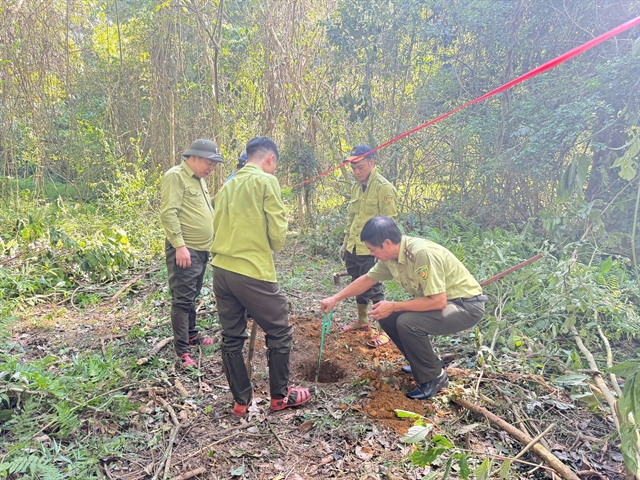 |
| Specialised rangers remove an illegal snare. — Photo courtesy of the national park |
The method is widely used in wildlife reintroduction programmes around the world to improve animals' ability to adapt and increase their chances of survival after returning to the wild.
Alongside the rewilding programme, Cúc Phương National Park is also implementing a comprehensive range of habitat protection measures to create favourable conditions for the animals to adapt quickly and establish sustainable wild populations.
Specialised ranger and patrol teams will continue to step up patrols, remove illegal snares, prevent wildlife crimes and use the Spatial Monitoring and Reporting Tool (SMART) system to manage patrols, monitor forest resources and analyse data in support of conservation efforts.
After their release, the animals will be monitored continuously using GPS tracking collars, VHF radio transmitters, camera traps and other advanced biological monitoring methods. The data collected will enable experts to accurately assess the animals' adaptation, home range, foraging behaviour, health, reproductive success and integration into the natural environment.
Restoring nature
According to the park authority, the programme is more than simply returning animals to the forest. It marks a shift from a conservation approach focused on rescuing and protecting individual animals to one centred on restoring wild populations, rebuilding ecological functions and enhancing the integrity of forest ecosystems.
Chính said the park aims not only to protect its existing natural values but also to take a proactive role in restoring degraded ecosystems and depleted wildlife populations.
He expressed hope that the programme would become a national model for wildlife rescue, rehabilitation, rewilding and population restoration, providing practical experience and lessons for national parks and nature reserves across the country.
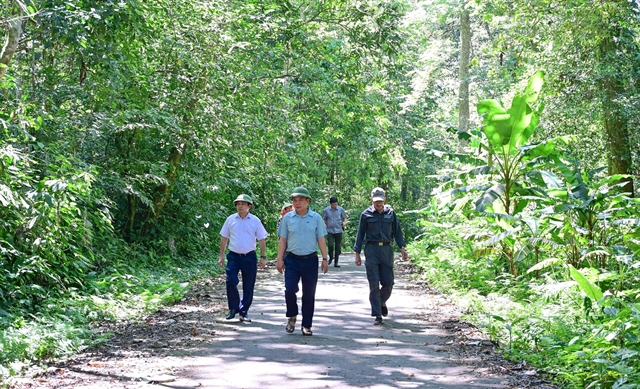 |
| Members of Cúc Phương Rescue, Conservation and Creature Development Centre patrol the national park. — Photo courtesy of the national park |
Scientific data collected through the programme is expected to provide an important foundation for refining rewilding protocols, restoring populations of rare wildlife species and enhancing the effectiveness of biodiversity conservation efforts in Việt Nam in the years ahead. — VNS
Environment
 Environment
 Environment
 Environment
 Environment
 Environment
 Environment
 Environment
 Environment
 Environment
 Environment
 Environment
 Environment
 Environment
 Environment