 Travel

Việt Nam, EU and Belgium seek deeper, practical cooperation
1.
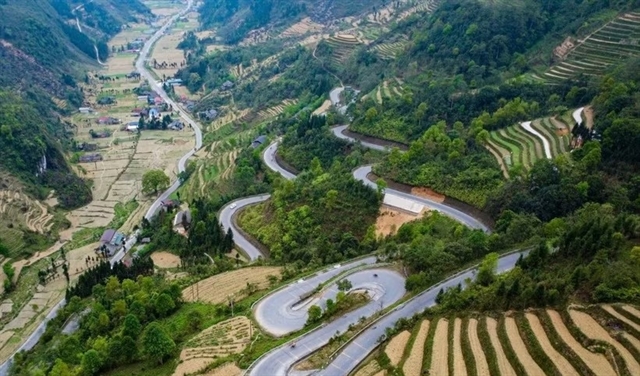 |
| The Nine Turn Pass is located on the 'Happiness Road'.— VNA/VNS Photo |
By Thanh Nga
People often say that a trip to Hà Giang - now Tuyên Quang Province - is not complete without a journey along the 'Happiness Road'.
We had heard that before, but it was only when we found ourselves winding along the route that we began to understand why.
Each time we return, the road offers something different - a new view, a new story or simply a quiet moment among the mountains. It is not just a scenic drive, but a journey through history, culture and the everyday life of the northern highlands.
The Happiness Road stretches about 185km, linking the former Hà Giang City with Đồng Văn and Mèo Vạc Districts. It cuts through the rugged limestone peaks of the Đồng Văn Karst Plateau, an area once isolated from the rest of the country.
In the late 1950s, travel here was extremely difficult. Communities beyond the 'Heaven’s Gate' of Quản Bạ faced year-round hardship due to the lack of proper roads. Construction of the route began in 1959 and was completed in 1965, after six years of effort by tens of thousands of youth volunteers and local ethnic people, working with rudimentary tools.
The name Happiness Road reflects what it brought - connection, opportunity and change.
Former provincial leader Sùng Đại Dùng once said that the road’s greatest value lies in opening up development for the region. Without it, places like Đồng Văn and Mèo Vạc would have struggled to grow as they have today. More than just infrastructure, the road became a lifeline, bringing knowledge, trade and new possibilities to remote communities.
Today, the route is both a vital transport corridor and one of Việt Nam’s most striking travel experiences.
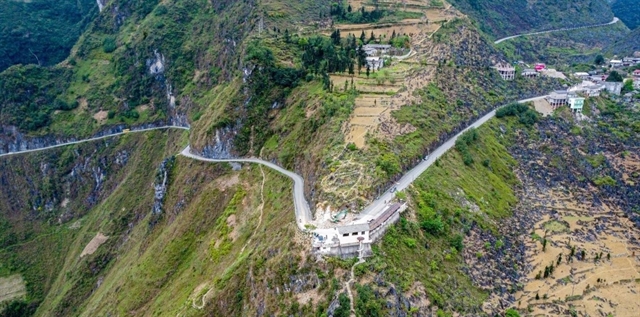 |
| The'Happiness Road' is a symbol of the spiritual strength, aspiration for progress and boundless sacrifice of the people in the highlands. — VNA/VNS Photo |
A journey through the highlands
Our trip began early in the morning, leaving Hà Giang Ward as the mist still hung low over the hills. The first major stop was Quản Bạ Heaven’s Gate, where the view opened wide over a valley dotted with fields and the well-known Twin Mountains.
Standing there, we watched clouds drift slowly across the peaks. The air was cool and quiet, and for a moment, everything seemed to slow down.
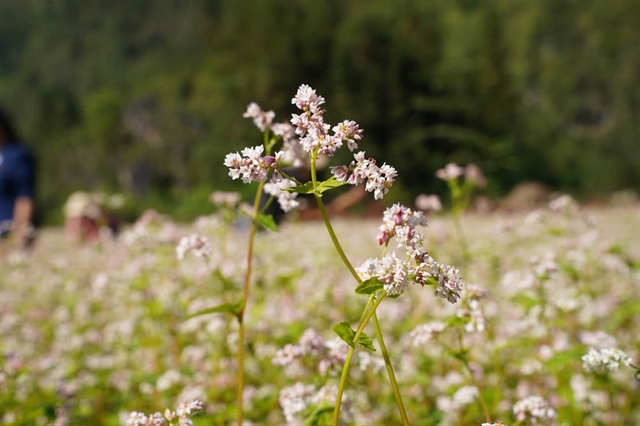
Further along, the road led us to Sủng Là Valley. Depending on the season, the landscape changes dramatically. When we visited, patches of buckwheat flowers added soft colours to the rocky terrain. In other months, yellow mustard flowers or green corn fields take over.
The valley is also home to traditional earthen houses of the Mông people. Some remain unchanged for generations, offering a glimpse into a way of life shaped by the mountains.
As we continued, the road narrowed and climbed higher. Then came Mã Pí Lèng Pass - often described as one of Việt Nam’s most spectacular mountain passes.
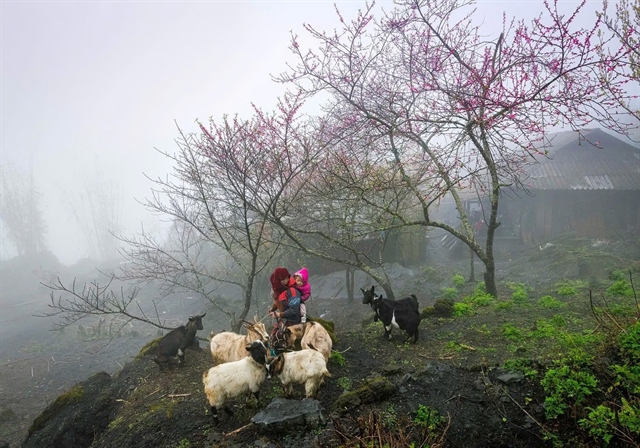 |
| The natural beauty and lifestyle of the locals of have a special appeal to tourists. — VNA/VNS Photo |
From the top, we looked down at the Nho Quế River winding through a deep gorge far below. The water appeared almost unreal in its emerald colour, contrasting sharply with the grey cliffs. The scale of the landscape is difficult to capture in photos. Standing there, we could only take it in quietly.
No trip along the Happiness Road feels complete without a stop at Lũng Cú Flag Tower, near the country’s northernmost point. After climbing the steps to the top, we saw the red flag with a yellow star flying high above the mountains. It is a simple moment, but one that leaves a lasting impression.
According to Phạm Văn Tú, a local official in Mèo Vạc, the road has played a key role in improving livelihoods and developing tourism. It has helped shift thinking in remote areas, opening the door for services and small businesses to grow.
However, what makes the journey more than just a scenic drive is the life along the road.
We passed through small villages where children waved as we went by and farmers worked on steep slopes. In local markets, we found traditional dishes such as thắng cố (horse meat stew), mèn mén (steamed cornmeal) and corn wine.
The flavours may not suit everyone, but trying them is part of understanding the region.
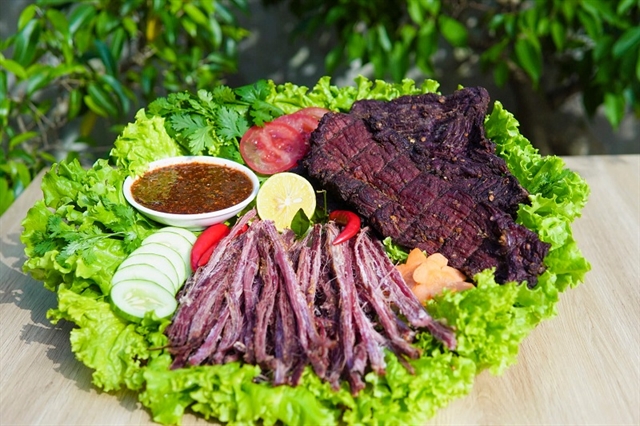 |
| Local cuisine in Tuyên Quang Province. — Photo ecotour.com.vn |
When to go
The Happiness Road can be visited year-round, but some periods stand out.
Spring, from January to March, brings peach and plum blossoms. Autumn, especially September and October, offers golden terraced fields in nearby areas. In winter, from November to December, mist covers the mountains, creating a quieter and more atmospheric experience.
Each season has its own appeal, and the road feels different every time.
More than 60 years after it was built, the Happiness Road continues to wind quietly through the mountains.
Most travellers today may not know the people who helped carve it out of rock and cliff, but their work remains visible in every passing journey.
For us, each trip along this road is not just about the destination. It is about the stories, the landscapes and the sense of connection that comes with travelling through one of Việt Nam’s most remarkable regions. — VNS
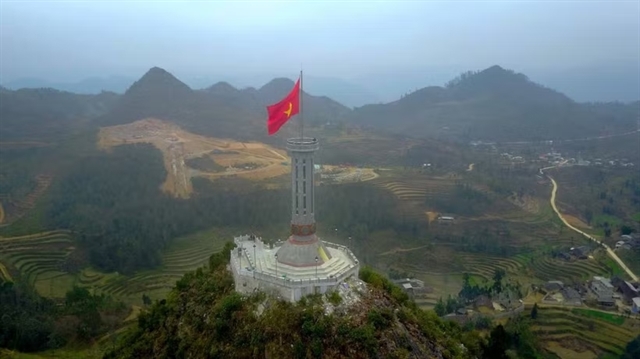 |
| Lũng Cú Flagpole. — VNA/VNS Photo |
Travel tips
- Carry valid identification, as there may be checkpoints near border areas.
- Check your vehicle carefully, especially brakes and tyres, as the roads are steep and winding.
- Bring warm clothing. Even in summer, temperatures can drop, especially in the early morning or evening.
- Avoid travelling at night due to fog and limited visibility.
- Pack water, snacks and basic medicine, as services can be sparse along the route. —VNS
Travel
 Travel
 Travel
 Travel
 Travel
 Travel
 Travel
 Travel
 Travel
 Travel
 Travel
 Travel
 Travel
 Travel
 Travel