 Travel

Việt Nam, EU and Belgium seek deeper, practical cooperation
1.
Mỹ Khê Beach, Đà Nẵng
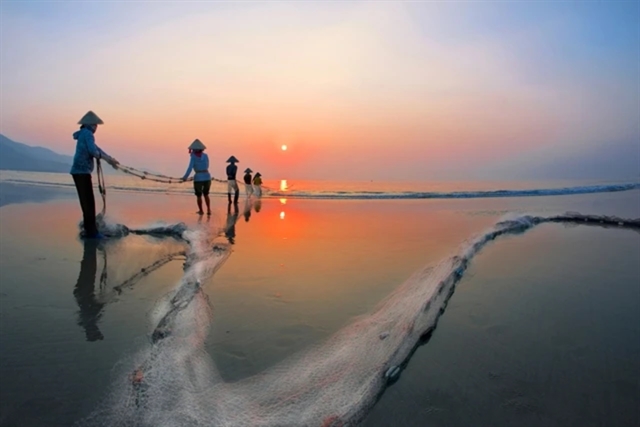 |
| SUNSET STRIP: Dubbed the Miami of Việt Nam, Đà Nẵng's Mỹ Khê beach has been voted among the world's most beautiful beaches. VNA/VNS file photo |
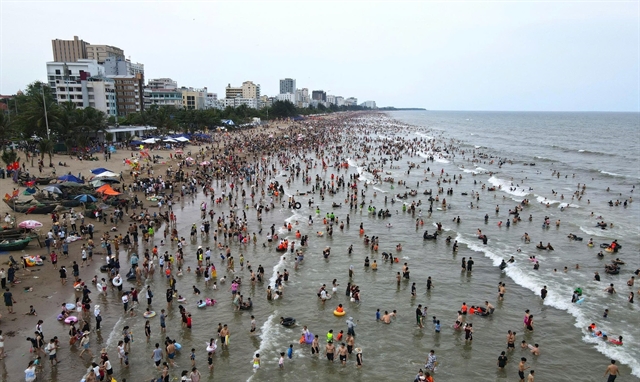
Mỹ Khê beach is one of the most beautiful coastal areas in Đà Nẵng, a city known for its stunning shorelines. The beach is several kilometres long, running from the Sơn Trà archipelago to the Marble Mountains. Mỹ Khê has shallow waters, warm weather and gentle waves all year round.
Most people gravitate towards the main stretch of the beach, a 900-metre section that offers plenty of activities including boogie boarding, surfing, water scooters and beach paragliding. Seafood is abundant and served in a variety of restaurants by the shore.
Mỹ Khê has made it into lists of seaside getaways compiled by the world's top travel magazines and guides, such as Forbes and Tripadvisor.
Located next to Huế, another culinary capital of Việt Nam, Đà Nẵng boasts its own fish-based dining delicacies, characterised by fresh-caught seafood with strong flavours.
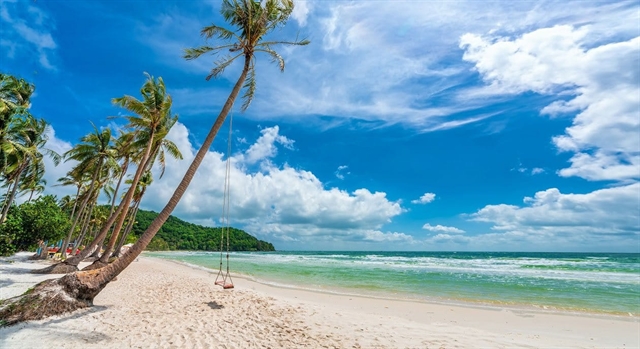 |
| ISLAND LIFE: Phú Quốc's Sao Beach offers great views and warm water to soothe the soul. VNA/VNS file photo |
Sao Beach, Phú Quốc Island
Located in An Thới Ward, 25km southwest of Dương Đông town on Phú Quốc, Sao Beach is world famous for its soft and silky white sand and crystal clear water, with a shallow, 7km-long shoreline and warm weather all year round.
Phú Quốc offers some of the most stunning photo ops with ancient coconut trees, swings and wooden bridges that make for a great background. Other activities include kayaking, snorkelling or parachuting and jetskiing.
Seafood is a significant part of Phú Quốc's local dining scene and is served at most seaside restaurants. Specialties include Phú Quốc's famous fresh herring salad, raw or roasted sea urchins, or horn scallops. The best time to visit Phú Quốc is during the dry season, from November until the following April.
The island also has a national park that takes up 70 per cent of its territory. Free to enter, the park allows visitors to trek from Hàm Ninh to Suối Tranh under the canopy of ancient trees that are hundreds of years old, or along well-known springs such as Tranh Stream on the path from Dương Đông to Hàm Ninh, or Đá Bàn or Đá Ngon streams. In the rainy season, the streams flow very rapidly, and hikers can observe spectacular waterfalls.
Nha Trang, Khánh Hòa Province
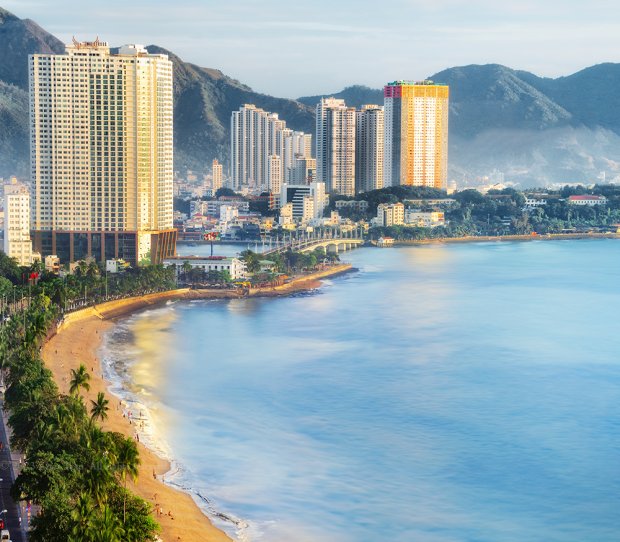 |
| SUMMER SPOT: Mild weather and affordability make Nha Trang a summer destination for both international tourists and Vietnamese residents. VNA/VNS File Photo |
The best time to visit Nha Trang is from January until August, when lots of seaside activities are taking place. Service fees can be less costly from January through May, as during the high summer season everything is priced a bit higher. The rainy season is from September until December, but tourists still come in droves for relaxation, wellness and tranquillity.
Nha Trang offers some of the most diverse water sports and activities. Visitors can go snorkelling or diving, explore the sea bed in a glass bottom boat, or walk along the seabed wearing special equipment.
The city is home to the Oceanography Museum, where a massive whale skeleton is kept intact. Daily visits to several islands around the bay can also be booked, though homestays on the islands themselves often have limited services.
Mũi Né, Lâm Đồng Province
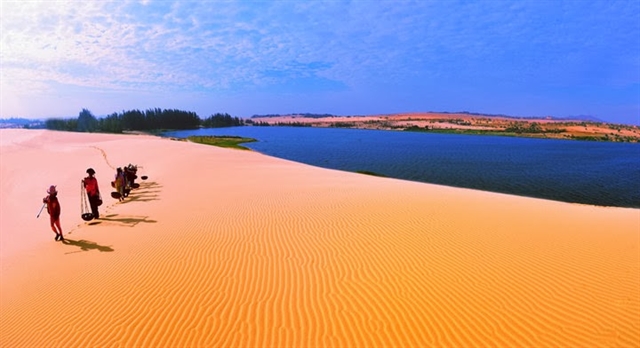 |
| LIGHT AND DARK: The contrast of the sea, sand and sky in Mũi Né makes very photogenic landscapes for those hunting for the perfect shot. VNA/VNS File Photo |
Mũi Né is a favourite getaway close to HCM City, and is famous for its stunning sand dunes, which often change shape in the wind. Several unique activities are provided for tourists, including surfing the dunes.
The small and relatively unknown Hòn Rơm island offshore of Mũi Né and just 28km from Phan Thiết town is also a great destination. Its beach is 17km long and has giant rocks, which make for spectacular views. On Hòn Rơm, visitors can watch the sun both rise and set. Beaches include Hòn Rơm 1 or 2 as well as Thùy Trang beach, which is a great spot for a family retreat.
Another island, Hòn Ghềnh, is only 1km offshore from Mũi Né. Formerly devoid of residents, the island housed only a temple, and was a resort area for fishermen or the rare tourist to go snorkelling early in the morning. Hòn Ghềnh is known for its gorgeous sunsets.
Back on the mainland in Mũi Né, travellers can also visit Kê Gà Cape in Hàm Thuận Nam to see the Kê Gà Lighthouse, which is the tallest and oldest in Việt Nam.
Côn Đảo Archipelago, HCM City
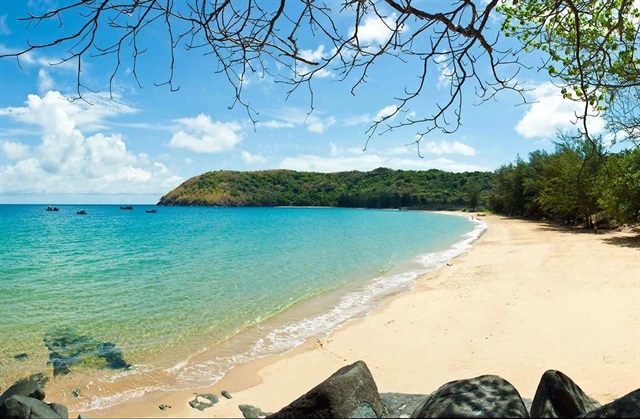 |
| GOLDEN SANDS: Côn Đảo boasts several private pristine and secluded beaches. VNA/VNS file photo |
Côn Sơn is the main island in the Côn Đảo archipelago, which is also simply referred to as Côn Đảo Island.
The waters of Côn Đảo are blue-green and crystal clear, and the island is home to a rich and diverse coral reef and pristine white sand beaches. Its best beaches include Đầm Trầu and Nhát beaches for spectacular sunset views. An Hải beach is another great option located in the centre of the island.
Travellers will find plenty to explore in Côn Đảo, including snorkelling on the reef that forms the marine part of Côn Đảo National Park. Canoes can also be rented to explore nearby islands in the archipelago, such as Hòn Bảy Cạnh or Hòn Cau.
From July to September is turtle season, a much-loved activity on the islands. Visitors can try experiential tours including trips to see the turtles lay their eggs, or later on, watching or helping volunteers release baby turtles into the sea. The best time to explore Côn Đảo is from March until September every year. — VNS
Travel
 Travel
 Travel
 Travel
 Travel
 Travel
 Travel
 Travel
 Travel
 Travel
 Travel
 Travel
 Travel
 Travel
 Travel