 Travel

Hà Nội to host international exhibition on food, beverage and packaging technology
1.
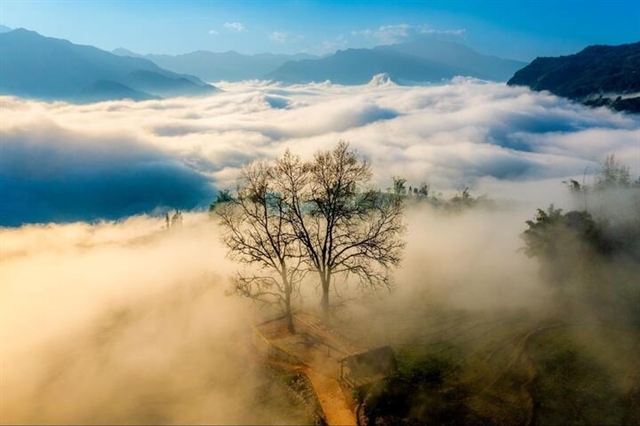 |
| Choản Thèn floating amid the mountain clouds. — Photo thoibaonganhang.vn |
LÀO CAI — Above 2,000m on the slopes of the Nhìu Cồ San mountain range, Choản Thèn is a Hà Nhì village that is over 300 years old, known for its sea of clouds, terraced fields and traditional earthen houses.
About 2km from the centre of Y Tý Commune, Lào Cai Province, the village has retained much of its traditional character. Old earthen houses stand among the mountains, while terraced fields stretch along the slopes around the village.
Choản Thèn means a village with a circular shape in the Hà Nhì language. It is particularly attractive from September to April, when favourable weather can bring clouds over the valleys.
From higher points, the houses and fields appear through the mist, creating the scenery that has made Choản Thèn increasingly popular with visitors.
But the clouds are only one part of its appeal.
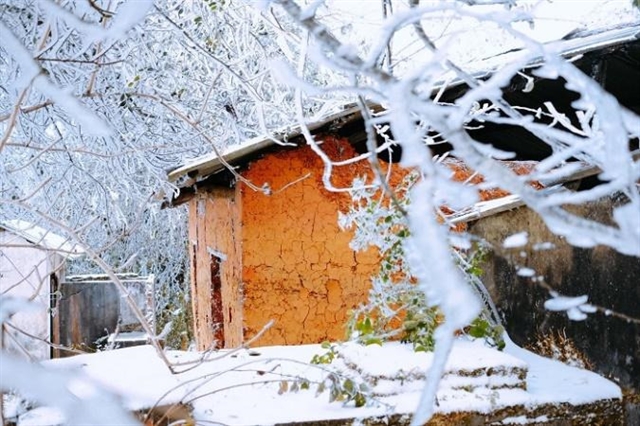 |
| A traditional earthen house helps retain warmth during the harsh winter in Choản Thèn. — Photo vtcnews.vn |
Life among the clouds
Choản Thèn is home to the Hà Nhì ethnic community, which has preserved many elements of its traditional culture.
The village’s earthen houses are among its most distinctive features. Usually square or rectangular, they have thick walls made from red earth mixed with gravel, and traditionally have thatched roofs. Most houses have one central entrance and one or two small arched windows.
Peach trees and flowers are often planted in courtyards and along fences. In spring, the flowers add colour to the otherwise earthy tones of the old houses.
The village landscape changes throughout the year.
In May and June, water fills the terraced fields, turning them into large mirrors reflecting the sky and surrounding mountains. In August and early September, the rice fields turn yellow before harvest.
Winter and early spring bring more clouds and mist. The changing scenery gives visitors different reasons to return at different times of the year.
Choản Thèn’s cultural attractions are equally important.
Traditional costumes, local cuisine, bamboo tray weaving, rice wine-making and brocade embroidery remain part of community life. Skills like performing folk songs and dances and playing the hó tơ musical instrument are also being passed on to younger generations.
Two large chestnut trees, known locally as the 'happiness trees', have become another familiar sight. Standing about 30m tall, their canopies and branches intertwine, giving the trees their name.
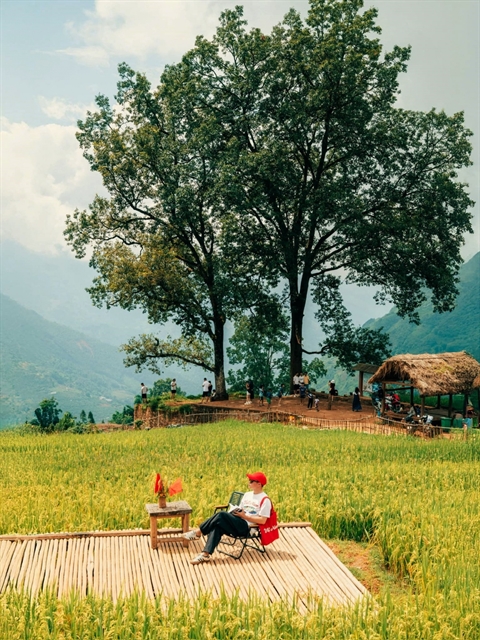 |
| Choản Thèn Park, an attractive destination in Y Tý. — Photo thoibaonganhang.vn |
Nearby, an open area known as Choản Thèn Park is used by local residents as a community space. It also provides views over the terraced fields, mountains and Y Tý Valley.
The park hosts important Hà Nhì festivals, including the Gạ Ma Thú (Sacred Village) Festival in the first lunar month and the Khô Già Già (Abundant Harvest) Festival in the sixth lunar month.
During the festivals, local people carry out traditional rituals, play folk games and take part in community activities. For visitors, these occasions offer an opportunity to learn about Hà Nhì customs in their original setting.
Tourism brings change
Tourism is gradually becoming a new source of income for Choản Thèn residents.
After taking part in training courses on tourism services and environmental protection, local people have become more aware of keeping the village clean and protecting its landscape. Free-roaming livestock and poultry have been reduced, animal shelters have been moved away from residential areas and waste is collected for treatment.
Some households have renovated their homes to provide homestay accommodation. Aside from Choản Thèn CBT House, four other households are currently offering accommodation, with average earnings of about VNĐ15 million ($575) per household each month.
The income is still modest, but it has encouraged more residents to see tourism as a possible livelihood while maintaining their traditional way of life.
For the community, tourism also creates a practical reason to preserve what makes the village different.
Traditional houses, costumes, food, handicrafts, festivals and folk games are no longer seen only as elements of the past. They can also become part of the tourism experience and generate income for local families.
Chairman of the Y Tý Commune People's Committee Nguyễn Văn Tài said the locality aims to develop Y Tý as a sustainable destination, with community-based tourism as a priority.
The commune is encouraging local people to operate homestays, preserve their traditional earthen houses and celebrate festivals of the Hà Nhì, Mông and Dao ethnic groups.
It also plans to improve transport infrastructure and the tourism sector, strengthen promotion through cultural events and attract investment in an environmentally responsible manner.
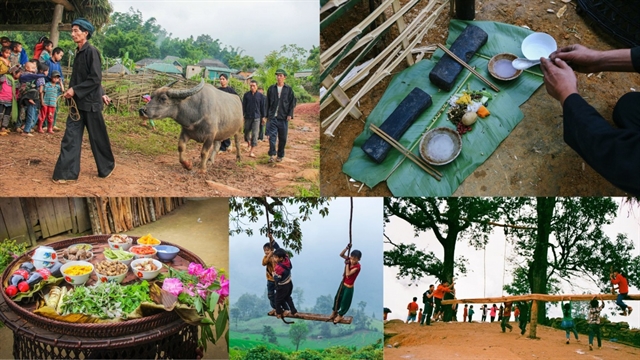 |
| The sacrificial buffalo at the Khô Già Già festival and the festival's folk games. — Photo thoibaonganhang.vn |
Keeping the village intact
For Choản Thèn, development comes with a clear challenge: how to attract more visitors without losing the character that draws them there in the first place.
The village’s relatively untouched landscape is one of its main advantages. Like many highland destinations, however, it could face pressure from construction and uncontrolled tourism as visitor numbers grow.
A community-based approach could help maintain a balance.
Local residents can remain at the centre of tourism services, while the village’s landscape, architecture and Hà Nhì culture form the basis of tourism products. Visitors can stay in traditional houses, explore the terraced fields, learn about local food and handicrafts, and experience festivals and community activities.
Choản Thèn can also be linked with other attractions in Y Tý to create longer itineraries, combining cloud hunting, terrace field photography, village walks and cultural experiences.
The village does not need large-scale development to attract visitors. Its appeal lies in the old houses, mountain landscape and everyday life of the Hà Nhì community. — VNS
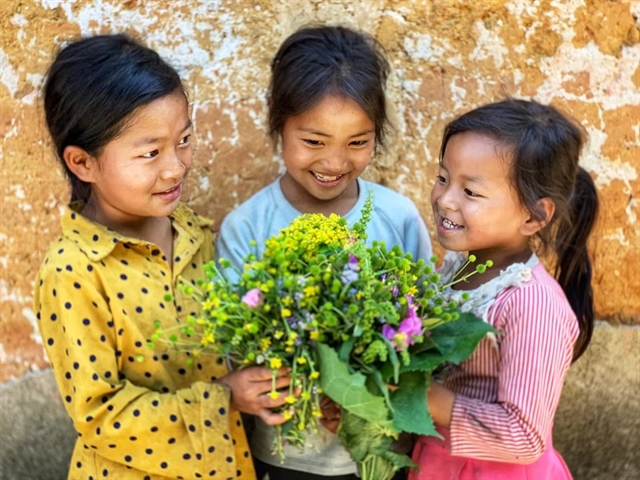 |
| Hà Nhì children in Choản Thèn Village. — VNA/VNS Photo |
Travel Information:
Getting there: Choản Thèn is about 370km from Hà Nội, depending on the route. The journey passes through winding mountain roads and offers views of the rugged and scenic landscapes of the northwestern highlands. Visitors can travel by coach or train to the nearby city of Lào Cai.
Things to do: Go cloud hunting, trek through the mountains and explore the surrounding landscape. Visitors can also see the Y Tý weekly market, held every Saturday, to buy local produce and experience the daily life of ethnic community members.
Local food: Hà Nhì cuisine includes thắng cố, a traditional dish made from horse meat, offal and spices such as cardamom, mắc khén, ginger and lemongrass. Other local dishes include charcoal-grilled black chicken, stir-fried forest bamboo shoots and black bánh chưng (Vietnamese square sticky rice cake).
Drinks: Corn wine is a popular local drink. Visitors can also try the traditional Hà Nhì rice drink, made from glutinous rice through a lengthy fermentation process. It is traditionally served when welcoming guests and during festivals and Tết celebrations. — VNS
Travel
 Travel
 Travel
 Travel
 Travel
 Travel
 Travel
 Travel
 Travel
 Travel
 Travel
 Travel
 Travel
 Travel
 Travel