 Travel

Việt Nam, Switzerland to turn education, sci-tech, innovation into cooperation focus
1.
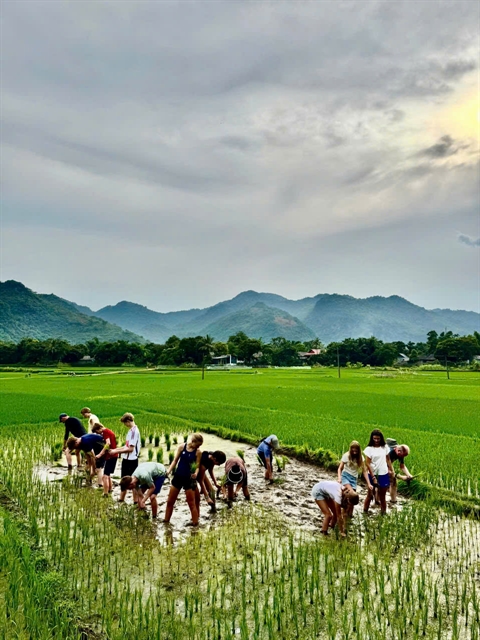 |
| Visitors are given the chance to take part in rice farming activities when they travel to Mường Cốc Village in Mỹ Đức Commune, Hà Nội. — Photos courtesy of Lê Hải Yến |
Thanh Hà
HÀ NỘI — I didn't come to Mường Cốc as a visitor. I came to experience a whole different way of living for a day, stepping into the shoes of a farmer in a Mường ethnic minority community.
Located 60km from the centre of Hà Nội, Mường Cốc in Mỹ Đức Commune is known for its 'miniature Northwest' landscape, featuring green valleys and mountains, and peaceful villages.
It is distinguished by the preservation of the Mường people's traditional way of life, gong culture and indigenous knowledge.
I booked a tour called Một Ngày Làm Người Mường (A Day as a Mường Person) with Gió Núi Farmstay who promised to introduce to me many things that I hadn't done before.
After more than an hour's drive, I reached the farm and joined a large group of visitors. We were warmly welcome by the host and many neighbours with cups of herbal tea, kept warm in a rustic bamboo tube, and served with fresh fruits.
Guests learned about traditional tea ingredients and brewing methods while gaining rich insights into daily life, language and the Mường culture, one of Việt Nam’s most enduring ethnic traditions deeply rooted in ancient history.
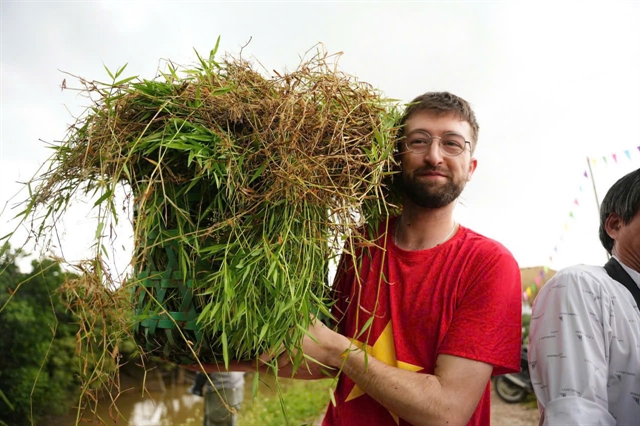 |
| A foreign guest shows off his work on the farm. |
My day began at the lotus pond while other visitors chose to pick fruits in the garden. After a briefing about our 'new jobs', we were all excited to jump in the the water, getting wet but enjoying fragrance from the lotus.
We joined a farmer to cut and harvest the flowers, then brought them back to the farm to help shell and dry the lotus seeds, remove any germs and cook sweet lotus seed soup.
Meanwhile the other group returned laden with fruit they had picked from the garden.
Lê Hải Yến, owner of the farm, told me when the lotus season ended, the 'amateur farmers' would head to the fields to plant or harvest crops.
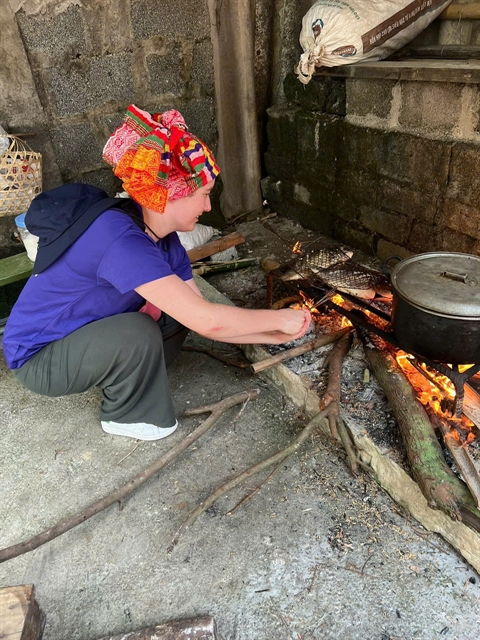 |
| Cooking time is part of the tour. |
The next activity was a cookery class. Under the guidance of an elderly female chef, we were taught how to make the authentic Mường dish of pickled wild bamboo shoots with chili.
She taught us everything we needed to know from how and where to collect the bamboo, the ingredients needed and the perfect ratio of seasonings for the sweet-and-sour pickle brine so we could take the knowledge home and prepare the meal for our families.
We learned how to steam the black glutinous rice and bamboo-tube rice and also taught the technique of clamping fish or chicken between bamboo sticks for grilling over hot coals until golden and crispy.
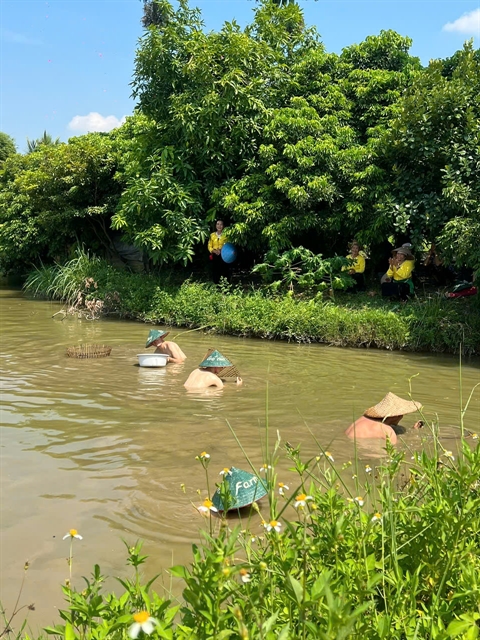 |
| Visitors gather crabs and snails, one of daily tasks of local farrmers. |
Other guests learned how to make the signature dipping sauce for porridge after they collected clams and snails from the pond.
Then we tried our hand at wrapping Mường Cốc banana cakes. These rustic cakes looked great and offered a natural sweetness.
Hard work and careful cooking paid off as we created a fantastic lunch. On top of the dishes we prepared ourselves, the farm treated us to an incredible local feast.
It was more than just food; it was an integral part of Mường culture, where dishes were crafted from local produce. The way they are enjoyed is deeply rooted in domestic traditions and the story behind each dish has been passed down through generations.
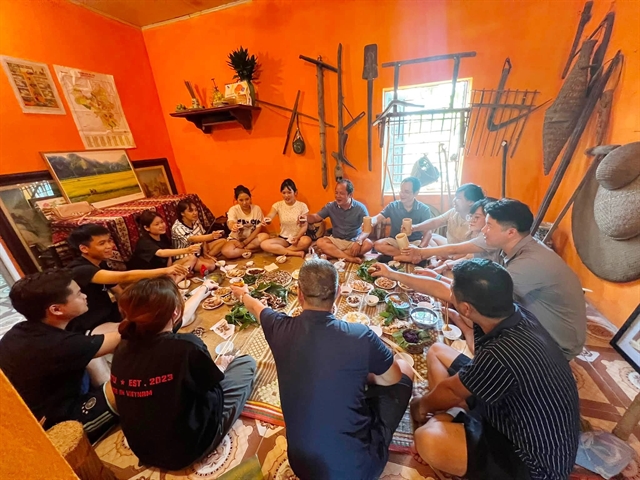 |
| A Mường feast served to visitors in Mường Cốc after a day of hard work. |
I really, really enjoyed the meal and believed that it was one of the best I have ever tasted.
After lunch, we were brought back to the garden where we learned about, and harvested, fresh medicinal herbs, which are used as ingredients to make traditional Mường remedies. We learned how to prepare, dry and boil the herbs to make tea and medicine.
The short course concluded with a herbal foot soak, a chance to fully restore our energy while relaxing in a wooden tub filled with herbs, next to a lotus pond.
Later on, it was time for a cultural exchange. Guests took part in an introductory Mường language session, learning basic phrases and how to greet one another.
Traditional and beautiful attire of the Mường people were also available to wear. A skirt with an intricately woven waistband and a distinctive short blouse allowed all the female guests to become authentic Mường women.
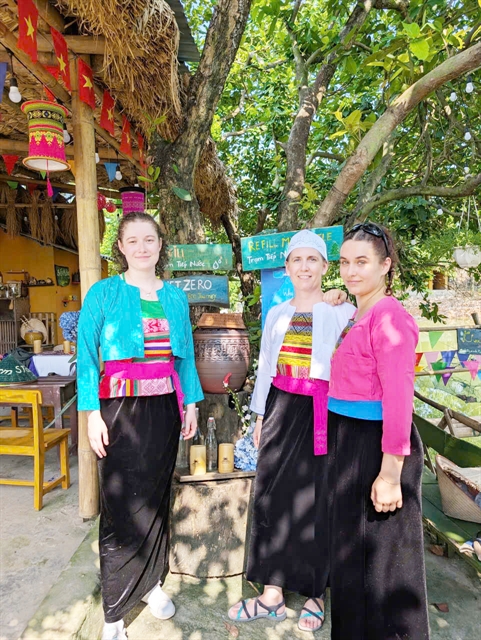 |
| Guests in traditional Mường clothing.. |
The afternoon session began with a traditional music show by artisans who lived near the farm.
Guests were invited to join the performance by playing gongs and dancing with the troupe while enjoying traditional rượu cần (gong-style jar wine) – a symbol of the locals' sense of connection and hospitality.
A bonfire was then lit and the hosts presented afternoon tea for guests. It was time for people to review their hard-working day and fond memories.
Every guest was given the wild bamboo tube they had crafted earlier in the day, a delightful surprise that sent everyone home with warm hearts and big smiles.
Yến told me that we had just scratched the surface of the many activities carried out in the village, which gave me the perfect excuse to return.
On my agenda when I come back will be mountain trekking and cycling along nature-immersed routes, joining folk games and experiencing sacred folk rituals performed during occasions such as prayers for good health and new rice celebrations.
Another chance to enrich my cultural knowledge. — VNS
Travel
 Travel
 Travel
 Travel
 Travel
 Travel
 Travel
 Travel
 Travel
 Travel
 Travel
 Travel
 Travel
 Travel
 Travel