 Society

Việt Nam, EU and Belgium seek deeper, practical cooperation
1.
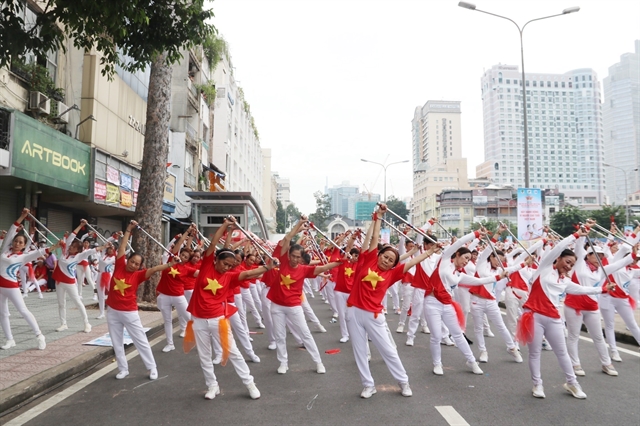 |
| Elderly residents practise traditional health exercises along a pedestrian street in HCM City. — VNA/VNS Photo |
HÀ NỘI — More than a fifth of Vietnamese adults do not get enough physical activity, the Ministry of Health said in newly issued national guidelines to curb the rise in sedentary lifestyles and associated chronic diseases.
According to the ministry's 2021 national survey on risk factors for non-communicable diseases, 22.2 per cent of adults in Việt Nam fail to meet recommended activity levels, with women (28.3 per cent) far more likely than men (16.1 per cent) to fall short.
The survey also found that 15.6 per cent of adults are overweight or obese, a figure that rises to 21.3 per cent in urban areas compared with 12.6 per cent in the countryside.
The findings prompted the ministry to publish a new handbook, 'Guidelines on Physical Activity for Public Health,' intended to educate the public and to serve as a reference for community health workers, schools and employers seeking to promote exercise.
The document outlines the health case for regular movement, recommended activity levels by age group, safety precautions and guidance for organisations on promoting exercise within communities and workplaces.
Officials say regular physical activity helps stave off some of the leading causes of death and illness, including cardiovascular disease, type 2 diabetes, certain cancers and chronic obstructive pulmonary disease, while also easing metabolic disorders.
Beyond physical health, the ministry noted that staying active reduces the risk of mental health problems, sharpens cognitive function and memory, and slows age-related decline among older adults.
The guidelines define physical activity broadly, encompassing structured exercise, organised sport, and everyday movement such as walking to work, cycling to school, household chores and manual labour.
For infants under one year old, the ministry recommends at least 30 minutes of daily movement, such as tummy time, crawling and practising steps.
Toddlers aged one to three should be active for a minimum of 180 minutes a day through indoor and outdoor play, and screen time is discouraged entirely for one-year-olds, while two- and three-year-olds should be limited to no more than an hour a day – less if possible.
The guidelines encourage caregivers to swap screen time for reading, storytelling and interactive play.
Children aged three to five should also get at least 180 minutes of daily activity, including a minimum of 60 minutes at moderate-to-vigorous intensity, alongside limits on prolonged sitting and screen use.
School-age children and teenagers between five and 17 are advised to have at least 60 minutes of moderate-to-vigorous activity every day of the week, with vigorous exercise, such as running or competitive sports, at least three times weekly to strengthen bones and muscles.
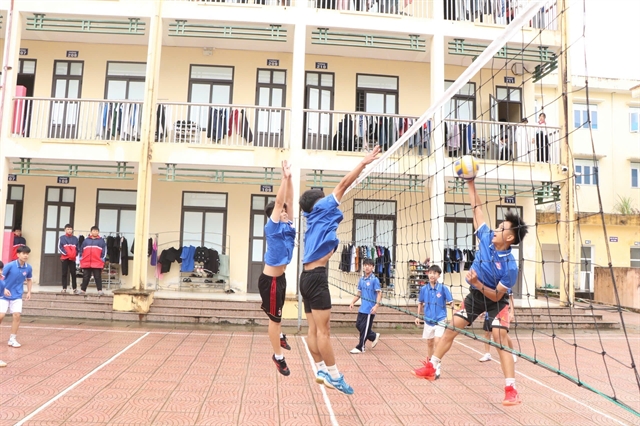 |
| High school students in the northern province of Phú Thọ unwind with a game of volleyball after school. — VNA/VNS Photo |
Suggested activities include brisk walking, swimming, cycling, football, volleyball and traditional games, and the ministry specifically encourages students to walk or bike to school rather than rely on motorised transport.
For adults aged 18 to 59, the ministry cites strong evidence that regular exercise lowers overall mortality, particularly from heart disease, while reducing the risk of hypertension, cancer, type 2 diabetes and excess body fat, and improving sleep, anxiety and depressive symptoms.
This group should aim to be active on at least five days a week, totaling 150 to 300 minutes of moderate-intensity exercise or 75 to 150 minutes of vigorous activity, or an equivalent combination of both.
The guidelines also call for at least two weekly sessions of strength training targeting major muscle groups, noting that additional activity beyond these minimums brings further health benefits.
Across all age groups, the ministry urged people to cut down on sedentary time and replace it with movement of any intensity.
The ministry also cautioned that anyone experiencing significant fatigue, shortness of breath, dizziness or chest pain during exercise should stop immediately and rest.
For young children, the guidelines stress that physical activity should always be supervised by an adult in a safe, clean environment free of injury risks. — VNS
Society
 Society
 Society
 Society
 Society
 Society
 Society
 Society
 Society
 Society
 Society
 Society
 Society
 Society
 Society