 Features
Data centre market faces energy challenges
1.
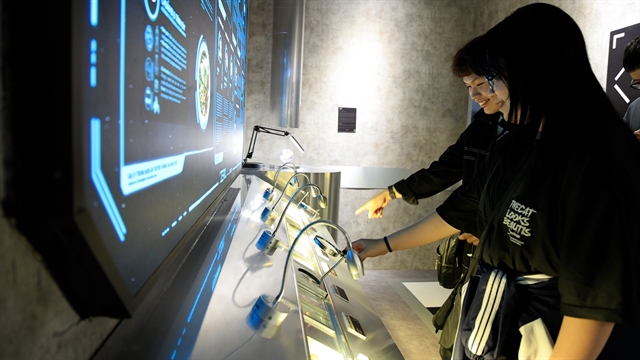 |
| A range of spices used in 'phở' can be explored at the museum through interactive displays. — VNS Photo Hải Anh |
Lê Hương*
Step into a spaceship in the heart of Hà Nội, and the journey may begin not with a distant planet, but with a familiar bowl of phở.
At a newly opened museum in downtown Hà Nội, visitors are invited to explore the spices and ingredients behind one of Việt Nam’s best-known dishes through sight, smell, touch and sound.
Shaped like a futuristic spacecraft, the museum uses a combination of digital technology, physical interaction and sensory experiences to tell stories about Vietnamese spices and culinary traditions.
Rather than presenting spices simply as objects to be viewed, the space encourages visitors to interact with them and discover how they are grown, processed and used in Vietnamese cooking.
“What would happen if, far in the future, Vietnamese people travelled to another universe and wanted to preserve their culinary culture, their cooking traditions and spices?” said Nguyễn Tiến Thịnh, head of marketing at Zero Gallery.
“And what would a Vietnamese spaceship look like at that time? What kinds of rooms and compartments would it have?”
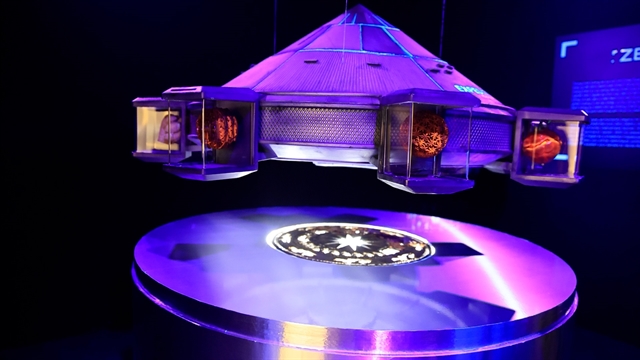 |
| Familiar 'phở' spices take on a futuristic setting inside the spaceship-themed museum. — VNS Photo Hải Anh |
Information about Vietnamese spices has been incorporated into different rooms and compartments designed around the imagined spacecraft, including a research room, an energy room, a signal transmission room and the ship’s core.
Each space uses different senses and forms of interaction to tell its part of the story. The idea, according to Thịnh, was to tell a story about Vietnamese culture in an accessible way rather than through a highly academic approach.
“We want to tell everyday stories, but not in a way that is too academic,” he said.
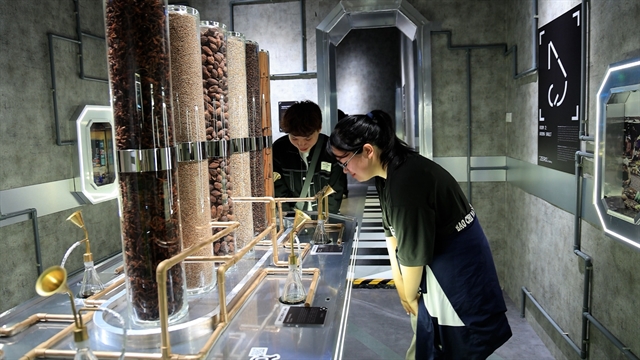 |
| Visitors experience the aromas of different spices. VNS Photo Hải Anh |
Sensory journey
The approach also reflects an effort to bring young visitors closer to cultural heritage through technologies with which they are already familiar.
Inside the museum, touchscreens provide information about spices, including three-dimensional images that visitors can view from different angles. The digital displays allow them to explore additional information about individual ingredients.
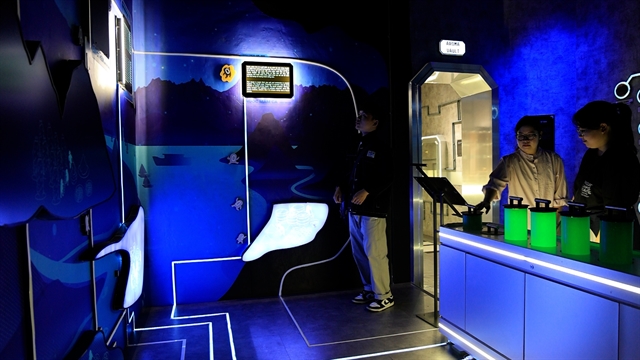 |
| The energy room combines physical interaction with digital technology to bring the story of Vietnamese spices to life. — VNS Photo Hải Anh |
Physical interaction is also incorporated into the experience. In the energy room, for example, visitors can press down on an energy bar while interacting with a computer. The action activates lights representing areas where spices are grown, creating a physical connection between the visitor and the information being presented.
Digital technology and physical mechanisms are combined throughout the space, creating an environment that visitors can explore rather than simply observe. One of the technologies used is 3D mapping, alongside what Zero Gallery describes as dynamic projection.
“We are pioneers in bringing dynamic projection technology to Việt Nam,” Thịnh said.
Unlike conventional 3D mapping, in which visuals are projected across an entire wall, the system used at the museum can create effects on different sections of a wall by rotating the head of a single projector. “This eliminates the need to install multiple projectors,” he added.
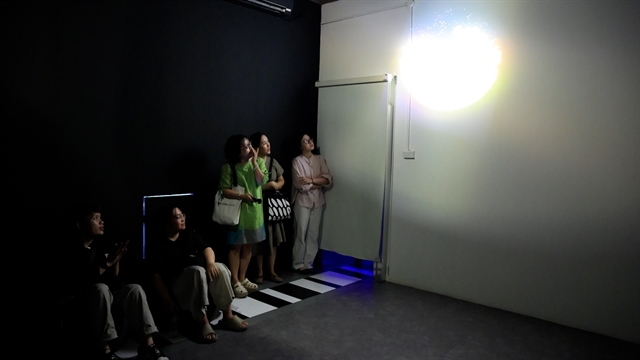 |
| A 3D mapping show transforms the museum walls into a changing visual environment. — VNS Photo Hải Anh |
The result is a changing visual environment in which projections become part of the physical space.
For visitors, however, the technology is only one part of the experience.
Lê Trường Phước said the museum offered a different way of discovering phở and its ingredients.
“I find the museum very visually engaging. Every time I enter a new room, I feel like I’m having a completely new experience,” he said. “Here, I can explore how it is prepared, look at each ingredient and learn to identify different aromas and spices.”
The sensory elements extend beyond sight and smell. For Phước, sound is one of the most distinctive features of the museum.
“If I had to point out one special feature, it would be the sounds,” he said. “Visually, the museum is already amazing, but I can also hear very authentic sounds connected to everyday life, which makes the experience much more vivid.”
The ability to interact with the exhibits and hear sounds associated with different stages of preparing and enjoying food added another layer to the experience, he said.
Beyond the bowl
For another visitor, Dương Quỳnh Anh, the museum offered a chance to look beyond the finished dish and discover the work behind its ingredients.
“I feel that each spice requires a great deal of care and effort to cultivate and process,” she said. “I can see the dedication of Vietnamese farmers in producing these ingredients.”
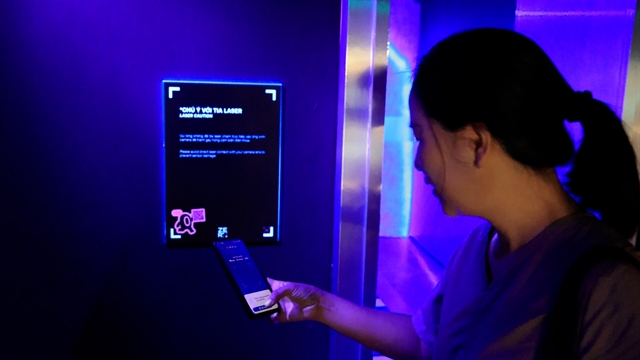 |
| QR codes allow visitors to use their smartphones to learn more about individual exhibits. — VNS Photo Hải Anh |
That discovery is also part of what Zero Gallery hopes the project will encourage. Although Vietnamese cuisine is increasingly familiar to international audiences, Thịnh said even Vietnamese visitors might not know all the spices used across the country.
“There are some spices that I only heard about while researching this project,” he said, noting that ingredients commonly used in one region may be unfamiliar to people from another.
The museum therefore aims to appeal not only to foreign visitors interested in Vietnamese culture, but also to Vietnamese people who want to discover more about their own culinary heritage.
“Young people have been exposed to technology from an early age,” he said. “When they see technology incorporated into cultural experiences, they can approach that culture more easily than by simply looking at traditional exhibits, which can sometimes feel a little dry.”
At 15B Trần Hưng Đạo Street of Cửa Nam Ward of Hà Nội, the imagined spacecraft is a collection of aromas, flavours, farming traditions and culinary practices that often disappear into a finished bowl of food.
By turning those ingredients into an interactive journey, the museum offers visitors a chance to pause before the first spoonful of phở and consider what lies behind its familiar taste. VNS
*With additional interview by Hải Anh
Features
 Features
 Features
 Features
 Features
 Features
 Features
 Features
 Features
 Features
 Features
 Features
 Features
.jpg) Features
Features
 Features