 Features
Green transformation boosts sustainable growth
1.
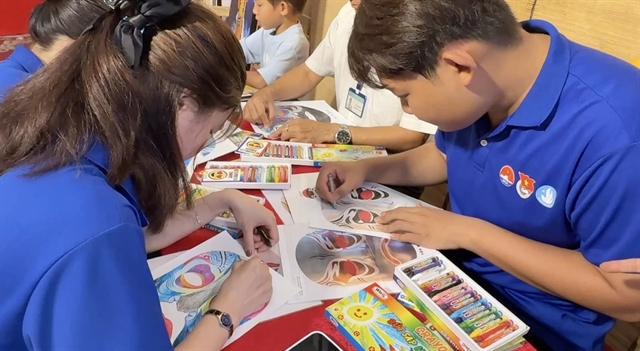 |
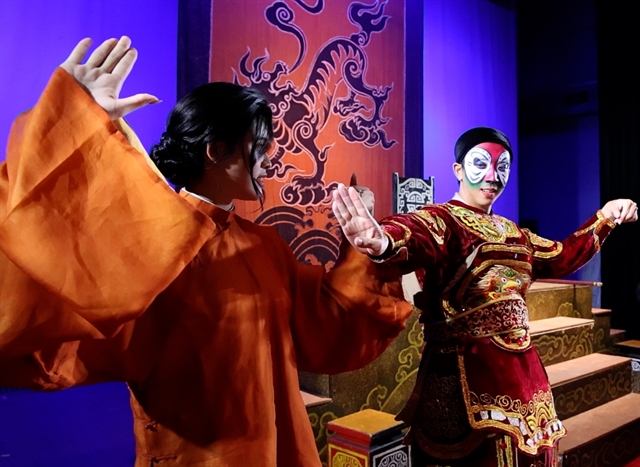
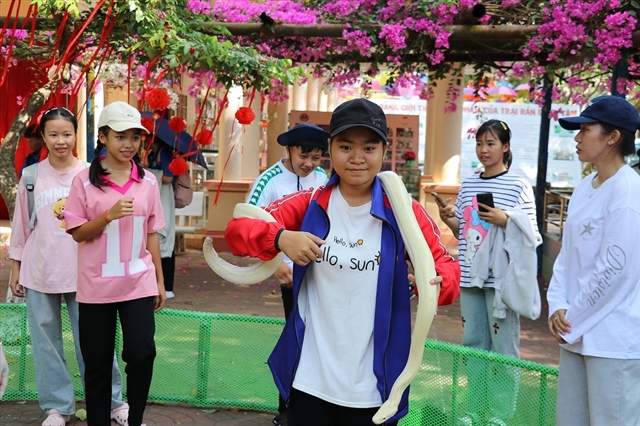
| Young visitors explore the traditional art of 'hát bội' through interactive activities at the programme 'Touching Heritage: When Technology Revives Urban Memory'. — VNA/VNS Photo |
HCM CITY — From interactive encounters with artists to beautifully crafted books and digitally revived heritage, Việt Nam’s cultural sector is finding new ways to bring the past into the present – and invite audiences, especially younger generations, to experience culture rather than simply observe it.
From immersive educational programmes and direct dialogue between creators and audiences to artfully produced book editions and digitally enhanced heritage spaces, innovative initiatives are bringing culture closer to everyday life.
These efforts are particularly engaging younger generations while opening up new ways for cultural values to flourish in contemporary society.
The rapid advancement of digital technology, coupled with changing audience expectations, is reshaping the way cultural activities are organised.
Active engagement
Alongside conventional exhibitions, displays and seminars, many organisations are designing interactive experiences that encourage visitors to participate, engage in dialogue and explore culture firsthand.
As a result, cultural appreciation is evolving from passive observation into an active journey of discovery, allowing audiences to connect not only with artistic works but also with their creators and the stories behind them.
This shift was reflected in the Việt Nam–South Korea cultural exchange programme, From Literature to Cinema, held at Văn Lang University.
Organised by the university's Faculty of Korean Language and Culture in collaboration with writers, poets and translators from the HCM City Writers Association, the event was designed as an experiential learning programme rather than a conventional literary discussion.
By integrating language learning with literature, cinema and cultural exchange, the programme enabled students to meet Vietnamese and Korean authors in person and gain deeper insight into the process of adapting literary works for the screen.
According to writer Trịnh Bích Ngân, chairwoman of the HCM City Writers Association, literature and cinema complement one another.
While literature nurtures reflection and explores the depths of human emotion, cinema transforms stories into visual and auditory experiences that transcend language barriers and reach much wider audiences.
She added that, as HCM City strengthens its role as a UNESCO Creative City of Film, closer collaboration between literature and cinema would expand the city's creative ecosystem while deepening cultural exchanges between Việt Nam and South Korea.
From a writer's perspective, South Korean novelist Kim Ae-ran said adaptation should not be viewed as a reproduction of the original work but as a new creative journey.
Speaking about the film adaptation of her novel My Brilliant Life, she noted that the film broadened the story by placing greater emphasis on family relationships and the protagonist's coming-of-age journey, rather than simply recreating the novel scene by scene.
Each artistic medium would have its own language, Kim said, adding that authors should respect directors' creative interpretation so that films can stand as independent artistic works.
Poet and screenwriter Hạnh Ngộ shared a similar view, saying the value of adaptation lies in allowing stories to continue living through a different artistic medium.
Although artificial intelligence is advancing rapidly, she believes that lived experience, human emotion and the unique perspective of writers remain irreplaceable qualities that technology cannot replicate.
For Trịnh Thanh Thảo, a third-year student at Văn Lang University's Faculty of Korean Language and Culture, meeting authors face-to-face made learning far more engaging than studying from textbooks alone.
The experience also provided valuable opportunities to practise language skills, gain a deeper understanding of Korean culture and spark creative inspiration.
Such programmes also broaden career prospects in language education, translation, literature and the cultural industries.
Rethinking reading
While experiential learning programmes are helping young people connect more deeply with literature through interaction and dialogue, publishers are also reimagining the reading experience.
Rather than simply producing books for reading, publishers are increasingly investing in editions that combine scholarly value, artistic craftsmanship and collectability, transforming books into cultural artefacts that preserve both knowledge and artistic excellence.
One example is the collaboration between Fahasa and Đông A Company to release eight special editions of four literary classics: The Godfather, The Tale of Kiều, Lục Vân Tiên and How the Steel Was Tempered. The collection comprises four limited editions and four deluxe editions.
Each publication has been meticulously developed, from editorial work and textual verification to illustration, design and bookbinding, appealing to both readers and collectors.
According to Fahasa Deputy General Director Phạm Thị Hóa, the partnership with Đông A aims not only to produce beautifully crafted books but also to honour literary classics and the art of bookmaking.
She said that investing in both content and presentation would enrich the reading experience, foster a love of books, preserve reading culture and showcase the artistic value of publishing.
Trần Đại Thắng, director of Đông A Company, said each edition required years of preparation, covering editing, illustration and production.
Only 500 copies of each limited edition and 1,000 copies of each deluxe edition had been published.
The goal, he said, was not merely to create collectible books but also to reintroduce literary classics to contemporary readers in a fresh format, allowing them to experience literary heritage through works of both aesthetic and cultural significance.
Book collector Lưu Ngọc Sơn believes the value of a special edition lies not only in its rarity or visual appeal but also in the cultural and scholarly depth embodied in every detail.
A carefully produced volume, he said, reflected the achievements of publishing while serving as a lasting record of each stage in the development of reading culture.
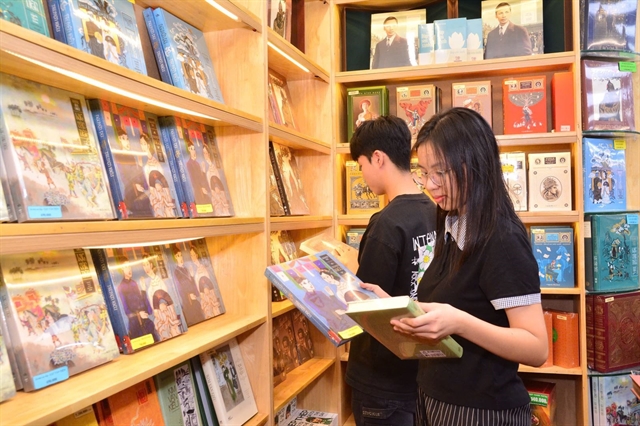 |
| Young readers browse the special editions of literary classics 'The Tale of Kiều' and 'Lục Vân Tiên', recently launched by Fahasa and Đông A publishers. — VNA/VNS Photo |
Digital heritage
The audience-centred approach is also reshaping heritage conservation and promotion.
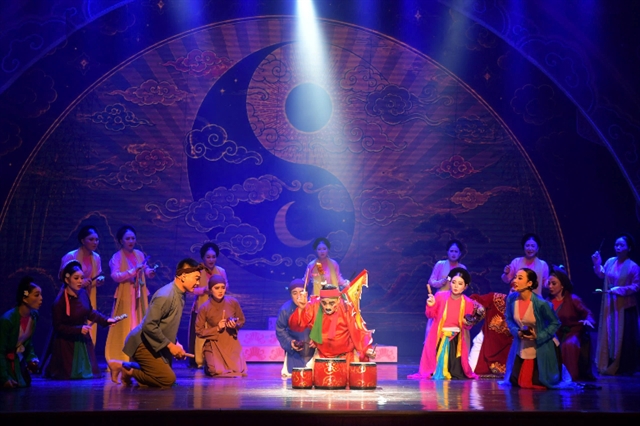
At the programme Touching Heritage: When Technology Revives Urban Memory, jointly organised by the HCM City Communist Party Committee's Commission for Publicity, Education and Mass Mobilisation and Tôn Đức Thắng Museum, visitors experienced museums, theatres and historical sites through digital platforms.
They also explored audiobooks, traditional craft villages and handicrafts, tried on traditional costumes and enjoyed performances of đờn ca tài tử, a southern traditional form of amateur chamber music, within the museum itself.
A highlight of the programme was a series of workshops showcasing technology-driven heritage preservation.
During a workshop on restoring cải lương (reformed drama) films, Lê Phước Hiếu Trung, deputy director of TMS–HTV Company, demonstrated how artificial intelligence was being used to restore, enhance and colourise archival footage.
"AI does not replace the authenticity of cultural heritage. Instead, it extends the lifespan of historical archives and makes valuable materials more accessible to the public, particularly younger generations," he said.
Another workshop on museum digitalisation introduced 3D technologies that enable visitors to interact with artefacts and heritage spaces, expanding public access while encouraging people to explore heritage in both digital and physical environments.
From experiential education and innovative publishing to digitally enhanced heritage preservation, many cultural initiatives now share a common goal: shifting from simply delivering information to creating meaningful experiences for audiences.
The trend aligns with Việt Nam's strategy for developing its cultural industries, ensuring that traditional values are not only preserved but continually revitalised through creativity and technology, allowing them to remain relevant in contemporary life while contributing to sustainable development. — VNS
Features
 Features
 Features
 Features
 Features
 Features
 Features
 Features
 Features
.jpg) Features
Features
 Features
 Features
 Features
 Features
 Features