 Features
Weaving the unique heritage of the Thu Lao
1.
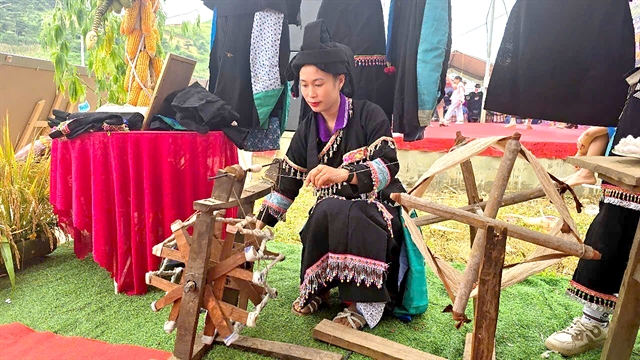 |
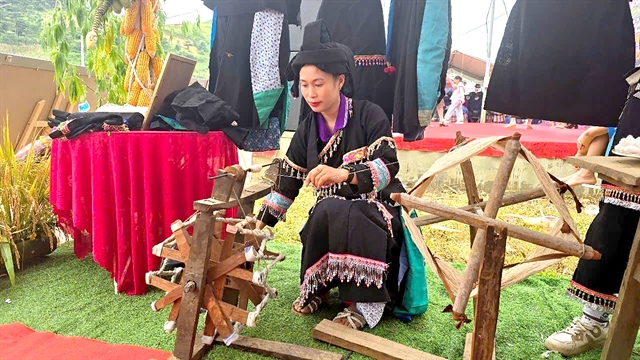
| A Thu Lao woman demonstrates traditional weaving at the 'Sín Chéng Golden Season – Echoes of the Khèn' festival held in August. — VNA/VNS Photo Hương Thu |
Each autumn, the front yards of ethnic Thu Lao homes in Sín Chéng Commune in the northern province of Lào Cai come alive with activity as women gather to turn cotton into thread and fabric to make traditional clothing for Lunar New Year.
From cotton grown on the hillsides, local women use a painstaking series of traditional handcrafting techniques to create durable indigo-dyed fabric and distinctive garments.
The Thu Lao live exclusively in Lào Cai, mainly in the upper reaches of the Chảy River, including Mường Khương, Pha Long and Sín Chéng.
The Thu Lao population in Sín Chéng numbers just over 1,000, yet almost every woman there knows how to weave and takes pride in preserving the traditional craft of her ethnic community.
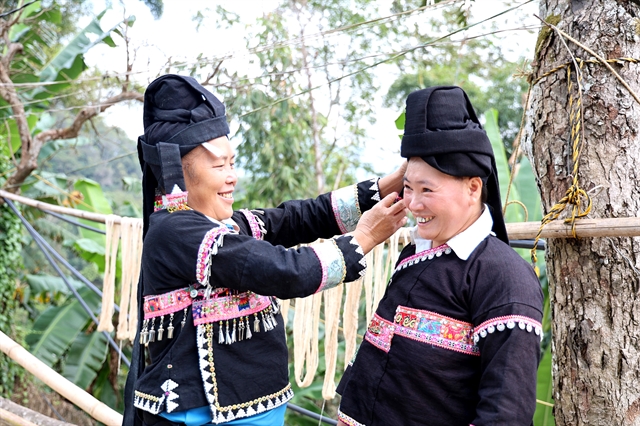 |
| Thu Lao women in their traditional attire. Behind every traditional Thu Lao outfit lies a painstaking process of craftsmanship, requiring patience, skill and meticulous attention to detail.— Photo baolaocai.vn |
Thu Lao women begin learning to weave at a young age under the guidance of their mothers, grandmothers and older sisters.
Behind every traditional Thu Lao outfit lies a painstaking process of craftsmanship, requiring patience, skill and meticulous attention to detail.
They typically plant cotton around February, after Lunar New Year. When the cotton bolls ripen in August or September, they are picked and dried before the villagers wait for the agricultural off-season to begin processing the fibre.
After harvesting rice and maize, usually in October and November, Thu Lao women begin processing the cotton by removing the seeds, fluffing and loosening the fibre and rolling it into long strands.
The fibres are then joined and spun into thread, which is wound onto bobbins for use in the shuttle.
The work may seem repetitive, but it requires considerable experience and skill.
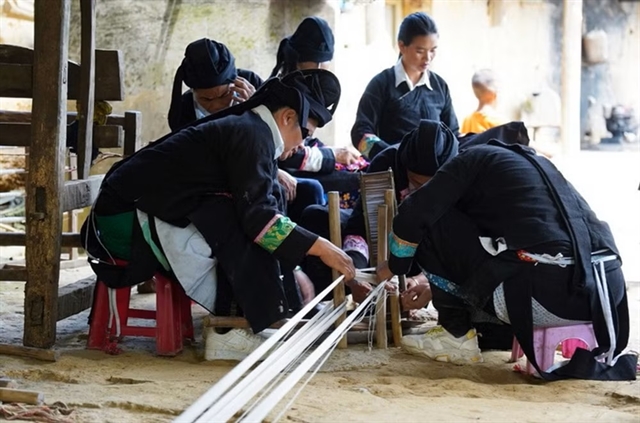 |
| Thu Lao women begin learning to weave at a young age under the guidance of their mothers, grandmothers and older sisters. — Photo baolaocai.vn |
The day for spinning thread is also carefully chosen. The Thu Lao believe that spinning should be done on a sunny day, avoiding rainy weather, so that the process goes smoothly, the thread remains strong and is easier to set up on the loom.
Once the yarn is ready, the women begin weaving. After the fabric is woven, it is dyed with indigo before being cut and sewn into skirts, shirts, scarves and other essential items.
After numerous labour-intensive processes, the black indigo-dyed fabric that emerges is simple in appearance, yet strong and durable.
Spiritual values
Traditional Thu Lao attire is dominated by black indigo, creating a subdued and simple yet distinctive appearance.
Against the dark indigo background, patterns, motifs and contrasting pieces of fabric are arranged along the ends of headscarves, waistbands, sleeve cuffs and sashes.
The women’s skirts are made from a piece of black indigo-dyed fabric roughly an arm’s length wide and long enough to reach just above the ankles.
The waistband, about 10cm wide, is made from the same material and colour, while a contrasting piece of fabric, about 15cm wide, is sewn onto the inner side of the hem.
A traditional Thu Lao woman’s outfit is also incomplete without leg wraps. Triangular in shape, the wraps are made from black indigo-dyed cotton fabric, measuring about 8–12cm wide at one end and just 1–2cm at the other, with the narrower end attached to a fabric tie measuring 45–60cm long.
Local resident Tráng Thị Thương explained that the leg wraps are worn around the calves to keep them slim and shapely.
"They also prevent the calves from swelling or the muscles from being strained while walking or climbing mountains, while protecting the legs from scratches caused by thorns, insects and snake bites,” she said.
According to her, traditional textiles serve purposes beyond clothing. Woven items are associated with important milestones throughout a person’s life, from nappies, baby carriers and caps for newborns to wedding attire, funeral garments and items used in rituals.
A distinctive feature of Thu Lao weaving is its close connection with the agricultural cycle. Only after completing their farm work do the women have time to sit at the loom.
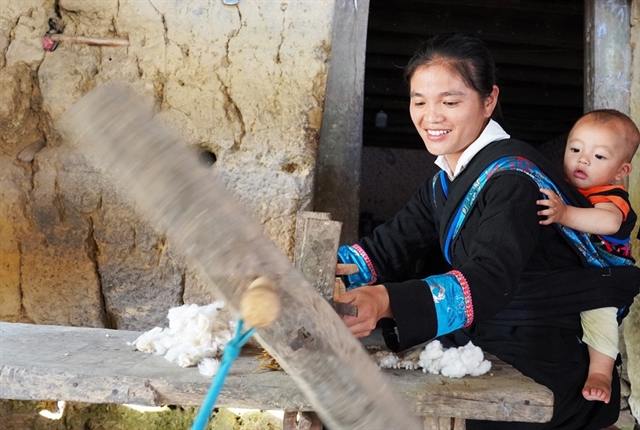 |
| A young Thu Lao mother spins cotton into yarn for weaving. The Thu Lao believe that spinning should be done on a sunny day so that the process goes smoothly. — Photo baolaocai.vn |
"Although weaving is labour- and time-intensive, almost every family has a small plot of land where they grow cotton. When the food crop season ends, the women turn their hands to spinning thread, weaving fabric and making traditional garments," Lìu Xuân Thương, head of Sán Trá Village, said.
Today, middle-aged and elderly Thu Lao women in many villages still wear traditional attire in their daily lives. Men wear it less frequently, but most families still keep at least one traditional outfit for important occasions.
Tourism potential
The traditional weaving craft of the Thu Lao in Lào Cai was recognised as National Intangible Cultural Heritage in early 2024, opening up new opportunities for the community to preserve and promote a traditional craft that has been part of Thu Lao life for generations.
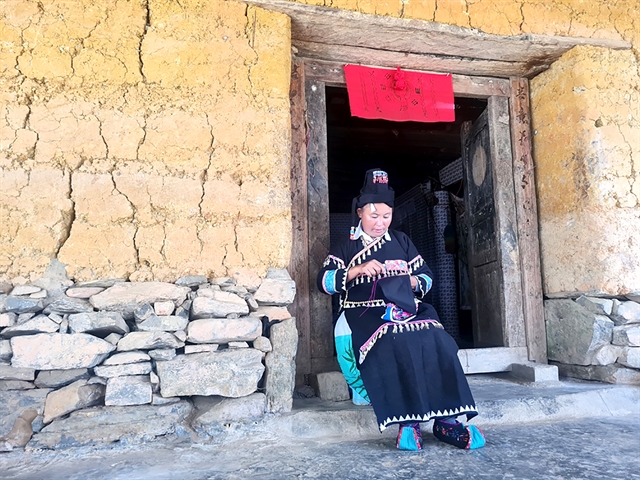 |
| The traditional handloom weaving craft of the Thu Lao in Lào Cai was recognised as National Intangible Cultural Heritage in 2024. — Photo courtesy of baochinhphu.vn |
"The recognition has not only made it easier to encourage Thu Lao people to preserve and promote their distinctive cultural values, but has also fostered a sense of ethnic pride and appreciation for a traditional craft that has been part of their community for generations," said Viên Đình Hiệp, chairman of the Sín Chéng Commune People’s Committee.
In practice, Thu Lao weaving is gaining more opportunities to reach visitors. At the “Sín Chéng Golden Season – Echoes of the Khèn” festival held in August, which attracted more than 50,000 local people and visitors, a space was dedicated to the traditional weaving craft of the Thu Lao.
Artisans demonstrated techniques such as spinning and weaving, giving visitors an opportunity to observe and experience a traditional craft rooted in the community’s way of life.
Kiều Minh Loan, a visitor from Hải Phòng City, said she was fascinated to see cotton plants first-hand and experience harvesting cotton, removing the seeds and spinning the fibre.
“Through the experience, we have gained a deeper understanding of and appreciation of the labour involved, as well as a greater affection for the unique and distinctive culture of the people in this highland area,” she said.
In the coming years, Lào Cai plans to organise training in traditional Thu Lao garment-making and embroidery, while creating spaces where artisans and community members can practise and pass on their heritage through festivals, rituals, customs, folk arts and traditional games.
The province also aims to support community participation in education on ethnic cultural values and the training of heritage bearers and folk artisans, while linking heritage preservation with community-based tourism and production development. VNS
Features
 Features
 Features
 Features
 Features
 Features
 Features
 Features
 Features
 Features
 Features
 Features
 Features
 Features
 Features