 Features
Data centre market faces energy challenges
1.
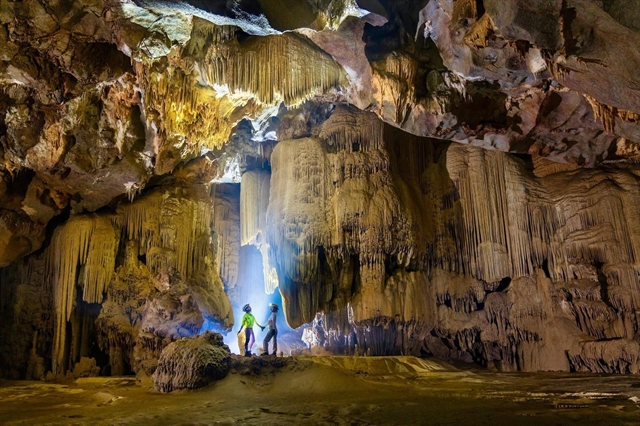 |
| Thắng (Victory) is a newly discovered cave in Phong Nha-Kẻ Bàng National Park stretching for approximately 3km and featuring extensive stalactite formations and numerous clusters of exceptionally large cave pearls. — VNA/VNS Photo |
Thanh Hà
Quảng Trị Province's Phong Nha-Kẻ Bàng National Park has received another boost to its international reputation after The Times in the UK named it among the most beautiful places in Việt Nam in 2026.
The British daily wrote in an article late August: "The green mountains of Phong Nha-Kẻ Bàng National Park look as though they’ve been lifted from Avatar.
"Boat trips into Phong Nha Cave and strolls through Paradise Cave offer a tantalising glimpse of their astonishing scale, but the real adventure lies deeper within the park, where cavers wade through underground rivers and weave among stalagmites as tall as Big Ben. Sơn Đoòng, with chambers vast enough to swallow entire city blocks, is the ultimate prize, while Hang Én and Hang Va offer similarly ethereal, but more affordable, alternatives."
This recognition reaffirms the status and reputation of Phong Nha-Kẻ Bàng, as well as Quảng Trị's broader tourism appeal at home and abroad, highlighting the province's remarkably diverse tourist assets.
Following its merger with neighbouring Quảng Bình Province last year, Quảng Trị has expanded significantly, bringing together a unique mix of assets, from coastal areas and islands to forests, cave systems, cultural heritage and revolutionary history, alongside tourism products of international standing.
Highlighting this transformation, Lê Minh Tuấn, director of the Quảng Trị Department of Culture, Sports and Tourism, noted: “The merger is a powerful integration of resources and vision, positioning tourism as a driving force behind our new regional identity.”
According to experts, by combining these vast natural and cultural advantages, few localities across the country boast such a complete convergence of forests, seas, caves, historical sites and spiritual spaces as Quảng Trị, giving the province favourable conditions to establish itself as a flagship tourist destination in central Việt Nam.
Natural powerhouse
To the east lies a coastal and island landscape featuring more than 200km of coastline, beautiful beaches and emerging seaside urban areas and resorts, alongside pristine islands such as Cồn Cỏ, Chim and Yến.
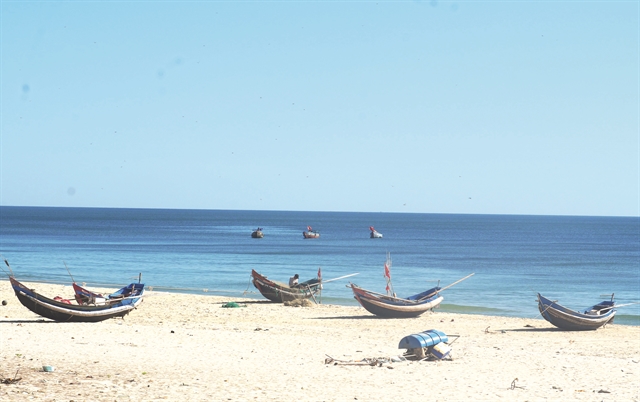 |
| Cửa Việt Beach is a peaceful stretch of coastline with soft sand, clear blue waters and lush green forests. — VNA/VNS Photo |
To the west, the province boasts forests covering more than 60 per cent of its area, limestone mountains and a magnificent cave system, most notably Phong Nha-Kẻ Bàng, a kingdom of caves spanning over 120,000ha.
The two-time UNESCO World Heritage site is home to more than 400 magnificent limestone caves, including Sơn Đoòng, the largest cave on Earth. It was picked as one of the top 10 wild places to visit in Southeast Asia in 2019 and named Việt Nam's Leading Nature Destination and Asia's Leading National Park in 2025.
In the same year, it was also named one of the world's nine most surreal, otherworldly destinations by the British travel magazine Wanderlust.
The Bắc Hướng Hóa and Đa Krông Nature Reserves feature pristine, dramatic landscapes within Việt Nam's largest continuous block of natural forest, preserving primeval lowland evergreen tropical ecosystems. These reserves provide a foundation for Quảng Trị to develop ecotourism, adventure tourism and green tourism.
Phạm Hồng Thái, director of Phong Nha-Kẻ Bàng National Park, said the area possesses outstanding universal value in terms of geology, geomorphology, biodiversity and ecological processes. Over three decades of surveys and research, local and international scientists, organisations and expeditions had helped reveal the significance of the cave system while unlocking new potential for conservation and tourism development.
Adventure capital
Leveraging its tourism resources, Quảng Trị has developed a relatively diverse range of products, including offerings with international appeal, such as expeditions to Sơn Đoòng, which attract numerous visitors every year. Tours to the cave are already fully booked until the end of 2027.
According to Nguyễn Châu Á, chairman and CEO of Oxalis Adventure, the sole company authorised to run tours into Sơn Đoòng, the company currently operates 16 cave exploration tours. Adventure and cave exploration tourism are being further developed, helping establish Quảng Trị as a leading global hub for this type of tourism.
"The adventure and ecotourism products that offer unique experiences reveal a new direction for Quảng Trị. Sơn Đoòng is a prime example. The product is not for mass exploitation but built to provide a unique experience for limited numbers of visitors, creating a sense of exclusivity and a compelling allure for travellers worldwide," he said.
Á noted that in 2025, the Phong Nha-Kẻ Bàng area and its surroundings welcomed approximately 919,000 visitors; of these, about 50,000 adventure tourists generated VNĐ180 billion (US$6.93 million) in revenue, whereas general tourists generated around VNĐ170 billion.
The potential for adventure tourism remains considerable. National Park director Thái said a British caving team explored 29 caves during a 2026 expedition and discovered 26 previously unknown caves totalling 13,640m. Some were particularly massive and scientifically valuable, providing geologists with valuable new data.
In July 2025, the Indian action-romance drama SILAA began filming in Việt Nam, with key scenes shot at Sơn Đoòng and renowned locations such as Tú Làn, Phong Nha and Tiên caves, as well as Tân Hóa, voted a Best Tourism Village in 2023 by UN Tourism.
This marked the first time a Bollywood production had been filmed at Sơn Đoòng.
With a total budget of approximately $4 million, SILAA featured a cast of renowned Indian actors and was released globally early this year in more than 1,000 theatres, reaching an estimated 8 million cinema-goers and hundreds of millions more via digital platforms, television and social media.
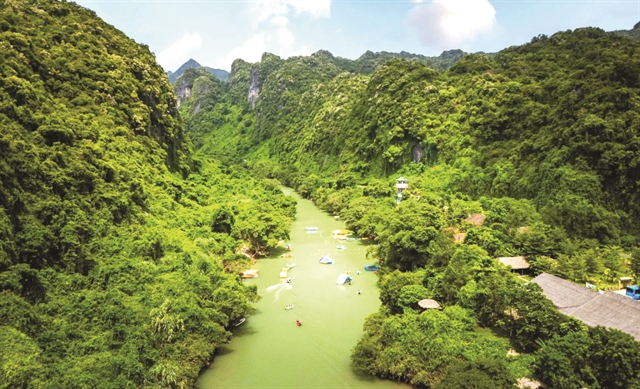 |
| Phong Nha-Kẻ Bàng is renowned for its majestic underground cave systems, ancient limestone karsts and lush primeval forests. — VNA/VNS Photo |
Indian film producer Rahul Bali, head of Innovations India, noted that SILAA acted as a cinematic bridge between global travellers and Việt Nam, a country whose breathtaking natural wonders remain relatively little known on the international stage.
Đặng Đông Hà, deputy director of the provincial Department of Culture, Sports and Tourism, told Việt Nam News the film would provide an excellent opportunity to promote Quảng Trị as a destination and showcase its images to international visitors.
Deputy Minister of Culture, Sports and Tourism Hồ An Phong said: “Bringing images of Việt Nam to Bollywood films is an effective way to inspire travel among hundreds of millions of Indian viewers."
With a middle class of over 300 million people who enjoy travelling, India represents a potential market that Việt Nam has barely tapped, according to Phong. Meanwhile, Bollywood cinema wields significant influence across South Asia, the Middle East and Africa, as well as among audiences in Europe and the Americas. With effective promotion, the film could generate a significant ripple effect for tourism in Quảng Trị and Việt Nam as a whole.
Across borders
In addition, in 2025, Phong Nha-Kẻ Bàng and Hin Nam No National Park together became the first transboundary natural World Heritage Site shared by Việt Nam and Laos.
According to Tạ Hòa Phương, PhD, president of the Việt Nam Paleontology and Stratigraphy Association, the two areas boast surreal landscapes and unique geological value.
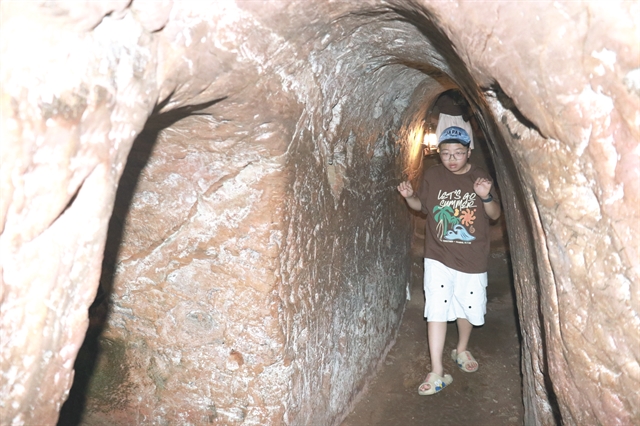 |
| The Vịnh Mốc Tunnels are a symbol of Việt Nam's wartime resilience, having served as an underground village that sheltered hundreds of people from US bombing. — VNA/VNS Photo |
They serve as a gateway connecting indigenous cultural values, ethnic minority communities and a network of historical sites along the Trường Sơn Range. Together, they offer a rare combination of magnificent nature, indigenous culture and international connectivity.
The connection could also open tourism routes linking Quảng Trị to other localities such as Savannakhet and Khammouan in Laos, gradually establishing a distinctive cross-border ecotourism and heritage corridor.
Phong Nha-Kẻ Bàng and Hin Nam No are connected through the Cà Roòng border checkpoint. If it were upgraded to an international border gate serving tourists, this would be a turning point, said Oxalis CEO Á. Cross-border tours in which visitors enter a Vietnamese cave and emerge on the Lao side would offer a special experience found nowhere else.
Remembering history
Quảng Trị’s appeal lies not only in its natural beauty but also in its rich historical heritage, which has made historical and remembrance tourism another pillar of the province's tourism sector.
The province is home to 647 heritage sites classified at various levels, including five special national relics and 69 national relics.
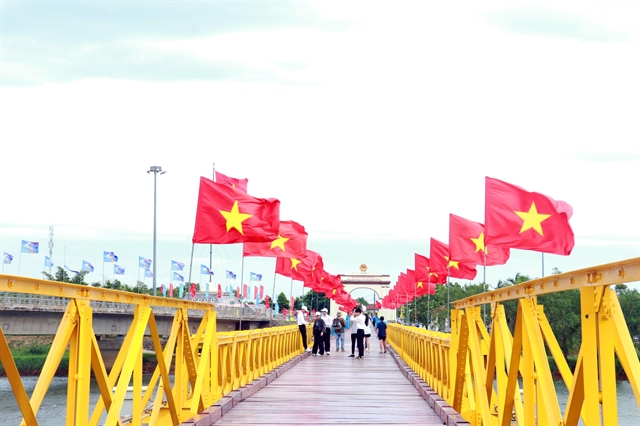 |
| The Hiền Lương-Bến Hải Banks Special National Relic Site has welcomed over 12,000 visitors in the past two months, many coming to pay tribute to those who sacrificed their lives for national liberation and reunification. — VNA/VNS Photo |
Sites such as the Vịnh Mốc Tunnels, the Hiền Lương-Bến Hải riverbanks, the DMZ, Tà Cơn Airfield and Trường Sơn and Route 9 National War Martyrs Cemeteries are places that preserve memories and stories of war, sacrifice and the yearning for peace, offering deeply moving experiences for visitors.
According to Trần Thị Phương Lan, deputy head of the Management Board of the Quảng Trị Ancient Citadel Relic Site, the province, often described as a most vivid museum of war relics, welcomes millions of tourists annually who visit former battlefields, learn about revolutionary history and pay tribute to heroic martyrs.
On War Invalids and Martyrs' Day on July 27, more than 10,000 visitors came to the citadel to offer incense, pay tribute to heroic martyrs, release floating lanterns and view thousands of shimmering candles on the Thạch Hãn River.
“When visiting Quảng Trị and the Ancient Citadel, people can witness and feel the brutality of war and come to cherish even more deeply the value of peace, independence and freedom," she said.
In the first eight months of 2026, about 8.74 million tourists visited Quảng Trị, an increase of 12 per cent from the same period the previous year.
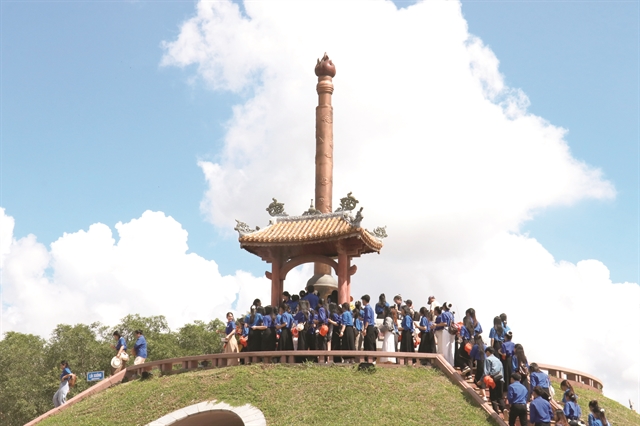 |
| Quảng Trị Ancient Citadel is a major destination for visitors around War Invalids and Martyrs' Day on July 27. — VNA/VNS Photo |
Lê Minh Tuấn, director of the provincial Department of Culture, Sports and Tourism, said that to achieve these results, the province had implemented various promotional strategies, ranging from international marketing campaigns and partnerships with major media and film companies to promote on digital platforms.
Iconic sites such as Quảng Trị Ancient Citadel, Phong Nha-Kẻ Bàng and Sơn Đoòng had featured in numerous international programmes, reaching a vast global audience.
Tourism authorities had also rolled out VR/AR and interactive technologies, hosted regular cultural, sporting and artistic events and launched multilingual media campaigns. They had also increased the frequency of press tours while integrating tourism trade fairs into their core promotional strategy.
“We are actively fostering close cooperation with other localities to develop interprovincial and cross-border tour itineraries. The top priorities are product standardisation, synchronised promotion and the establishment of a regional brand,” Tuấn said.
Under its strategy to 2030, Quảng Trị aims to position itself as a distinctive coastal resort centre in the central region, a premier tourist destination in Việt Nam and an Asian hub for adventure tourism.
“We aren't building a new Quảng Trị on paper, but creating a province capable of integrated, creative thinking. Tourism will lead the charge, awakening the potential and unleashing the aspirations of this historic land,” Tuấn said. — VNS
Features
 Features
 Features
 Features
 Features
 Features
 Features
 Features
 Features
 Features
 Features
 Features
 Features
.jpg) Features
Features
 Features