 Features

VR experience brings history to life for Hà Nội students
1.
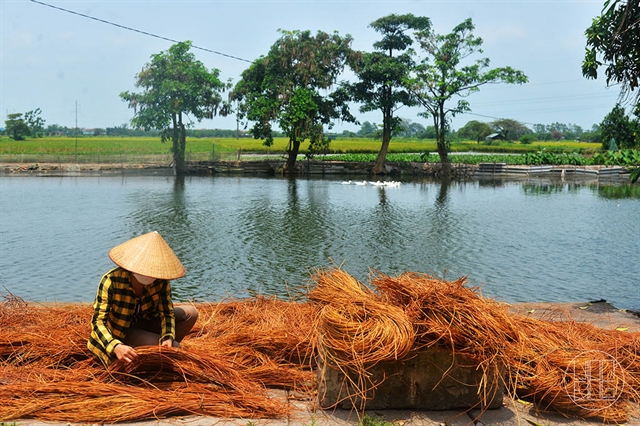 |
| Drying the 'tế' fern in Lưu Thượng Village. — Photo velang.vn |
For nearly four centuries, the craft of weaving tế fern has quietly endured in Lưu Thượng Village, about 40 kilometres south of central Hà Nội, where generations have turned a humble forest plant into a source of livelihood, pride and memory.
In Lưu Thượng, Phượng Dực Commune, weaving with cỏ tế, a tropical fern, is not just a way to earn a living. It is a link between past and present, holding together the pride and memory of generations.
Tế fern (scientifically called Dicranopteris linearis) grows abundantly on hillsides, open land, forest margins and disturbed areas. Its long, tough and flexible stems are traditionally harvested, dried and used as a natural material for weaving baskets, trays, mats, handicrafts and other household products.
Bundles of dried tế fern lie stacked in courtyards and under eaves in Lưu Thượng all year round. Old people and children sit together, stripping stems, splitting stems into thin strips or working quickly with their hands to weave. The rhythm of the craft runs through daily life.
According to village records, the craft dates back to the late 17th century, when Nguyễn Thảo Lâm first brought the plant to the area. He spent years studying it and finding ways to turn it into material for everyday items.
Villagers later honoured him as the founding ancestor of the craft, and a statue of Lâm stands in the communal house. Each year, on the 15th day of the 10th lunar month, residents hold a ceremony in his memory.
Village resident Nguyễn Văn Viễn says that in the past, the technique for making durable and beautiful thin strips was kept strictly within the village. Even daughters were discouraged from marrying far away for fear the crafting secret might be revealed.
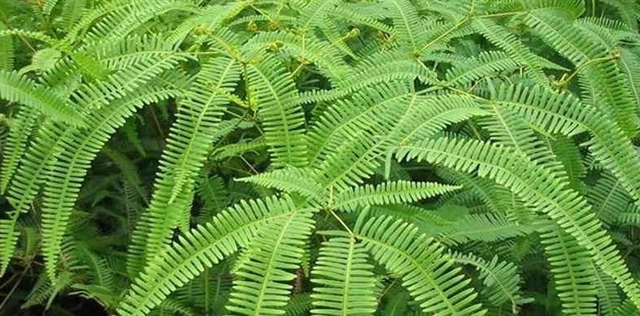 |
| '‘Tế’ fern grows abundantly in Việt Nam’s northern mountainous provinces. Its long, tough and flexible stems are used to weave baskets, handicrafts and other household products. — Photo tretruchuyhoang.com |
That changed over time. As markets opened and demand grew, the craft began to spread to nearby areas.
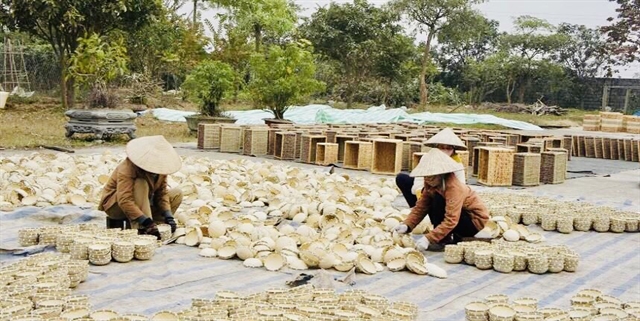
From the 1990s, when Việt Nam’s economy began to expand, Lưu Thượng’s products reached overseas markets, including Europe, the Middle East, Japan and South Korea. The craft not only brought income, but also helped the village move out of poverty.
Viễn says the village today owes much to its early master artisans, including Nguyễn Văn Thọ, Nguyễn Văn Ngải and Nguyễn Văn Thông, who created new designs and trained others to continue the craft.
Handmade heritage
At Phú Thịnh workshop, run by Nguyễn Văn Thịnh, the son of late master artisan Nguyễn Văn Ngải, the work continues much as it has for decades. Inside the workshop, staffers focus on the final stages before products are sent out. Some trim loose ends after weaving. Others check the shape and finish.
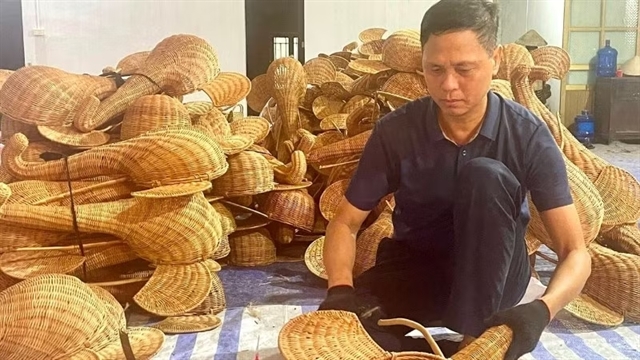 |
| Artisan Nguyễn Văn Thịnh with his products. — Photo nhandan.vn |
With more than 40 years of experience, Thịnh says weaving tế fern is similar to working with rattan or bamboo, but the material itself makes the difference. The fern grows naturally in forests. It is soft, flexible and durable, resistant to termites, and develops natural colours, such as pale yellow and reddish brown, without the need for chemical treatment.
But good thin strips depend on careful processing. This is the most difficult and time-consuming stage.
After being harvested, the fern is stripped to take out the inner core. The stems are then dried in the sun and dew for at least three days and nights. Too much or too little exposure can affect the colour and quality, so the process requires both skill and experience.
The stems are later soaked in water to increase flexibility, split further into thin strips, depending on the required thickness, dried again and sorted for different uses.
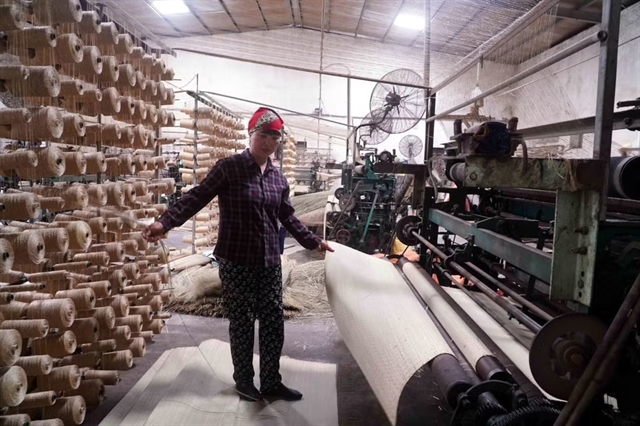
Weaving comes next, followed by a coating step to fix the shape and strengthen the structure. The entire process is done by hand. Even though the technique has spread to other areas, many say only tế fern strips processed in Lưu Thượng have the same sharp finish. For that reason, some households specialise in preparing raw stems to supply other producers.
Thịnh’s workshop provides year-round jobs for nearly 10 main workers, along with seasonal labour during busy periods. Each month, it produces between 1,000 and 2,000 items. Many combine tế fern with other materials such as rattan, sedge, corn husk and palm leaves to create new designs for the market.
Alongside traditional items like hats, baskets, trays and sieves, which are still sold domestically, villagers now make modern products for export, including handbags, gift boxes, flower baskets, suitcases, cosmetics cases, toys and souvenirs.
A living craft
Few places have such a close link between a craft and daily life. In Lưu Thượng, more than 500 households are involved in some part of the work. From elderly people to young children, almost everyone can take part in one stage or another.
People here know the material by sight. Fern from Cao Bằng is often shorter and tougher. From Sơn La and Lai Châu, it is longer and more flexible. Fern from Laos has its own distinct characteristics. These details are part of the knowledge passed down through generations.
On average, a worker can earn between VNĐ100,000 and VNĐ200,000 a day, depending on productivity. Around 30 companies and production groups in the local craft cluster now help connect the village to wider markets.
 |
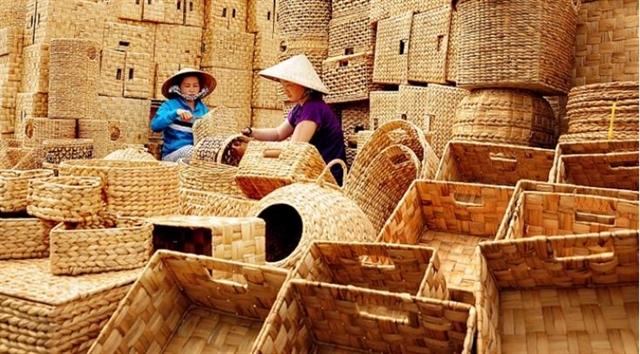 |
| Lưu Thượng’s products have reached overseas markets. — Photo TTV Magazine |
Since July 2025, Phượng Dực Commune has also organised training sessions to help residents sell their products online. Villagers learn how to film videos, write content and livestream to reach more customers.
With its long history, skilled artisans and quiet rural setting, Lưu Thượng is also being developed as a cultural tourism destination. Visitors can come to the village, try weaving for themselves and take home handmade products.
In a place where time seems to move more slowly, the tế fern continues to bind together families, livelihoods and memories, just as it has for generations. — VNS
Features
 Features
 Features
 Features
 Features
 Features
 Features
 Features
 Features
 Features
 Features
 Features
 Features
 Features
 Features