 Features
Bắc Ninh aims for 800 OCOP-certified products by year end
1.
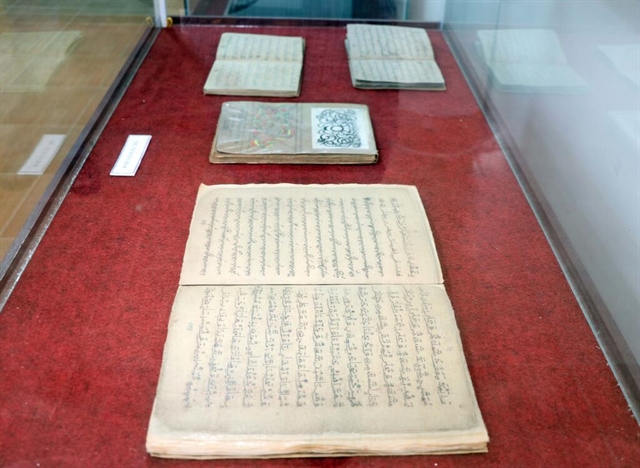 |
| Ancient Chăm manuscripts offer invaluable insights into centuries of Chăm history, beliefs and cultural traditions. — VNA/VNS Photo |
As one of Việt Nam's rarest forms of documented heritage, ancient Chăm manuscripts offer invaluable insights into centuries of history, beliefs and cultural traditions, yet many are deteriorating faster than they can be preserved.
Preserving centuries of knowledge about history, beliefs, religion and community life, ancient Chăm manuscripts reflect the Chăm people's creativity, cultural exchange and distinctive traditions of knowledge transmission.
However, the manuscripts are gradually deteriorating with age, highlighting the urgent need for research, documentation and effective conservation measures to safeguard this invaluable heritage.
Handwritten Chăm manuscripts, particularly those inscribed on palmyra leaves, are regarded as an exceptionally rare form of documented heritage. For generations, they have played a central role in the cultural and spiritual life of the Chăm community.
According to Trượng Tính, deputy director of the Khánh Hòa Museum, the manuscripts were written on a variety of materials, including poonah paper, cloth and, most notably, palmyra leaves.
They have been preserved and passed down through generations by religious dignitaries, scholars and artisans.
Sacred texts
For Chăm communities practising Brahmanism and Bani Islam, the manuscripts are not merely written records but sacred objects closely associated with religious ceremonies held at temples, towers and within local communities.
Each Po Adhia (high priest) responsible for a Chăm temple or tower safeguards a collection of palm-leaf scriptures used during major religious rituals.
These manuscripts are carefully preserved and are only brought out for specific ceremonies, including the Yuer Yang festival, purification rites for temples, land and homes, and ordination and investiture ceremonies for religious leaders.
Because of their sacred significance, the manuscripts are not widely circulated but are traditionally entrusted only to the families of religious dignitaries or those responsible for carrying on ceremonial practices.
According to Thập Hồng Luyện, a Chăm culture researcher in Khánh Hòa Province, the manuscripts contain a rich body of cultural knowledge extending far beyond religion and belief.
In addition to religious texts, they include records of traditional astronomy, calendrical science, traditional medicine, philosophy and literature.
Some scriptures describe rituals such as the purification of land, houses and temple towers, ceremonies to worship the fire deity, prayers for rain, water-source protection rites and religious ordination ceremonies.
One of the most distinctive features of the palmyra-leaf manuscripts lies in their physical form.
The texts are carved on specially treated palmyra leaves, written on both sides in ancient Chăm script, sometimes interspersed with Sanskrit characters. Each leaf typically contains between two and five lines of text.
Among the Bani Chăm community, although Islam has influenced religious practice, manuscripts continue to be written in the traditional Akhar Thrah script alongside Arabic.
This demonstrates both the resilience of the Chăm writing system and the community’s ability to preserve its cultural identity while interacting with other civilisations.
Race to preserve
Despite their immense value, preserving Chăm manuscripts remains a considerable challenge.
Most surviving manuscripts date from the 18th and 19th centuries, while some are believed to be even older. Over time, exposure to Việt Nam's hot, humid tropical climate, sea salt, insects and mould has caused many to deteriorate significantly.
Torn pages, decaying materials and fading inscriptions are common, particularly among manuscripts stored in unsuitable conditions.
Preservation within the Chăm community still largely relies on traditional methods, according to Bá Minh Truyền, who holds a master's degree and works at the Khánh Hòa Museum.
The manuscripts are usually kept in woven bamboo baskets known as ciét tapuk or cloth bags and hung in dry, elevated locations to minimise insect damage.
Religious custodians periodically expose them to sunlight to prevent mould. Dusty or faded palmyra leaves are often cleaned with rice wine, while faded inscriptions may be retraced with ink.
Although these methods have helped preserve the manuscripts over generations, they provide only temporary protection and may unintentionally alter the original appearance of the texts.
Another growing concern is that many families still possess ancient manuscripts but no longer have anyone capable of reading or preserving them.
Because of religious beliefs, families are reluctant to destroy the manuscripts, yet they are often equally unwilling to hand them over to outsiders.
In some cases, when manuscripts become too badly damaged or no successor is available to care for them, they are released into rivers in accordance with traditional customs.
As a result, many valuable documents risk being permanently lost before they can be fully documented or studied.
In recent years, cultural authorities and museums have stepped up efforts to preserve these collections.
Museums in Khánh Hòa and Lâm Đồng provinces have collected, catalogued and preserved numerous valuable manuscripts.
The Khánh Hòa Museum currently houses 19 sets of palm-leaf manuscripts, while the Chăm Cultural Exhibition Centre and the Lâm Đồng Museum preserve nine collections.
Several private collectors also possess valuable manuscripts.
Nevertheless, conservation efforts remain constrained.
Many institutions still lack purpose-built storage facilities equipped with systems to regulate temperature, humidity and environmental conditions.
Funding for conservation is limited, while restoration and digitisation require substantial financial resources.
Moreover, only a small number of specialists are able to read, transliterate and translate ancient Chăm manuscripts, making it difficult to unlock the full value of many collections even after they have been preserved.
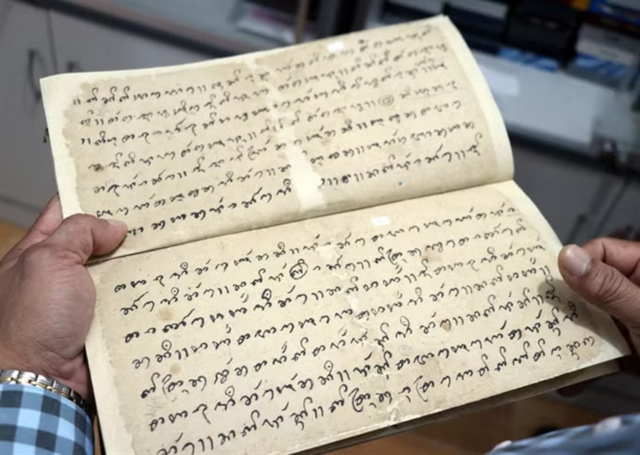 |
| In addition to religious texts, ancient Chăm manuscripts include records of traditional astronomy, calendrical science, traditional medicine, philosophy and literature. — VNA/VNS Photo |
Digital future
Đinh Hy, former director of the Chăm Culture Research Centre, said an urgent priority would be to conduct comprehensive surveys and inventories of Chăm manuscripts still held by local communities.
At the same time, digitisation and the development of comprehensive databases would be needed to accurately assess existing collections and formulate appropriate conservation strategies.
Digital technology would also offer new opportunities for preservation.
Establishing online databases and digital libraries would help safeguard original manuscripts while making them more accessible to researchers and the public.
Digital platforms would also allow the historical, cultural and intellectual value preserved in the manuscripts to be introduced more widely both in Việt Nam and abroad.
Truyền said museums and archival institutions had implemented a range of conservation measures in recent years, including cataloguing artefacts, cleaning, pest treatment, restoration, digitisation and public exhibitions for research and educational purposes.
Several palmyra-leaf manuscript collections had already been digitised using specialised software, making them easier to access while reducing the need to handle fragile originals directly. This represented an important step towards extending the lifespan of the manuscripts and minimising damage caused by frequent use.
According to Phú Văn Lương, a Brahman Chăm religious dignitary in Phước Hữu Commune, the ancient manuscripts constitute an exceptionally valuable cultural legacy that reflects the depth of Chăm history and identity while enriching the cultural diversity of Việt Nam's ethnic communities.
"Preserving these manuscripts is not simply about protecting ancient objects. It is about safeguarding an entire treasury of cultural knowledge and spiritual values accumulated over generations," he said.
He expressed hope that government agencies, researchers and the Chăm community would work together to develop effective solutions to preserve, protect and promote this invaluable heritage for future generations, thereby further enriching the cultural legacy of Việt Nam's ethnic groups. — VNS
Features
 Features
 Features
 Features
 Features
 Features
 Features
 Features
 Features
 Features
 Features
 Features
 Features
 Features
.jpg) Features
Features