 Features

Oriental Residence Bangkok Awarded One MICHELIN Key for the Third Consecutive Year
1.
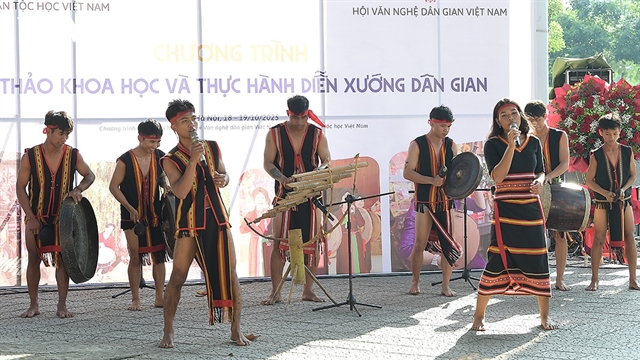 |
| A Ba Na folk music ensemble in the Central Highlands. Folk culture is a valuable source of inspiration for Việt Nam’s cultural industries. — VNA/ VNS Photo |
HCM CITY — For generations, Việt Nam’s folk culture has lived in village festivals, legends, folk songs and communal rituals passed from one generation to the next. Today, that vast cultural inheritance is increasingly being viewed not only as a legacy to preserve, but also as a strategic resource for developing cultural industries and strengthening the nation’s soft power.
Resolution 80, issued in January 2026 by the Communist Party of Việt Nam on the development of Vietnamese culture, recognises culture as the nation’s “soft power” and a direct driver of socio-economic development.
In particular, the spirit of the resolution has opened up a new approach: viewing heritage, including folk culture, not only as a legacy to safeguard, but also as a resource for developing cultural industries in the contemporary age.
According to Lê Hồng Lý, PhD, president of the Việt Nam Folklore Arts Association, throughout the nation’s history, folk culture has always occupied a fundamental position in the lives of Vietnamese people.
For a long period, until the success of the August Revolution in 1945, more than 90 per cent of Vietnamese people were illiterate, making folk culture the primary cultural foundation not only for the Kinh ethnic majority but also for ethnic minority communities across the country.
Folk culture was passed down orally and through everyday practices, often through direct instruction and memorisation.
Customs, folk verses, legends, anecdotes, rituals, festivals and worship ceremonies were repeated over generations and deeply embedded in the public consciousness.
Although many people could neither read nor formally study history, stories of the Hùng Kings, Saint Gióng, the Trưng Sisters, An Dương Vương, Ngô Quyền and Trần Hưng Đạo became ingrained in the national consciousness through storytelling, village festivals and communal rituals.
These folk cultural values nurtured patriotism, community spirit and the moral tradition of “remembering the source when drinking water”, laying the foundation for today’s Vietnamese identity.
'Living archive'
Alongside more than 8,000 cultural and spiritual festivals nationwide, traditional craft villages and a rich culinary heritage, Việt Nam possesses a vast reservoir of folk cultural assets from its 54 ethnic groups.
Folk games and art performances have gradually become distinctive traditional cultural and artistic values and a sustainable foundation of the nation’s cultural life.
Many experts regard this wealth of folk culture as a “gold mine” for the development of cultural industries.
However, the key issue is how to exploit it in a way that both creates economic value and preserves cultural identity and depth.
President Lý noted that while Việt Nam had yet to develop globally recognised cultural industry brands such as Hollywood in the United States or the K-pop wave in South Korea, folk culture would remain a crucial source of identity and competitive advantage for the country’s cultural industries.
Việt Nam’s greatest strength lies in the cultural diversity of its 54 ethnic groups. This constitutes an exceptionally rich “living archive” that few countries possess.
Such diversity provides abundant inspiration for music, cinema, tourism, performing arts, festivals and contemporary creative products.
In practice, many successful young artists today have effectively incorporated folk elements into their creative works.
These include singer Hòa Minzy with the song and music video Bắc Bling; singer Đức Phúc, winner of the international Intervision Song Contest 2025 with the song Phù Đổng Thiên Vương, which combines folk music and rap; and artist Soobin Hoàng Sơn with the work Mục hạ vô nhân.
Such productions not only increase the appeal of creative products but also contribute to preserving and promoting traditional cultural values in contemporary life.
The recent success of young artists blending folk music with electronic music, rap and modern stage performance demonstrates the renewed vitality of traditional materials within the entertainment industry, as well as the immense potential of folk arts for developing cultural industries and promoting traditional cultural values in contemporary art.
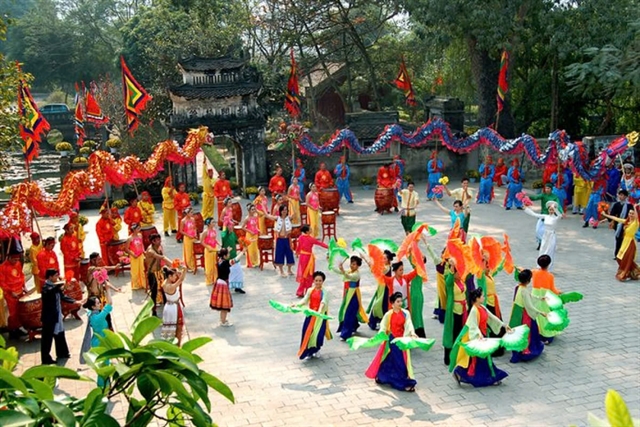 |
| Artists from diverse ethnic communities take part in a combined cultural performance. Rich cultural traditions are regarded as a key asset in strengthening the nation’s soft power. — Photo vanhoatinnguong.vn |
Soft power
Many researchers argue that folk culture should be viewed as a strategic reserve of resources for cultural development.
Traditional elements, when refreshed through modern thinking, have created strong appeal among audiences, especially young people.
This proves that folk culture is not a “static heritage”, but can become an economic driver if properly invested in.
However, how to exploit these resources while still preserving cultural identity and depth remains a major concern for society.
Resolution 80 clearly addresses this issue by affirming that culture must permeate all areas of social life and that cultural values must become the nation’s soft power.
Many experts believe this is not only a theoretical viewpoint but also a strategic orientation for Việt Nam’s development amid increasingly fierce global competition.
In today’s world, competition between nations is determined not only by economy or technology, but also by cultural attractiveness.
Countries that can effectively harness cultural resources will gain sustainable advantages.
One of the important points of Resolution 80 is the requirement to fully identify and effectively utilise cultural resources, placing cultural heritage at the centre and digital cultural resources as a strength, while aiming to preserve, promote and sustainably develop cultural values.
Creative resource
This demonstrates that folk culture is now being viewed as a genuine resource for development.
While heritage was once seen mainly from a preservation perspective, it is now also regarded as a source of creativity and raw material for cultural industries.
The country’s rich folk tales can inspire films, animation, video games, theatre and digital media. Legends such as Saint Gióng, Sơn Tinh–Thuỷ Tinh, Chử Đồng Tử and the Central Highlands epics could become compelling cultural narratives, much like how many countries have successfully utilised their own myths and folk legends.
However, experts stress that to bring folk culture further, it must be combined with technology and modern creative thinking. Việt Nam also needs to proactively introduce its culture to the world through films, art performances and innovative tourism products.
The growing number of businesses drawing on local cultural values in destinations such as Phú Quốc, Tây Ninh and Sa Pa shows that folk culture can thrive in new forms when combined with innovative storytelling, technology and creative thinking. More importantly, it demonstrates that the traditions passed down through generations are not relics of the past, but living cultural assets that continue to shape Vietnamese identity while creating new opportunities for the future. — VNS
Features
 Features
 Features
 Features
 Features
 Features
 Features
 Features
.jpg) Features
Features
 Features
 Features
 Features
 Features
 Features
 Features