 Features

Deputy PM calls for tighter price management of essential goods
1.
by Lê Ngọc - Quỳnh Hoa
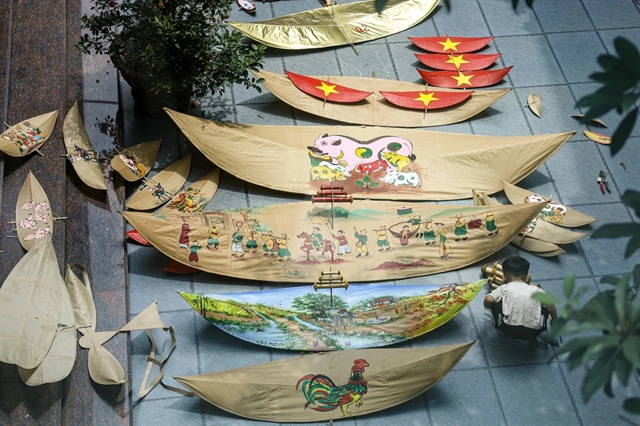 |
| Traditional flute kites crafted in Bá Dương Nội Village reflect centuries of folk artistry and cultural memory preserved along the Red River Delta. VNA/VNS Photos Lê Ngọc |
On breezy afternoons in northern Việt Nam, the sky above Bá Dương Nội becomes a stage of drifting kites and singing bamboo flutes. In this centuries-old village by the Red River, kite making is more than a folk pastime — it is a living cultural ritual carrying the memory, beliefs and rhythms of the Red River Delta.
For villagers in Bá Dương Nội, now part of Ô Diên Commune in Hà Nội’s Đan Phượng Ward, the sound is more than a melody carried by the wind. It is an echo of memory, a reminder of the agricultural civilisation that once shaped life across the northern plains.
The village is widely regarded as one of Việt Nam’s oldest centres of flute-kite making. Here, kite crafting is not merely a pastime but a deeply rooted cultural practice tied to spirituality, craftsmanship and communal identity.
Every year, on the full moon of the third lunar month, villagers gather for the famed Bá Dương Nội Kite Festival, where giant traditional kites soar above the rice fields in rituals praying for favourable winds, peaceful weather and prosperous harvests.
“The sound of flute kites is the soul of our village,” said Nguyễn Văn Quyết, head of the Bá Dương Nội Flute Kite Club. “Even people who leave Bá Dương Nội for decades can still recognise their hometown through the sound of the kites.”
Bamboo and breeze
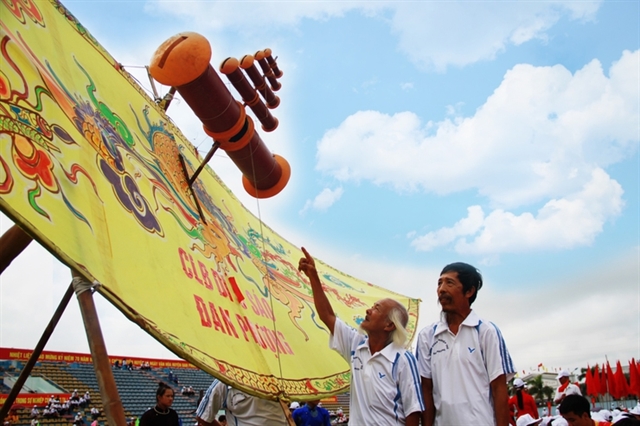 |
| Villagers from kite clubs in Ô Diên Commune gather for the famed Bá Dương Nội Kite Festival, where giant traditional kites soar above the rice fields in rituals praying for favourable winds, peaceful weather and prosperous harvests. Photo odien.hanoi.gov.vn |
Nestled beside the Red River, Bá Dương Nội has preserved its kite-making tradition for more than 1,000 years.
According to village genealogies, the craft is linked to the legend of General Nguyễn Cả, a military commander under King Đinh Tiên Hoàng.
After helping suppress the rebellion of the Twelve Warlords in the 10th century, he returned to the village, taught local people farming and introduced folk pastimes, including kite flying. After his death, villagers built a temple in his honour and worshipped him as the village guardian spirit.
The annual kite festival emerged from ceremonies commemorating the general and today remains one of the oldest traditional kite festivals in northern Việt Nam.
The festival is also closely linked to the worship of the Châu Thổ deity at the village’s ancient kite temple. Known locally as Miếu Diều or Miếu Châu Trần, the shrine is dedicated to the guardian deity of the fertile alluvial lands along the Red River — a rare spiritual feature that makes the tradition distinctive in Việt Nam.
In early 2024, the Ministry of Culture, Sports and Tourism inscribed the Bá Dương Nội Kite Festival on the National Intangible Cultural Heritage list. The following year, Hà Nội authorities also recognised Bá Dương Nội flute-kite making as one of the capital’s traditional crafts.
But beyond titles and certificates, what truly keeps the heritage alive is the quiet devotion of local artisans.
Inside modest village homes, elderly craftsmen patiently shave bamboo strips into delicate frames, stretch paper across giant wings and tune handmade bamboo flutes with the precision of musicians.
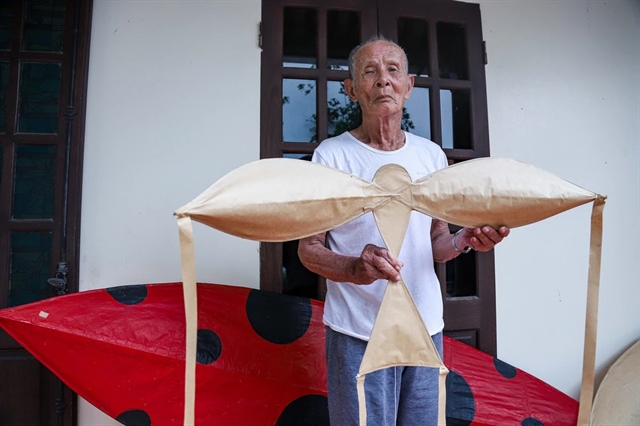 |
| Artisan Nguyễn Văn Bồi, 92, has spent decades crafting some of the highest-flying kites in Bá Dương Nội and was honoured as a master artisan in 2019. |
For artisan Nguyễn Văn Bồi, now 92 and renowned for making some of the village’s highest-flying kites, the craft begins not in the sky but in the bamboo grove.
“To make a kite, the first step is choosing the bamboo for the frame,” he said. “The best bamboo is old 'male' bamboo growing in the middle of the cluster. This bamboo is straight, with long internodes, thick walls and no scratches.”
According to Bồi, bamboo strips are carefully boiled in limewater or salted water so they become supple and resistant to humidity before being bent into shape. Running through the centre of the kite is the spine, a thick bamboo beam secured with tightly woven cords.
After the frame comes the delicate stage of applying the kite paper. In the past, artisans used giấy dó (poonah paper), valued for its light texture, which allowed the kite to rise quickly and steadily.
To attach the paper, craftsmen used glue made from crushed young sapodilla resin mixed with water. The same resin was later brushed over the surface to protect the kite from moisture and insects.
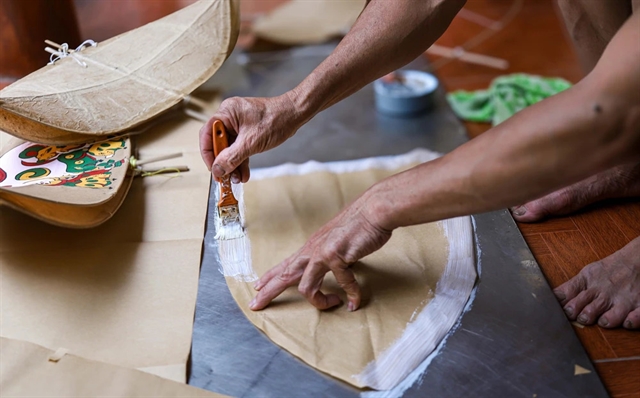 |
| Brown paper is attached to the kite frame by glue. |
Yet the soul of Bá Dương Nội’s kite lies not in the frame but in its flutes.
Unlike many traditional kites elsewhere in Asia, Bá Dương Nội flute kites have no tail. After the kite itself is completed, artisans spend weeks — sometimes months — crafting and arranging bamboo flutes into a harmonious musical set.
“Tuning the flutes is extremely important, and not everyone can do it,” Bồi said. “When the kite rises, the sound can be piercing, deep or joyful — like music floating in the sky.”
Village elders often compare the six-flute arrangement to a mother calling and a child replying, with layers of echoing sound carried by the wind.
“That harmony is something uniquely Vietnamese,” Bồi said.
Though the process may appear simple, kite making demands patience, precision and artistic sensitivity.
Many villagers still recall lying on river dykes at dusk as children, listening to the sound of flutes attached to flying kites drifting across the summer sky. Yet the tradition nearly disappeared.
Wars and economic hardship interrupted the festival for decades before villagers revived it in 1989 through the efforts of dedicated artisans and community elders. Since then, Bá Dương Nội has gradually regained its reputation as a village of singing kites.
Today, younger generations are once again learning the craft from their parents and grandparents, while local kite clubs attract visitors curious about Vietnamese folk culture.
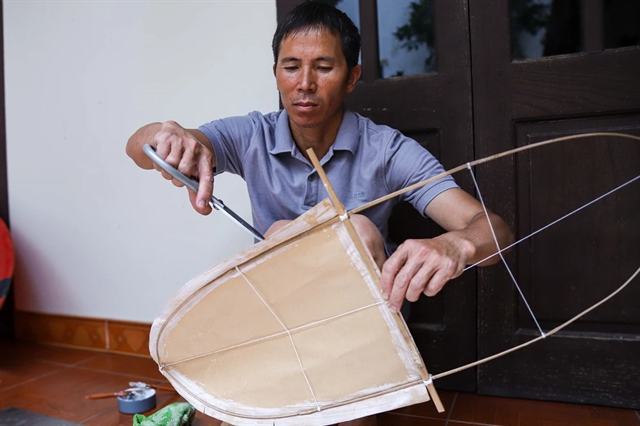 |
| Artisans in Bá Dương Nội use traditional giấy dó (poonah paper) for kite coverings thanks to its light and porous texture, which helps the kites catch the wind and fly steadily. |
Heritage in flight
What makes Bá Dương Nội remarkable is the way the village continues to preserve authenticity while adapting to contemporary life.
Some artisans now create miniature decorative kites for tourists while others introduce the craft at schools and cultural events.
According to Quyết, local artisans are also introducing the village’s heritage to international audiences through festivals in Việt Nam, Thailand, China, France and Malaysia.
Local authorities are also planning a three-hectare community cultural experience zone near the village's Kite Temple. The area is expected to become a future cultural tourism destination while also serving as a heritage education space for students and visitors.
In many ways, Bá Dương Nội reflects a broader movement across Việt Nam to reposition traditional heritage not as a relic of the past but as a living cultural resource.
That vision aligns closely with Resolution 80 issued by the Communist Party, which identifies culture as an endogenous strength and a driving force for sustainable national development. The resolution emphasises preserving and promoting cultural heritage while integrating it into modern socio-economic life and cultural industries.
In Bá Dương Nội, that policy direction can already be seen in practice — from community-based tourism plans to efforts to bring traditional crafts closer to younger generations.
For local artisans, however, the most important goal remains simple: ensuring that the sound of flute kites never disappears from the sky.
On festival days, villagers carry giant kites across the fields before releasing them into the wind. As the kites climb higher, the bamboo flutes begin to sing together above the Red River Delta.
In an era dominated by digital screens and artificial sounds, the handcrafted flute kites of Bá Dương Nội offer something increasingly rare: a direct conversation between humans and nature.
The wind becomes the musician. Bamboo becomes the instrument. And the sky itself becomes a stage for cultural memory.
As long as those kites continue to rise above the Red River, the soul of Bá Dương Nội will continue to sing. VNS
Features
 Features
 Features
 Features
 Features
 Features
 Features
 Features
 Features
 Features
 Features
 Features
 Features
 Features
 Features