 Features

Ministry eyes data architecture as quality becomes key to deeper digital transformation
1.
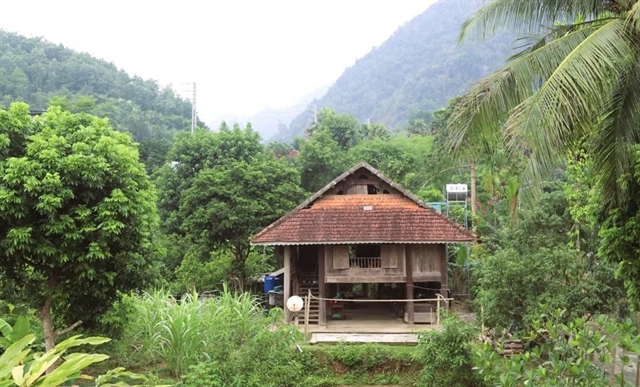 |
| The stilt house is a unique architectural work, shaped by generations of practical experience, customs and beliefs of the Thái people. — VNS Photo Xuân Tiến |
By Thanh Nga and Xuân Tiến
In the mountain valleys of Bình Chuẩn Commune in Nghệ An Province, traditional wooden stilt houses continue to shape daily life much as they have for generations. More than places of shelter, they stand as living expressions of the Thái people's relationship with nature, craftsmanship and community.
In villages such as Xiềng, Đình and Quăn, these houses are not preserved as relics of the past but remain an integral part of daily life, serving generations of families.
Viewed from the higher slopes of Pù Huột, the valley is dotted with clusters of wooden houses set against a lush green landscape. Raised on pillars ranging from about 1.6m to more than 2m in height, the structures are designed to adapt to the terrain and climate rather than alter them.
For the Thái ethnic community, a house is more than simply a place to live.
“It is where we live, but also where we connect with nature,” said Kha Văn Khay of Nà Cọ Village.
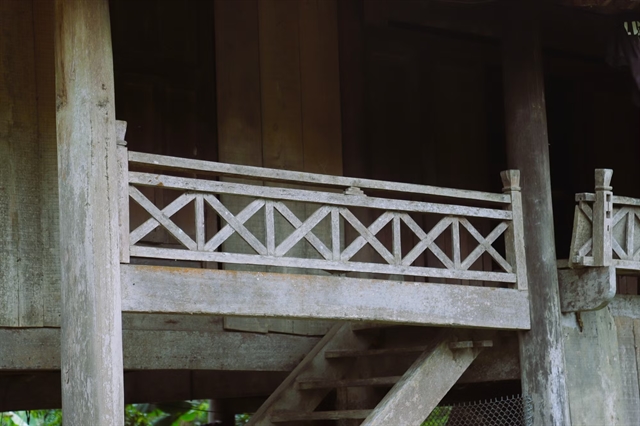 |
| Carved details along staircases, railings and roof edges help improve ventilation, allow in natural light and reduce the impact of heavy rain. — VNS Photo Xuân Tiến |
That connection is reflected in the design of each house. The raised floor helps protect against dampness, wild animals and seasonal flooding, while the open space beneath is used to store firewood and farming tools. Daily life unfolds upstairs, where families cook, gather and welcome guests.
The kitchen, usually located near the gable end, remains one of the most important spaces in the home.
Building a stilt house is a process shaped by both experience and long-established traditions. According to local resident Lô Văn Mằn, timber was traditionally selected during the dry season, when the wood contains less moisture and is less susceptible to termite damage.
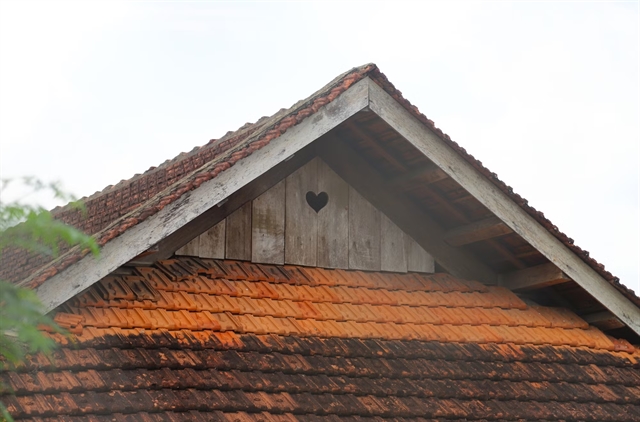 |
| The heart-shaped opening in the roof apex allows air to circulate, brings natural light into the house and helps prevent rainwater accumulation. — VNS Photo Xuân Tiến |
Built to last
Only straight, undamaged trunks are selected. Certain signs, such as a broken treetop, are avoided because they are believed to affect the durability of the structure.
The main pillars are often made of solid hardwoods, which can withstand harsh weather conditions for many years.
Rather than being fixed directly into the ground, each pillar rests on a stone base. This helps protect the wood from moisture and insects while allowing builders to adjust the height to suit uneven terrain.
Traditional construction techniques remain widely used. Wooden frames are assembled using mortise-and-tenon joints rather than nails.
“The entire frame is connected using traditional mortise-and-tenon joints,” said local farmer Lang Văn Tuất. “It requires precision, but it makes the structure both strong and stable.”
Architecturally, the stilt houses of Bình Chuẩn have distinctive features. Their four-sided roofs extend outwards to provide protection from the sun and rain while creating a more open structure.
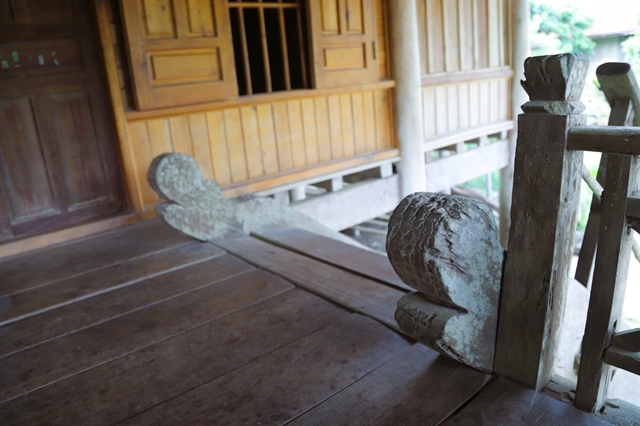 |
| The shapes, patterns and colours of the dragon-head carvings on the staircase remain clearly visible even after decades. — VNS Photo Xuân Tiến |
Unlike stilt houses in north-western Việt Nam, which often have separate staircases for men and women, houses in this area typically feature a single staircase used by all members of the household.
Feng shui also plays a role in their design. Houses are commonly built with an odd number of bays, such as three or five, while doors and windows are arranged accordingly, reflecting beliefs about balance and good fortune.
Decorative elements can be found throughout the structure, but they also serve practical purposes. Carved details along staircases, railings and roof edges help improve ventilation, allow in natural light and reduce the impact of heavy rain.
At the base of some staircases, wooden carvings in the shape of dragon heads can still be seen. Facing upwards, they symbolise protection and aspiration within the household.
Cultural heart
Inside, the space is both functional and symbolic. Wooden beams are sometimes decorated with carvings of flowers, birds and foliage, reflecting a close relationship with nature.
Beyond its architecture, the stilt house remains closely connected to the cultural life of the Thái people.
From daily meals to important life events, many activities take place within this elevated space. Weddings, spiritual rituals and the welcoming of guests are usually held in the main room, where families gather and share food.
The space beneath the house also serves as a communal area. During festivals and post-harvest periods, it becomes a venue for folk games, music performances, xòe dances and social gatherings.
In recent years, some households have introduced modest changes to improve living conditions, such as adding covered areas or upgrading facilities. However, the core structure of the stilt house has largely remained unchanged.
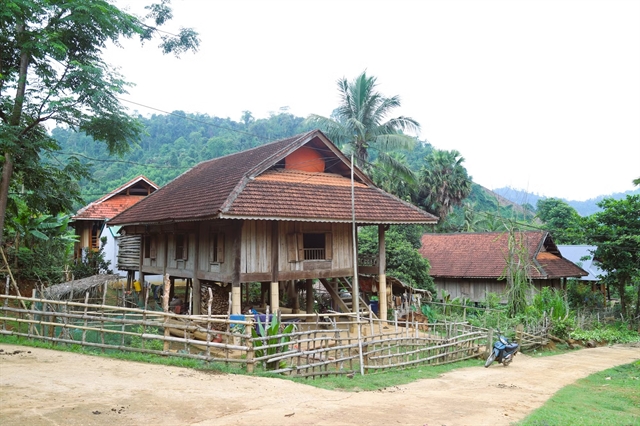 |
| Thanks to its system of supporting columns and frames, a stilt house can be firmly erected on sloping terrain without the need for level ground. — VNS Photo Xuân Tiến |
For village chief Kha Văn Trang, preserving these houses is closely tied to safeguarding cultural identity.
“In a time when concrete buildings are becoming more common, choosing to build a wooden stilt house is also a way of preserving our traditions,” he said.
While modern development continues to reach the valley, the traditional stilt houses of Bình Chuẩn remain far more than architectural landmarks. They are living expressions of the Thái people's relationship with nature, community and tradition, ensuring that cultural knowledge and identity continue to be passed from one generation to the next.— VNS
Features
 Features
 Features
 Features
 Features
 Features
.jpg) Features
Features
 Features
 Features
 Features
 Features
 Features
 Features
 Features
 Features