 Features

Bắc Ninh and Samsung launch new business support programme
1.
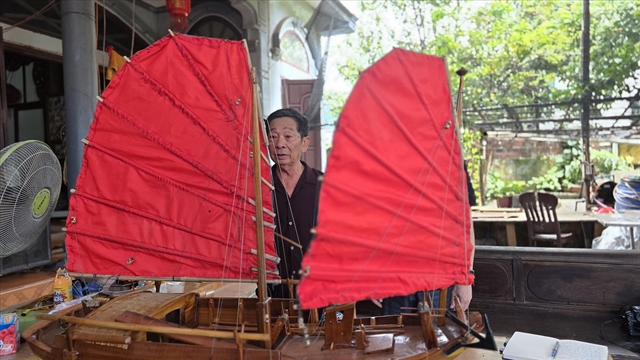 |
| Boat builder Lê Đức Chắn, 77, with a model of a traditional three-plank sailing boat in Quảng Ninh Province. — VNS Photo Thanh Vân |
Thanh Nga & Thanh Vân
The red-brown sails of traditional three-plank sailing boats have once again become a familiar sight on Hạ Long Bay after decades of absence, rekindling memories of Quảng Ninh's rich maritime heritage.
Backed by decades of experience and supported by local authorities and businesses, veteran boat builder Lê Đức Chắn is working to transform the traditional vessel into a distinctive tourism product while helping preserve a centuries-old craft.
At a boatyard along the Chanh River in Cống Mương Village, Liên Hòa Ward, workers are busy completing several three-plank boats.
At 77, Chắn – the 17th-generation successor of the Lê Đức family, once well known in the former Quảng Yên area – still supervises every stage of boat building.
The boats are closely linked to the history of estuarine communities, where residents had to navigate complex river and tidal conditions. From that environment, earlier generations developed the bat-wing sailboat with a distinctive structure.
Chắn said the defining feature of the sampans lies in their dual steering system, combining a bow rudder with a stern rudder. This allows them to manoeuvre with remarkable flexibility in different wind conditions – downwind, crosswind and even against the wind and current – without relying heavily on manual rowing.
The hull is divided into three longitudinal sections. This design not only strengthens the structure but also improves safety. If one section is damaged, the boat can still stay afloat and continue under sail.
For generations of fishermen along the Chanh River, the boats were more than a means of livelihood. They represented a complex craft, reflecting accumulated knowledge and the resilience of communities living at the Bạch Đằng estuary since the 15th century.
What impresses specialists is Chắn’s precise calculations. Without machines or design software, he keeps all technical details in his memory. From the curve of the hull to the ratio of bamboo ribs in the sail, and even the natural dye used to protect the sail from seawater, everything is done by experience.
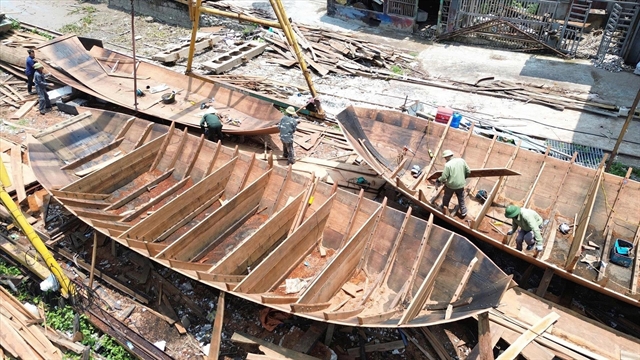 |
| Workers build traditional three-plank sailing boats at a riverside yard in Quảng Ninh Province. — VNS Photo Thanh Vân |
Revival begins
Despite their cultural value, the boats fell into decline as market demand changed. Chắn’s family had to shift to building other types of vessels, including round-bottom boats and steel ships, to sustain their livelihood.
A turning point came on June 29 when the three-plank boats officially returned to operation. Their red sails quickly drew interest from visitors, creating a new experience on Hạ Long Bay.
When the first boats were launched and began operating along the coast, local residents and tourists alike were moved. After many years, the sight of red bat-wing sails cutting through the water among limestone islands brought back memories of the past.
The revival is not only the introduction of a new tourism product, but also the return of traditional knowledge that had nearly disappeared.
“I was deeply moved to see the boats return,” Chắn said. “They were once used to transport goods by people in the Bạch Đằng River region. Now they carry visitors.”
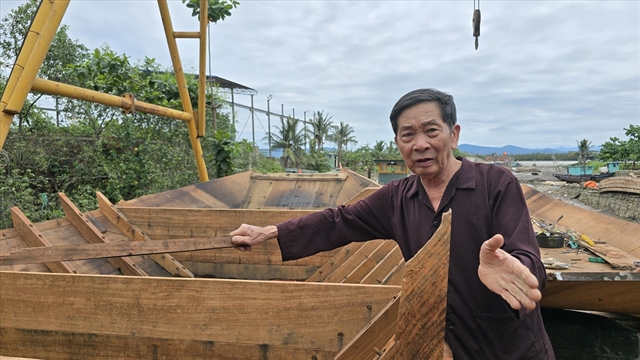 |
| Veteran boat builder Lê Đức Chắn continues to supervise every stage of the traditional craft. — VNS Photo Thanh Vân |
He hopes the restoration effort will continue to receive support from authorities. Alongside building new boats for tourism, he said, attention should be given to preserving and passing on the craft to younger generations.
“If we can develop experiential models, exhibitions or training classes, we will not only keep the technique alive but also foster pride in our cultural heritage,” he said.
The route runs along the shoreline of Hạ Long Bay, from the Bài Thơ Bridge to the Quảng Ninh Museum and Library.
Trips depart from the passenger waterway terminal near Hạ Long 1 Market. Each journey lasts around 60 minutes, with services operating daily from 8am to 5pm.
Next generation
Chắn has passed on his knowledge and techniques to his four sons, who are now turning his mental blueprints into larger, more modern vessels while maintaining the traditional form.
His son, Lê Đức Hưng, said the pressure on the next generation had been significant. Each boat must retain the original shape and spirit of the traditional design.
To meet current requirements, he has combined traditional experience with modern technical standards. The aim is to produce sailing sampans that maintain a rustic appearance while meeting strict safety regulations.
Balancing heritage aesthetics with modern requirements would be key to bringing the boats back into operation, he said.
The revival has also created jobs and increased income for local workers, contributing to tourism development in the area.
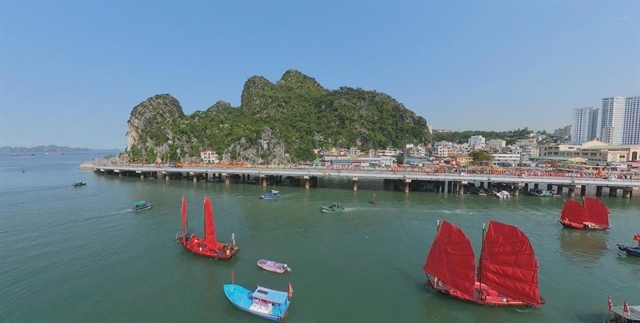 |
| Traditional three-plank sailing boats have returned to Hạ Long Bay as a distinctive new tourism attraction. — VNS Photo Thanh Vân |
Local authorities see the return of the boats as part of a broader strategy to diversify tourism products in Quảng Ninh.
Bùi Thị Giang, head of the Heritage Management Division under the provincial Department of Culture, Sports and Tourism, said the initiative offered both a unique attraction and a practical way to preserve traditional knowledge.
The province was documenting the craft by recording artisanal boat builders’ accounts and systematising technical knowledge. This would support efforts to seek national recognition for the boat-building craft as intangible cultural heritage.
Plans were also being considered to turn the boatyard in Liên Hòa Ward into a tourist destination, offering hands-on experiences and creating sustainable livelihoods for traditional boat builders. — VNS
Features
 Features
 Features
 Features
 Features
 Features
 Features
 Features
 Features
 Features
 Features
 Features
 Features
 Features
 Features