 Features

Việt Nam, EU sign Letter of Intent on Education and Training
1.
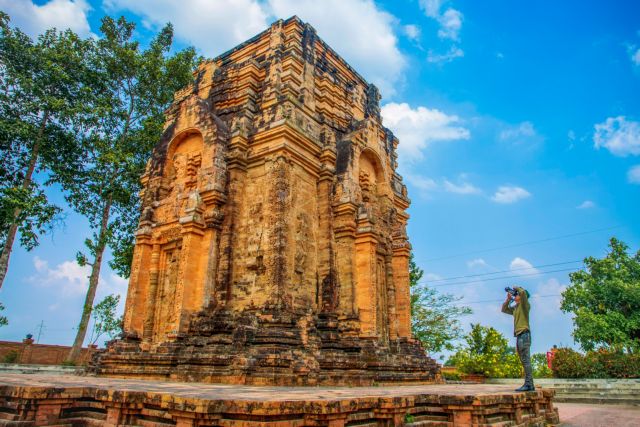 |
| Chót Mạt Tower has stood the test of time as one of only three surviving temple-towers in southern Việt Nam. — VNA/VNS Photo Giang Phương |
Stately set against in the landscape of the southwestern province Tây Ninh, Chót Mạt Tower carries the traces of the ancient Óc Eo civilisation, offering a glimpse into the cultural world that once flourished across southern Việt Nam.
With its distinctive brick architecture and enduring historical value, the tower is not only an important archaeological relic but also a potential destination for visitors interested in the region's cultural heritage.
Similar to the Chăm towers in central Việt Nam, Chót Mạt Tower, also known as Chóp Mạt Tower, was built with fired bricks and slate fitted tightly together without the use of any binding material. The technique was highly sophisticated, leaving virtually no gaps between the bricks.
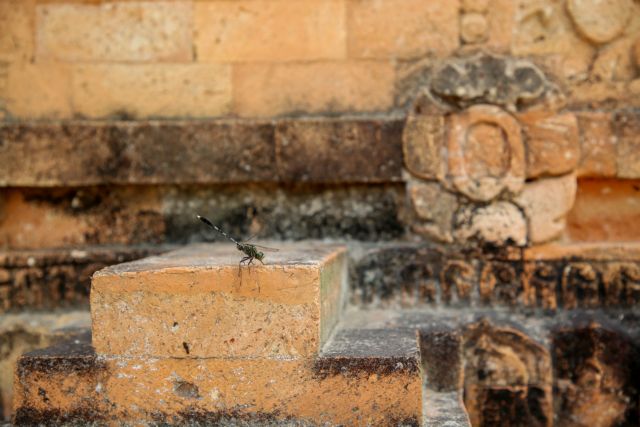 |
| The sophisticated building technique left virtually no gaps between the bricks. — VNA/VNS Photo Giang Phương |
The tower's name derives from the fact that, when it was discovered, its roof pinnacle was missing. Despite undergoing several rounds of restoration, the top of the tower has yet to be fully restored to its original form.
The structure remains relatively intact on a flat, rectangular earthen platform oriented along an east-west axis, measuring about 70m by 65m.
The exterior of the tower is an artistic space featuring reliefs depicting floral motifs, birds and deities.
The tower's sides follow the traditional layout of ancient temple-tower architecture. Its main entrance faces east, while the other sides feature false doors, creating a balanced overall structure.
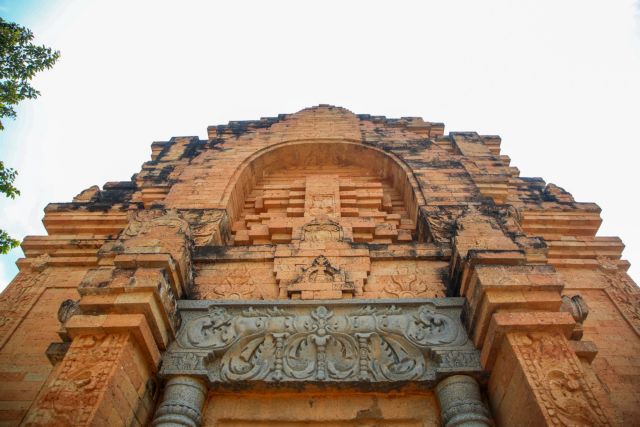 |
| The exterior of the tower is an artistic space featuring reliefs depicting floral motifs, birds and deities. — VNA/VNS Photo Giang Phương |
Inside the tower, the worship space is relatively simple. Archaeological surveys have uncovered a yoni pedestal and a sandstone statue of Vishnu, indicating that the site was once a place of worship dedicated to Vishnu in the Hindu tradition.
Ancient legacy
To date, Chót Mạt Tower is one of only three surviving temple-towers in southern Việt Nam. The relic was recognised as a national-level heritage site in 1993 for its significant historical, cultural, archaeological and artistic value.
According to Lê Đỗ Thuận, vice chairman of the Thạnh Bình Commune People's Committee, the exact date of construction of Chót Mạt Tower remains to be determined through further in-depth scientific research.
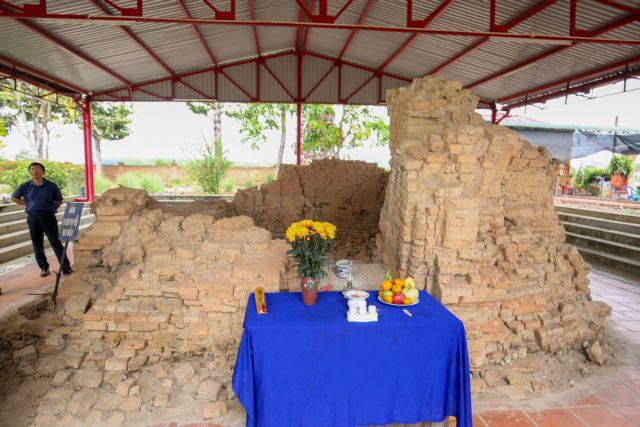 |
| Remains of the Óc Eo culture preserved alongside the main tower help shed light on the historical and cultural value of Chót Mạt Tower. — VNA/VNS Photo Giang Phương |
However, some studies suggest that the structure may have been built around the eighth century, during the period when the Óc Eo culture (1st–7th century) flourished in southern Việt Nam.
These values make Chót Mạt Tower more than an isolated ancient structure. It is also a testament to the existence of a longstanding cultural space where religious beliefs, artistic traditions, construction techniques and cultural exchanges converged throughout history.
To many locals, the temple is a source of pride and a heritage passed down by their ancestors.
"I was born and grew up here, seeing Chót Mạt Tower every day. To me, the tower is not just a relic, but a memory of my homeland," said Sóc Lên, 53, an ethnic Khmer resident living near the relic site.
“Every brick seems to tell a story about our ancestors and a once-glorious civilisation. Seeing the tower still standing today, I feel proud and also feel a responsibility to remind younger generations to cherish and preserve this heritage.”
Chót Mạt Tower relic site's appeal to tourists lies in its simple, tranquil beauty, which sets it apart from modern tourist attractions.
Standing amid the rural landscape, the tower feels like a gateway to the past, offering visitors an opportunity to gain a deeper understanding of and appreciation for local cultural values.
“What impressed me about Chót Mạt Tower is its relatively well-preserved ancient architecture and the depth of history reflected in every brick and architectural detail,” said Nguyễn Hoàng Phương Lan, a visitor from HCM City.
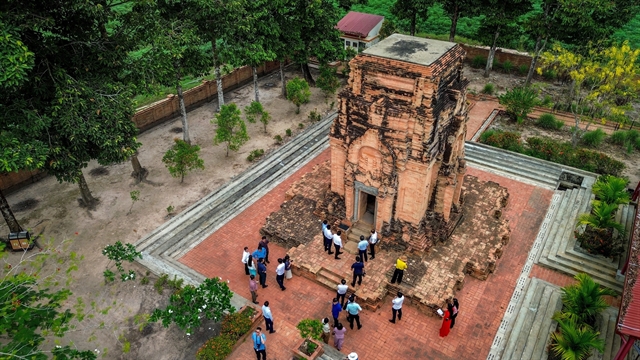 |
| Chót Mạt Tower is a highlight of any journey to explore Tây Ninh Province. The tower's name derives from the fact that, when it was discovered, its roof pinnacle was missing.— VNA/VNS Photo Giang Phương |
Beyond its appeal as a tourist attraction, the ancient tower has been identified by local authorities as a potential destination for learning, historical and cultural education, and tourism.
A living heritage
“Preserving and promoting the value of Chót Mạt Tower is about fostering an appreciation of tradition, nurturing love for one's homeland and raising community awareness of heritage conservation,” Thuận noted.
The local authorities have suggested the inclusion of Chót Mạt Tower in a tourism route linking other nearby destinations, like Bà Đen Mountain, Tây Ninh Holy See, the Huỳnh Công Giản Tomb, Lò Gò–Xa Mát National Park and the headquarters of the South Việt Nam Liberation movement.
They also proposed developing a tourism and heritage education product, Chót Mạt Tower – A Legacy of Óc Eo Culture in Tây Ninh, for students and visitors.
The vice chairman revealed that a plan is under way to develop experiential tourism products centred on its agricultural strengths, such as visits to fruit orchards, thereby creating additional attractions and drawing more visitors.
As Tây Ninh looks to develop cultural and historical tourism, Chót Mạt Tower offers more than a glimpse into the past. Properly conserved and brought closer to visitors, the ancient monument could become a distinctive gateway through which travellers discover the rich cultural layers of the southern region. VNS
Features
 Features
 Features
 Features
 Features
 Features
.jpg) Features
Features
 Features
 Features
 Features
 Features
 Features
 Features
 Features
 Features