 Society
84 individuals investigated for transnational online frauds
1.
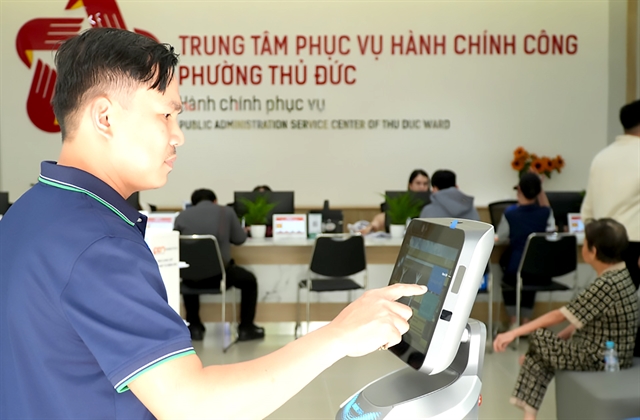 |
| A resident uses a robot-assisted information system to inquire about administrative procedures at the Public Administrative Service Centre in Thủ Đức Ward in HCM City. — VNA/VNS Photo |
HCM CITY — HCM City reported public satisfaction above 96 per cent and faster administrative processing after the first year of operating under its two-tier local government model, according to a review released on Thursday.
City officials said the restructuring, one of the city’s most significant administrative reforms in decades, was designed to streamline bureaucracy, accelerate decision-making and bring public services closer to residents.
The results were presented at a city Party Committee review conference marking one year since Việt Nam’s largest metropolis implemented the new governance framework.
The model, which came into operation on July 1, 2025, reorganised HCM City’s administrative structure into 168 communes, wards, and special administrative-level units serving a population of more than 14 million.
The reform forms part of broader national efforts to streamline state administration, improve decentralisation and enhance public service delivery.
According to city officials, more than 99.5 per cent of administrative dossiers were processed on time over the past year, while online submissions accounted for more than 88 per cent of total applications.
Authorities said all official administrative document exchanges are now conducted electronically.
The city has also introduced a non-location-based administrative processing system allowing residents and businesses to submit and receive services anywhere within the city, regardless of their registered place of residence.
Digital reforms, including integrated online public service platforms, digital citizen service stations and smart kiosk applications, have also been expanded to improve access and reduce processing times.
Officials said more than 1,000 administrative tasks had been decentralised from city-level departments to grassroots authorities, enabling local administrations to resolve issues more directly and respond faster to residents’ needs.
City leaders said the reform had helped reduce management layers, strengthen direct interaction between local authorities and residents, and improve operational effectiveness.
The governance overhaul was also linked to broader socio-economic performance, with most major development and state budget targets for 2025 and the first half of this year either met or exceeded.
Officials highlighted several public welfare measures introduced during the period, including free health check-ups for residents, free public bus services and accelerated implementation of major infrastructure projects.
However, the review also identified persistent challenges, particularly shortages of experienced personnel in critical sectors such as information technology, finance, land management, construction, healthcare and education.
Officials said workload pressures remain uneven across localities, with densely populated areas facing rising administrative demands despite staffing levels that are not always aligned with actual workloads.
Trần Lưu Quang, secretary of the HCM City Party Committee, said a comprehensive review of leadership assignments across city departments and grassroots administrations would be conducted to better align personnel capacity with operational needs.
The city also plans to make use of staffing flexibility measures, allowing personnel increases of up to 20 per cent in areas facing the greatest pressure, while avoiding uniform staffing allocations across all localities.
Authorities said they would continue restructuring local administrative units, strengthening digital governance capacity and recruiting outstanding graduates and young researchers to build a higher-quality public sector workforce.
The city said further refinement of the model would focus on ensuring the governance system remains capable of supporting long-term urban growth while maintaining service quality for residents and businesses. — VNS
Society
 Society
 Society
 Society
 Society
 Society
.jfif) Society
Society
 Society
 Society
 Society
 Society
.jfif) Society
Society
 Society
 Society
 Society