 Society
Vietnamese, Danish FMs discuss ways to deepen bilateral ties
1.
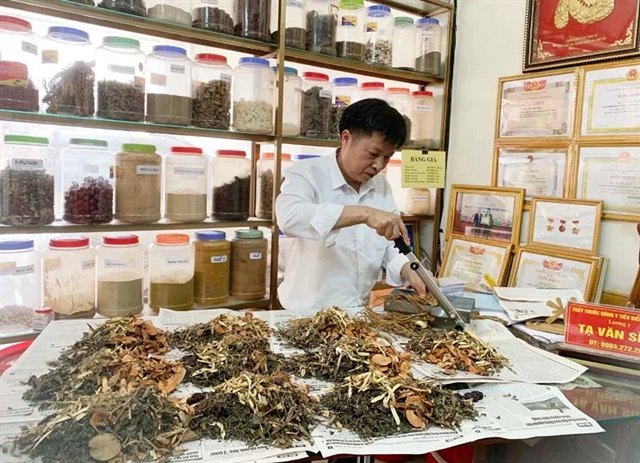 |
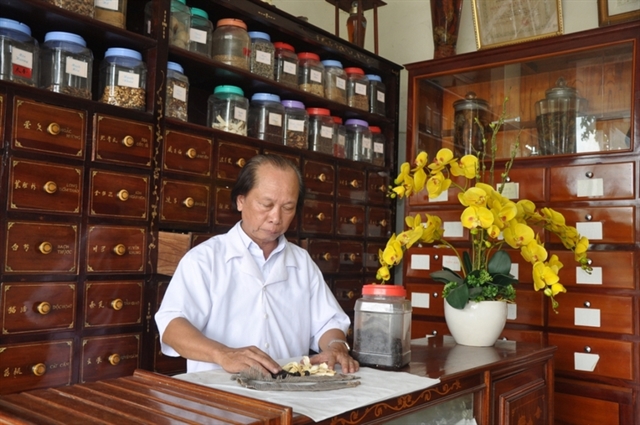
| A traditional medicine practitioner is preparing herbal medicine. — Photo thuvienphapluat.vn |
HÀ NỘI — Human resources play a crucial role in the preservation and development of Vietnamese traditional medicine. Traditional medicine practitioners have long been pivotal in preserving, practising and passing down the essence of this indigenous medical heritage.
However, the workforce of traditional medicine practitioners is currently facing an ageing crisis, while many traditional family remedies are at risk of being lost.
According to Assoc. Prof. Dr. Nguyễn Tuấn Hưng, Director of the Vietnam Institute of Oriental Medicine, the Party and the State have identified Vietnamese traditional medicine as a key pillar of the national healthcare system. Major policies emphasise the need to inherit, preserve and promote the value of traditional medicine while integrating it with modern medicine to enhance the effectiveness of public healthcare.
In light of this reality, Dr. Hưng emphasised the need to seriously recognise the role of traditional medicine practitioners - those who directly preserve and pass down this wealth of knowledge.
According to Dr. Hưng, the knowledge of traditional medicine practitioners is not merely found in books but is shaped by decades of clinical practice and experience, as well as by family remedies and healing methods passed down through generations. Consequently, these traditional medicine practitioners are not just practitioners but also the "living heritage" of Vietnamese traditional medicine.
Dr. Hưng said that on December 12, 2019, the Department of Traditional Medicine Administration (the Ministry of Health) issued traditional medicine practitioners’ certificates to 124 members of the Vietnam Pure Land Lay Buddhist Association, marking a significant milestone in the process of examining and recognising this group of practitioners.
However, the subsequent recognition of traditional medicine practitioners has not occurred as frequently as expected, while the workforce is steadily ageing. Many individuals who dedicated their lives to research, patient care and the preservation of valuable remedies are retiring or passing away.
"A concerning issue is that when a traditional medicine practitioner passes away, we lose not only a practitioner but also risk losing a wealth of knowledge that has not been fully documented. Insights into the use of indigenous medicinal plants, treatment methods deeply rooted in Vietnamese identity, and family-secret remedies risk being lost forever if they are not passed down and carried on in time," Dr. Hưng stressed.
Investing in human resources to develop traditional medicine
Currently, the country has over 10,000 traditional medicine clinics and centres, 68 traditional medicine hospitals, and more than 1,000 traditional medicine departments within general hospitals, forming a widespread healthcare network.
However, only about 20 per cent of these traditional medicine practitioners are licensed to practice, while statistics indicate that over 25,000 individuals are seeking to obtain a practising certificate.
 |
| Only one-fifth of the more than 25,000 traditional medicine practitioners have been granted a practicing license. — Photo chinhphu.vn |
The Ministry of Health has issued Circular 02/2024/TT-BYT regarding the issuance of certificates for traditional medicine practitioners, holders of family remedies or traditional treatment methods, and practitioners combining traditional and modern medicine at healthcare facilities, marking a significant step forward and establishing a legal basis to resolve long-standing difficulties.
However, experts suggest that from the perspective of long-term human resource development, further work is needed to refine the mechanisms for training, competency assessment, and the official recognition of traditional healers based on standardised criteria. Current regulations primarily focus on existing practitioners or those in the transitional phase, whereas the mechanisms for cultivating a new generation of traditional medicine practitioners remain inadequate.
"If Việt Nam encourages qualified facilities to participate in training and the transmission of traditional medicine skills, it is essential to further refine the legal framework so that learners, upon meeting standards for knowledge and skills and passing a competency assessment, have a clear pathway to becoming traditional medicine practitioners in accordance with the law," Dr. Hưng emphasised.
Another gap is the lack of national occupational skills standards for traditional medicine practitioners.
According to health experts, establishing unified competency standards would help link training, apprenticeship, skills assessment and the management of practice quality. This is also a crucial prerequisite for preserving the values of traditional medicine in the context of international integration.
Vietnamese traditional medicine possesses a unique identity shaped by natural conditions, indigenous medicinal plant resources and the treatment experiences of the Vietnamese people. Consequently, developing a workforce of traditional medicine practitioners is not merely about bolstering healthcare personnel; it is also about preserving a part of the nation's cultural heritage and traditional knowledge.
Health experts argue that traditional medicine practitioners should be recognised as a distinctive human resource within the healthcare system.
They also recommend continuing to review and evaluate the implementation of Circular 02 to refine regulations, with a focus on cultivating a new generation of traditional medicine practitioners.
It is essential to promptly establish national occupational skills standards for these practitioners to serve as a basis for training and competency assessment.
Furthermore, unified mechanisms for training, knowledge transfer, and examination must be developed; these should preserve the essence of traditional medicine while ensuring professional quality and patient safety.
Policies should also be implemented to encourage senior practitioners to pass on their knowledge, remedies, and clinical experience, thereby preventing the loss of the invaluable values inherent in traditional medicine.
According to Dr. Hồ Văn Hân, Director of the Hồ Chí Minh City Institute of Traditional Medicine, many valuable traditional remedies and treatment insights remain within the community, held by family lineages, traditional medicine practitioners, and ethnic minority groups, and risk being lost forever if not promptly collected, preserved and digitised.
Therefore, Dr. Hân said, it is essential to establish a national database on traditional medicine and to digitise remedies, medicinal plants, medical records, and treatment experiences to ensure their preservation. — VNS
Society
 Society
 Society
 Society
 Society
 Society
 Society
 Society
 Society
 Society
 Society
 Society
 Society
 Society
 Society