 Society
Bahasa Indonesia programme strengthens people-to-people ties between Việt Nam, Indonesia
1.
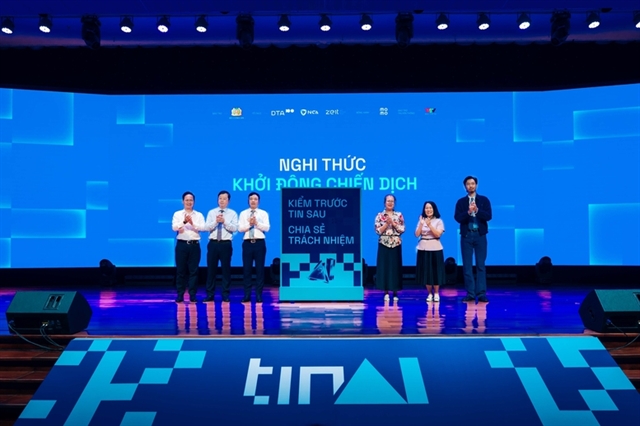 |
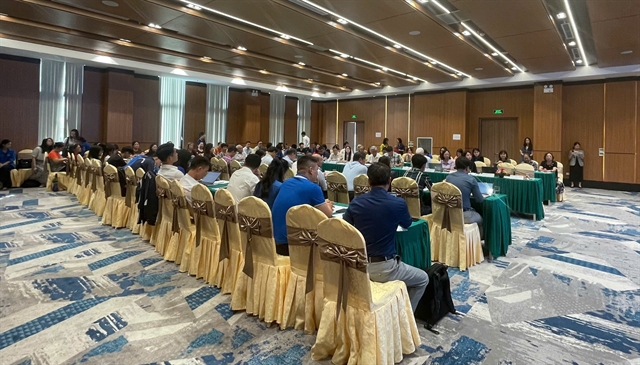
| TinAI? campaign was launched on Friday in Hà Nội. — Photo baochinhphu.vn |
HÀ NỘI — The Department of Cybersecurity and High-Tech Crime Prevention under the Ministry of Public Security launched the nationwide TinAI? campaign at Phenikaa University in Hà Nội on Friday.
The campaign is jointly organised by the Department of Cybersecurity and High-Tech Crime Prevention, the Digital Trust Alliance and the National Cybersecurity Association, with support from fintech company MoMo and the Vietnam Television (VTV).
Carrying the message 'Verify Before You Trust', the campaign seeks to foster a new public habit: before believing, sharing or making decisions based on information found online, people should take the time to verify the source, context and authenticity of the content.
The launch marks the beginning of a nationwide public communications campaign aimed at improving awareness and skills in identifying and verifying information, while combating fake news and misinformation, particularly as AI is rapidly transforming the digital information landscape.
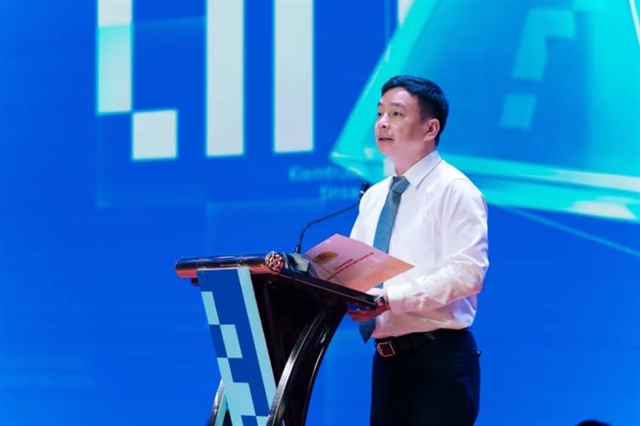
Lieutenant General Lê Xuân Minh, Director of the Department of Cybersecurity and High-Tech Crime Prevention, said that AI is fundamentally changing the way people create, access and spread information.
"Never before has it been so quick and easy to generate a convincing image, video, voice recording or story," Minh said.
"AI presents enormous opportunities for socio-economic development, innovation and improving quality of life. At the same time, however, it also creates new challenges for the information environment.
"What we are facing is not merely an increase in fake news or misleading content. More importantly, the line between truth and falsehood is becoming increasingly blurred. What we see, hear or read online can no longer automatically be assumed to be true," he noted.
Against this backdrop, Minh stressed that safeguarding cybersecurity is not only about protecting information systems, data or digital infrastructure.
"More importantly, it is about protecting public trust in information. A piece of false information that spreads widely can damage the reputation of individuals, businesses and organisations, create public anxiety, undermine security and public order, and affect the country's sustainable development," he said.
According to Minh, no matter how advanced technology becomes, it can never fully replace human judgement.
"No tool can verify every piece of information on our behalf. No agency can keep pace with millions of pieces of content generated every day," he said.
The lieutenant general said the most fundamental solution is to build a culture of verification throughout society, ensuring that every citizen develops the habit of checking sources, cross-referencing information and thinking carefully before believing, sharing or acting on online content.
"This is no longer just a digital skill. It is becoming an essential civic competency in the AI era," he said, adding that this was the reason behind the launch of the campaign under the slogan 'Verify Before You Trust'.
Minh expressed his hope that the campaign would build a broad partnership network involving Government agencies, news organisations, technology companies, digital platforms, social organisations, content creators and the general public.
"Each stakeholder, through its own role, can help build a healthy information ecosystem where truth spreads faster and trust is built on the foundation of verification," he said.
The event also saw the launch of the 'True or False – Fact Check' bulletin, which is jointly produced by VTV's News Department and the Cybersecurity and High-Tech Crime Prevention Force.
The programme will provide the public with a concise, authoritative and timely source of information on major incidents, emerging scams and online content requiring verification.
As part of the event, a panel discussion titled 'Building a Verification Mindset in the AI Era' brought together experts, Government representatives, journalists, technology companies and digital content creators.
Speakers from technology firms, digital platforms, academia, psychology, the media and the content creation community shared perspectives on the challenges AI poses to the information environment, as well as the responsibilities of different stakeholders in building a transparent and trustworthy information ecosystem.
Participants agreed that in the AI era, combating fake news is not solely the responsibility of Government agencies or news organisations, but requires the participation of society as a whole.
Every internet user can become a gatekeeper of information by developing the habit of verifying content before sharing it. — VNA/VNS
Society
 Society
 Society
 Society
 Society
 Society
 Society
 Society
 Society
 Society
 Society
 Society
 Society
 Society
 Society