 Society

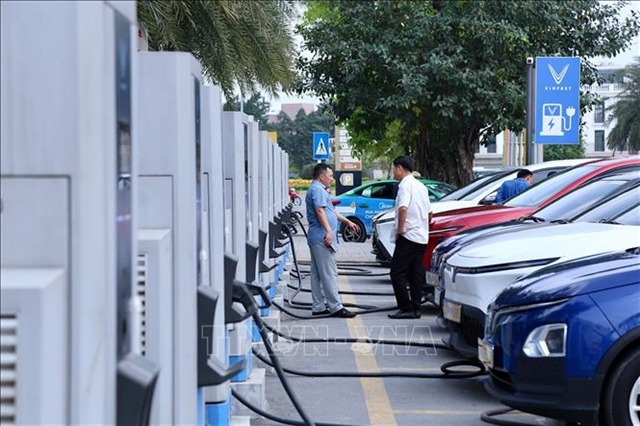
Integrated planning needed for urban e-vehicle charging networks: expert
1.
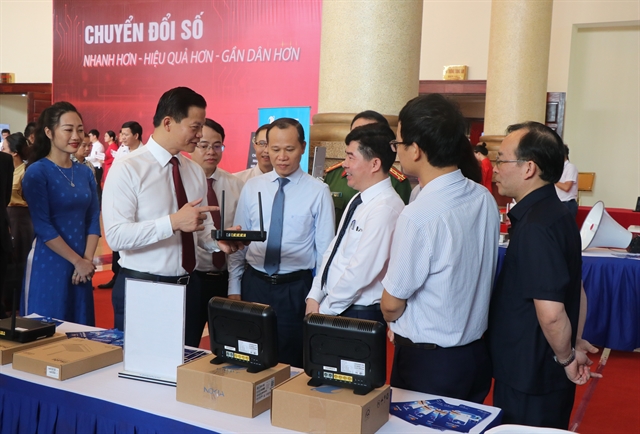 |
| Participants visit the digital transformation exhibition programme.— Photos courtesy of the People's Committee of Bắc Ninh |
BẮC NINH — Authorities, sectors, businesses and residents in the northern province of Bắc Ninh have been urged to continue investing in telecommunications infrastructure, data centres, and modern cloud-computing platforms.
They must ensure safety and seamless connectivity from urban to rural areas and creating a solid foundation for digital economic and social development.
The call was made in pursuit of the province’s goal of achieving “Faster, more effective and more citizen-centred digital transformation”, said Mai Sơn, Permanent Vice Chairman of the provincial People’s Committee.
.jpg) |
| Officials guide people to carry out administrative procedures at the Sơn Động Commune Administrative Centre in the northern province of Bắc Ninh. |
He was speaking at the 2025 Digital Transformation Day workshop, themed “Universal, comprehensive and end-to-end digital transformation – accelerating breakthroughs in Bắc Ninh’s digital economy”.
The event, he said, was significant in reviewing progress, sharing experience, showcasing effective models and creative practices, and identifying priorities and solutions to ensure digital transformation becomes a key driver of rapid and sustainable provincial development.
Sơn also called for continued standardisation, interconnection and enrichment of shared databases; stronger administrative reform; and improved quality of online public services, working towards fully end-to-end digital public services.
The province encourages businesses, especially small and medium-sized enterprises, household firms and cooperatives, to embrace digital transformation.
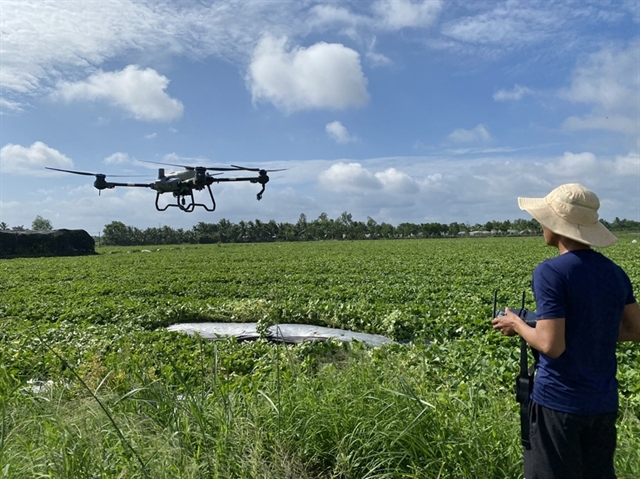
The province intends to support the expansion of e-commerce, digital logistics, digital agriculture and digital tourism, and foster models such as “smart factories” and “smart craft villages” tailored to local characteristics.
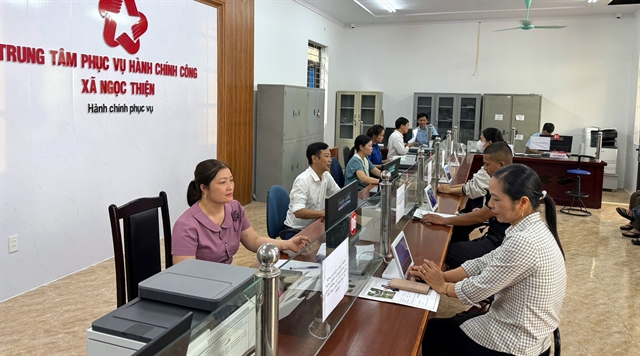 |
| People at the Public Administration Service Centre of Ngọc Thiện Commune, in the northern province of Bắc Ninh. |
Digital transformation is not simply a global trend but an inevitable requirement for renewing the growth model and enhancing productivity and economic competitiveness, he added.
The province considers digital transformation a central task and a pillar of socio-economic development – “the central nervous system” of two-tier local government where all data, information and processes are interconnected to improve governance and better serve citizens and businesses.
In recent years, with close provincial Party leadership, decisive action by the People’s Committee, business community and the public, the province’s digital-transformation efforts have achieved comprehensive and visible results.
The province now boasted 4G coverage for 99 per cent of the population and 5G coverage for more than 50 per cent.
Its dedicated data-transmission network and online-conference system reach all communes and wards.
All mandatory administrative-procedure records have been fully digitised; more than 96 per cent of applications are submitted online; and nearly 80 per cent of payments are made electronically.
The province ranks first nationwide for serving citizens and businesses in administrative-procedure processing.
In terms of the digital economy, digital value-added accounts for more than 43 per cent of the province’s GRDP - the highest in the country.
E-commerce is expanding rapidly, with many enterprises applying digital platforms in management, production and sales.
In the digital-society sphere, 97 per cent of residents have electronic health records linked to VNeID; all medical and educational establishments have implemented electronic medical records and digital student records; all villages and neighbourhoods have community digital-technology teams; and digital skills are widely disseminated among the population.
During the workshop, participants also discussed lessons and solutions for building datasets to support comprehensive transformation in agriculture and environmental management; developing telecommunications and internet infrastructure; expanding 5G coverage to more than 60 per cent of the population in 2025; and applying end-to-end artificial intelligence in administrative-procedure processing.
According to an expert from VNPT Group, as the province operates a two-tier local-government structure, AI applications can help residents and businesses easily look up administrative processes through AI assistants, reduce waiting times and support the correction and completion of documents.
Officials can save time in verification and proactively identify invalid submissions, while leaders can monitor real-time processing capacity via visual statistical dashboards, helping to pinpoint bottlenecks and issue timely and effective direction.— VNS
Society
 Society
 Society
 Society
 Society
 Society
 Society
 Society
 Society
 Society
 Society
 Society
 Society
 Society
 Society