 Society

Việt Nam, World Bank Group step up cooperation ahead of APEC 2027
1.
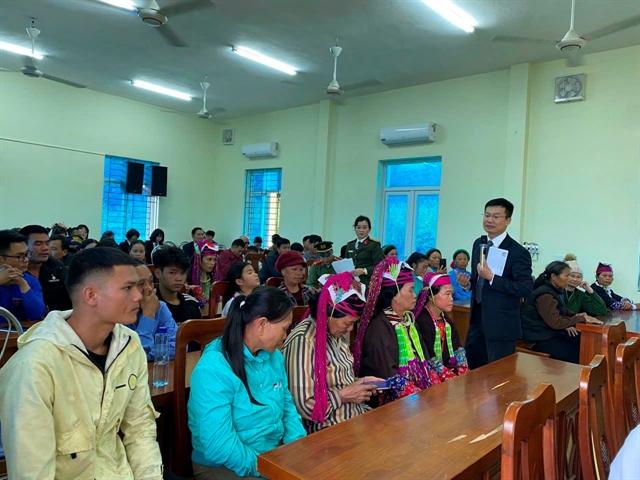 |
| Lawyers and Ministry of Public Security officers provide legal aid to people in difficult circumstances in Quảng Ninh. — Photo danchuphapluat.vn |
By Hoàng Minh Hiển
Legal aid is one of Việt Nam’s most important social policies, reflecting the humanitarian commitment of the State to ensure equal access to justice for all citizens, especially vulnerable groups.
Through legal aid, disadvantaged people receive free legal services when disputes arise, helping to raise legal awareness and prevent violations of the law.
In this system, lawyers play a central role, directly advising, representing and defending vulnerable individuals.
Yet in reality, legal aid continues to face serious difficulties in terms of institutional mechanisms, financial resources and methods of implementation.
Who is entitled?
Vietnamese law and international conventions recognise a wide range of vulnerable groups entitled to legal aid. These include children, persons with disabilities, people living with HIV, ethnic minorities in difficult circumstances and human trafficking victims.
Legal aid for these groups, currently, is delivered mainly through two channels.
The first is State legal aid, organised by state-run Legal Aid Centres with the participation of collaborating lawyers. The second is legal aid conducted by Bar Associations, law firms and individual lawyers, either on a voluntary basis or at the request of agencies and organisations under contractual arrangements.
In both models, lawyers form the core professional force.
Lawyers assist people living in poverty through multiple channels: direct legal consultation at law offices, grassroots legal awareness campaigns and free-of-charge participation in legal cases.
Legal aid is also delivered through thematic programmes and projects linked to pressing local issues or social concerns that directly affect the poor communities.
These efforts allow them to receive timely legal protection, reduce the risk of prolonged disputes and complex complaints and resolve cases in a reasonable and consensual manner.
For women, legal aid focuses on marriage and family relations, domestic violence prevention and the protection of rights in labour and civil matters.
Lawyers do not operate in isolation. They frequently coordinate with social organisations, support centres and law-enforcement agencies to ensure comprehensive protection for women in vulnerable situations.
Many domestic violence cases have been intervened in promptly. Victims receive legal advice, psychological support and safe accommodation at shelters such as 'Peace Houses', which provide temporary refuge for abused women and children.
Children are a group requiring special protection. Legal aid lawyers commonly participate in cases involving abuse, violence and disputes over custody and care.
Defence and protection are conducted using child-friendly methods that respect children’s psychological development.
Lawyers also coordinate with child-protection agencies, social organisations and schools and take part in school-based legal education and counselling.
As a result, children are better protected in judicial procedures, coercive interrogation is reduced and young victims receive assistance to reintegrate into their communities and recover psychologically.
People with disabilities and elderly citizens face specific obstacles in accessing legal services, including limited mobility and difficulties using digital technology.
In response, legal aid lawyers adapt their working methods to individual needs. These include mobile consultations conducted at the client’s place of residence, the use of sign language for people with hearing impairments and large-print documents for elderly clients with visual or mobility limitations.
Many cases linked to social allowances, insurance, inheritance and land-use rights have been handled effectively through these tailored approaches.
Legal aid has helped ensure that people with disabilities and the elderly enjoy greater equality in accessing the law and legal services.
Legal aid for ethnic minorities in remote areas is regularly provided through coordination among lawyers, local authorities, the Vietnam Fatherland Front and mass organisations.
Mobile legal aid teams are dispatched to villages where ethnic minority populations are concentrated and to areas facing sensitive disputes, such as land compensation and site clearance.
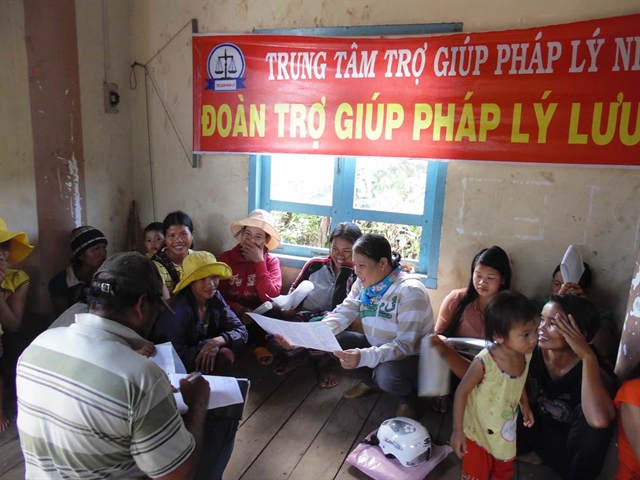 |
| A mobile legal aid team offers on-site support to women from an ethnic minority community. — Photo tiengchuong.chinhphu.vn |
The focus of these activities is often on land, marriage and administrative issues – areas where misunderstandings can easily escalate into conflict.
Lawyers apply accessible communication methods, including storytelling and interactive activities, to improve legal awareness among local residents.
As a result, many disputes are resolved through mediation, contributing to community solidarity and grassroots social stability.
Legal aid lawyers regularly participate in criminal proceedings to defend suspects and defendants who fall within the legally entitled categories.
This includes minors aged from 16 to under 18 who are denounced, proposed for prosecution, held in emergency custody or formally charged, as well as some cases involving persons aged from 14 to under 16. It also includes accused persons who fall under mandatory defence appointment provisions under criminal procedure law.
Lawyers take part from the investigation stage through prosecution and trial, collecting evidence and carrying out defence activities.
Their participation enhances the quality of courtroom debate and strengthens the protection of human rights in criminal proceedings. In many cases, this role has been recognised and highly valued by procedural authorities.
Main challenges
Current regulations governing remuneration and working-time calculation place legal aid lawyers at a disadvantage compared with State legal aid officers.
Although both perform legal aid work, many essential activities undertaken by lawyers are not fully counted for payment.
These include meetings with defendants who are on bail, meetings with victims and witnesses for defence preparation and time spent studying case files at home or in the office.
In contrast, legal aid officers are allowed to count a broader range of working time, including preparation and contact with the aided persons’ relatives.
Differences also appear in the way postponed court hearings are handled, with lawyers receiving only partial recognition of working time. The level of remuneration remains low and is not commensurate with professional requirements.
Public awareness of the right to legal aid remains limited. Many people do not proactively seek legal services when facing disputes or legal violations.
At the same time, legal aid cases are becoming increasingly complex, while beneficiaries often lack basic legal understanding and may even refuse legal assistance when introduced by procedural authorities.
Heavy workloads and rising social expectations place significant pressure on legal aid lawyers. In some cases, this affects their ability to fully meet professional responsibilities.
In certain provinces, the number of lawyers remains limited. Some Bar Associations have fewer than 15 members, many of whom are elderly and face health and travel constraints.
Specialised expertise is also lacking in complex areas, such as legal aid for persons with hearing or visual impairments, people with severe mobility disabilities or defendants accused of committing crimes using computer networks or electronic devices.
The application of information technology in legal aid remains limited. Many areas still lack hotlines, integrated digital platforms or mobile applications for receiving and managing legal aid cases.
Meanwhile, online fraud and online 'kidnapping' schemes continue to increase rapidly, causing major financial losses and increasingly targeting students and young people who lack sufficient risk-identification skills.
Proposals to improve
Working time should be calculated based on actual working days rather than aggregated hours. Time spent meeting defendants on bail, meeting victims and witnesses, studying case files and preparing defence arguments should be properly recognised.
Overtime, holiday and night work performed at the request of procedural authorities should be paid under established labour principles.
State funding for legal aid for vulnerable groups should also be increased, alongside mechanisms that encourage broader social participation.
Regular commendation and recognition should be awarded to lawyers and organisations with outstanding contributions. Clear quality-assessment criteria based on effectiveness and client satisfaction should be established as a basis for evaluation and recognition.
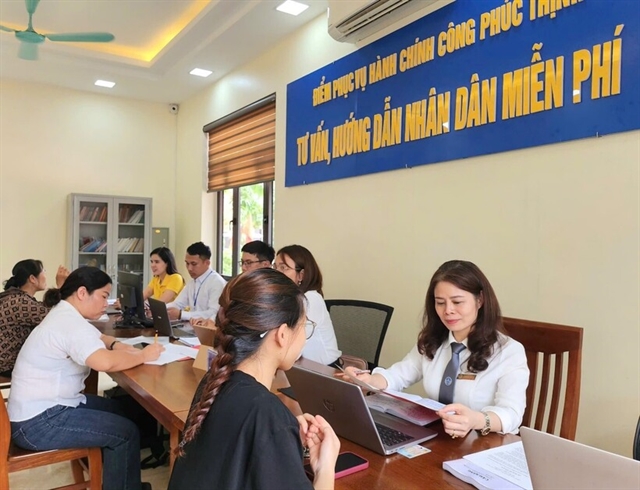 |
| A young person seeks legal aid from lawyers at a local public service centre. Photo lsvn.vn |
Emulation movements should be promoted throughout Bar Associations and law-practising organisations and widely disseminated through official information channels.
A network of specialised legal aid lawyers should be developed to facilitate the sharing of data, experience and professional practice.
A national legal aid information portal and mobile application should be established. Artificial intelligence could be applied to classify, monitor and evaluate legal aid cases, including those handled by lawyers.
Communication campaigns should more widely promote the right to legal aid, particularly among minors. Broader awareness of society’s responsibility toward protecting vulnerable people must be strengthened through sustained public education efforts. — VNS
Society
 Society
 Society
 Society
 Society
 Society
 Society
 Society
 Society
 Society
 Society
 Society
.jpg) Society
Society
 Society
 Society