 Society
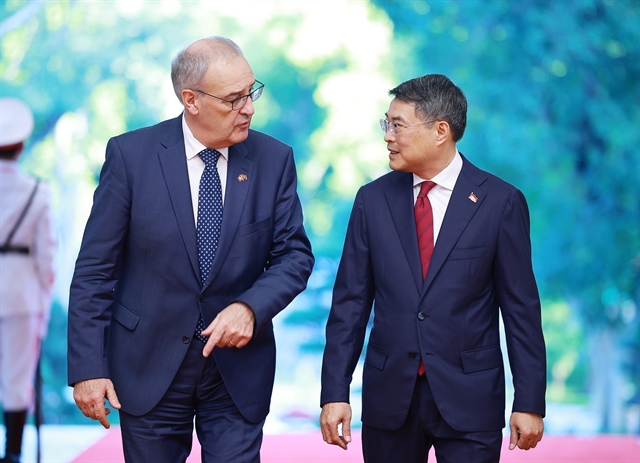
Việt Nam, Switzerland to turn education, sci-tech, innovation into cooperation focus
1.

|
| Participants attend a training workshop on strengthening communication for child labour prevention, organised by the Ministry of Health in HCM City on December 8. — VNA/VNS Photo Thanh Vũ |
HCM CITY — Communication plays a pivotal role in preventing and reducing child labour by shaping public awareness and driving collective action to protect children, experts said at a training workshop held on Monday (December 8).
The event, organised by the Department of Maternal and Child Health under the Ministry of Health, provided capacity-building for journalists and social media content creators on child labour prevention.
Speaking at the workshop, Đặng Hoa Nam, Vice President of the Association for the Protection of Children’s Rights and former Director of the Department of Children, highlighted global and national trends in child labour, as well as the challenges and responsibilities facing the media.
Nam said an estimated 541 million youth aged 15–24 are currently part of the global workforce. In 2020 alone, 160 million children aged five to 17 were engaged in child labour, including 79 million in hazardous work.
Some 70 per cent of child labourers work in agriculture, followed by 19.7 per cent in services and 10.3 per cent in industry. A significant share remain out of school, including 28 per cent of children aged five to 11 and 35 per cent of those aged 12–15.
In Việt Nam, the 2023 National Child Labour Survey recorded 731,600 working children aged five to 17, accounting for 3.5 per cent of the child population – a 5.6 per cent decline from 2018. Of these working children, 84.6 per cent live in rural areas and 55 per cent are out of school.
According to the legal definition, 269,603 children (1.3 per cent of all children) are classified as child labourers – a significant drop in recent years.
Việt Nam is on track to achieve its child labour reduction targets of 4.9 per cent by 2025 and 4.5 per cent by 2030, Nam said.
However, challenges persist: 76.4 per cent of child labour is in rural areas; 35 per cent of children work in hazardous conditions; 18 per cent work at night; and 12 per cent suffer work-related health issues.
“The line between children helping with family work and child labour is often unclear, particularly in traditional craft villages,” he said. When children participate in income-generating production or activities that enter supply chains, it can be classified as child labour.
Nam also noted that stricter import regulations in many countries have made child labour a critical trade compliance issue for Vietnamese businesses.
Việt Nam has committed to eliminating child labour and is among 25 pioneering countries in this effort. It has ratified key international conventions on child protection and integrated child labour standards into new-generation free trade agreements such as the CPTPP and EVFTA. The country has also implemented poverty reduction schemes, scholarship programmes, social assistance, and vocational training initiatives for at-risk children.
Despite progress, Việt Nam continues to face obstacles, including widespread informal labour, vulnerabilities caused by natural disasters and pandemics, child migration, school dropout, limited local detection capacity and insufficient inspection resources.
“The media is essential in exposing risks, shaping public understanding and mobilising support for child protection,” Nam stressed. Reporting not only highlights the negative impacts of child labour on economic growth and human resources but also showcases effective interventions by families, authorities, businesses and communities.
He emphasised that child-related reporting must uphold principles of best interest, privacy protection, accuracy and national interest.
“Journalists can approach the issue from social, economic or political perspectives, but children must remain at the centre,” he said.
.jpeg)
|
| Đặng Hoa Nam, vice president of the Association for the Protection of Children’s Rights, speaks at a training workshop on child labour prevention in HCM City on December 8. — VNA/VNS Photo Thanh Vũ |
Recommended communication formats include investigative features, documentaries, interviews, talk shows and human-interest stories delivered via print, broadcast, online platforms and social media.
Large-scale campaigns such as World Day Against Child Labour also offer opportunities to amplify messages and mobilise community action.
Phạm Đình Nghinh, Vice President of the HCM City Association for the Protection of Children’s Rights, said the programme aims to equip media professionals with greater awareness and practical skills to strengthen child protection efforts.
“Every accurate and compassionate media product plays a meaningful role in reducing child labour and creating a safer environment for children,” he said.
Dr Nguyễn Hiệp Trí, a gender and equality expert, outlined key legal provisions governing the reporting of sensitive content and underscored the importance of adhering to journalistic ethics, particularly regarding confidentiality of children’s personal information.
Participants were also briefed on international and domestic child protection frameworks. Việt Nam is among the first 25 countries to ratify the UN Convention on the Rights of the Child and is a signatory to ILO Conventions 138 and 182.
The 2015 Penal Code outlines multiple offences related to exploitation, coercion, trafficking and unlawful use of children, supplemented by administrative sanctions as an additional deterrent. — VNS
Society
 Society
 Society
 Society
 Society
 Society
 Society
 Society
 Society
.jpg) Society
Society
 Society
 Society
 Society
 Society
 Society