Life & Style
Top Vietnamese leader highlights new horizon for Việt Nam–Denmark cooperation
1.
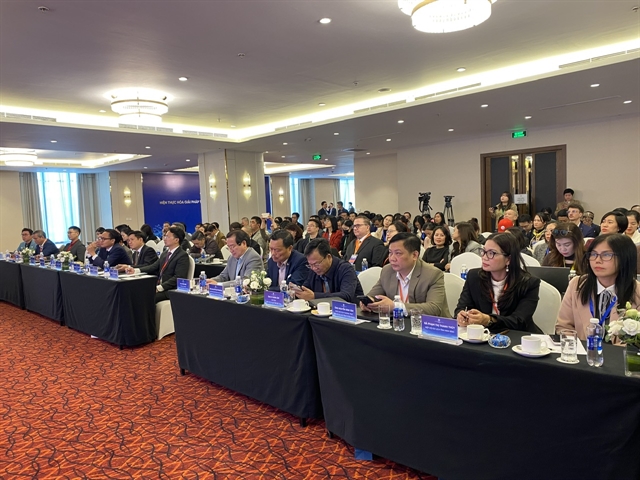 |
| Delegates take part in the forum titled "Realizing Solutions to Enhance the Attraction of International Tourists to Hà Nội". Photo vietnamtourism.gov.vn |
HÀ NỘI — The Hà Nội tourism sector aims to become a leading destination in the Asia–Pacific region and a key hub connecting domestic and international tourism in the near future, with initial targets of welcoming more than 35.8 million visitors and generating over VNĐ160 trillion (US$6.08 billion) in revenue by 2026.
The Hà Nội Department of Tourism has recently organised a forum titled "Realizing Solutions to Enhance the Attraction of International Tourists to Hà Nội", collecting ideas and opinions from agencies, associations, and businesses.
Many proposed solutions and suggestions were discussed, aiming to help Hà Nội proactively develop plans to ensure its achievement and subsequent international tourist market targets.
Successful 2025
In 2025, Hà Nội's tourism industry has seen strong development, achieving many positive results with all indicators at high growth rates, exceeding the set targets and plans.
Specifically, the city has welcomed over 33.7 million visitors, an increase of 20.87 per cent compared to 2024, including over 7.82 million international tourists, an increase of 22.76 per cent compared to last year (accounting for approximately 37 per cent of the national total).
Total revenue from tourism is estimated to surpass VNĐ134.46 trillion, an increase of 21.5 per cent compared to 2024.
"These figures demonstrate the growing attractiveness of the capital city on the regional and global tourism map," said Trần Trung Hiếu, Deputy Director of the Hà Nội Department of Tourism.
The achievement thanked to Hà Nội's upgraded transportation infrastructure, which encompassed all road, rail, water, and air transport modes, to meet the increasing traveling demand of local people and visitors.
The inner-city public transport system is comprehensive and diverse: public buses, the BRT system, and airport bus routes; and two metro lines.
Hà Nội has witnessed a significant shift in the structure of its international tourist market. In addition to traditional markets such as Northeast Asia and ASEAN, the city has received a large number of customers from the Americas, Europe, the Middle East, and Australia.
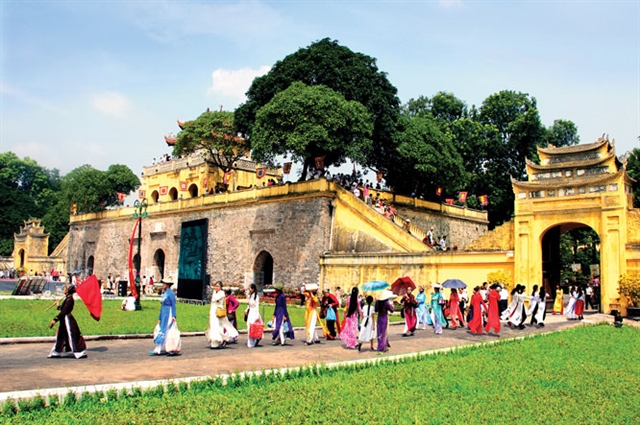 |
| Visitors to Thăng Long Citadel, a UNESCO World Heritage site of Hà Nội. Photo vietnamtourism.gov.vn |
In addition to the growth in visitor numbers and revenue, Hà Nội continues to be a world favourite destinations through a series of awards and accolades from prestigious international organisations such as the World Travel Awards, TripAdvisor, Time Out, Agoda, and TasteAtlas.
Fodor's Travel (USA) included the Metropole Hotel Hanoi in its list of the 100 best hotels in the world in 2026, The New York Times suggested a 36-hour itinerary for tourists visiting Hà Nội, and the capital city is also among the top 20 friendliest cities in the world.
Challenges and solutions
Despite remarkable growth rate, Hiếu acknowledged the shortcomings.
While the number of international visitors rose significantly, their average length of stay and spending remained below the city’s potential.
Tourists were still cautious about shopping due to several factors, including the limited development of night-time tourism, a shortage of high-end, cultural and experiential products, and the lack of international-standard shopping centres.
In addition, weak and uneven connectivity between Hà Nội and other localities, along with shortcomings in infrastructure, the environment, transport links, and service quality, continued to hinder growth.
At the forum, delegates comprehensively discussed and evaluated the international tourist market to Việt Nam in general and Hà Nội in particular, analysing new trends and demands of tourists in the context of recovery and increasing destination competition; and proposing solutions.
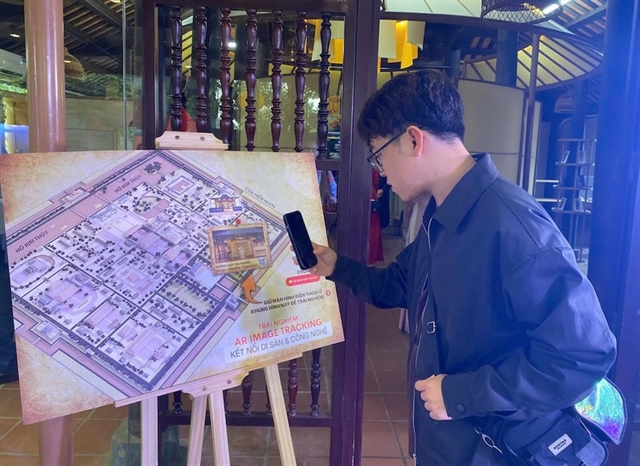
According to Nguyễn Quý Phương of the Vietnam National Authority of Tourism, Hà Nội needed to strengthen digital communication; modernise tourism information infrastructure; build an official tourism website integrated with AI to suggest itineraries for tourists; develop a high-quality image and video database to serve international promotion; apply VR/AR technology to promote heritage and remote experiences; and increase participation in international tourism fairs and events.
It was necessary to strengthen linkages between aviation, travel, and destinations, as well as regional connections to key and potential international markets such as India, the Middle East, Europe, and the Americas; and improve the quantity and quality of tourism human resources, prioritising the training of personnel proficient in foreign languages, technology, and professional conduct.
Bùi Minh Chiến from Vietnam Airlines suggested enhancing tourist experience right from the gateway. For example, airlines, accommodation providers, and travel agencies could develop co-branded product packages, such as combos of air tickets, hotels, and Hanoi experiences with cultural, entertainment, and wellness tours at the Nội Bài Airport.
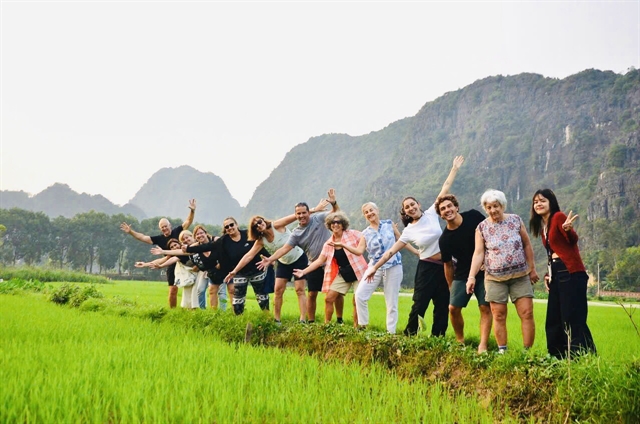 |
| Tourists in Ninh Bình Province, a destination with which Hà Nội should build strong linkages to diversify and enhance its tourism offerings. Photo courtesy of Travelogy Việt Nam |
In addition, Hà Nội needed to diversify its distinctive tourism products such as tours to museums, historical and cultural sites, and traditional craft villages; organise events, and develop and select unique Hà Nội-specific programmes and festivals for annual events.
According to Vũ Văn Tuyên, Director of Travelogy Việt Nam, to extend the length of tourists' stays, community tourism, craft villages, suburban ecotourism, and nighttime culture should be upgraded into complete product chains.
Destinations like Bát Tràng, Đường Lâm, Ba Vì, and the Hoàn Kiếm Lake area, if properly connected in terms of experiences, services, and creative spaces, would become reasons for international tourists to stay longer.
In conclusion, Deputy Director Hiếu said: “Attracting international visitors is not about slogans, but about close coordination among the State, businesses, airlines, and the community, with clear criteria for responsibilities, tasks, products, and outcomes.” — VNS
Life & Style
 Life & Style
 Life & Style
 Life & Style
 Life & Style
 Life & Style
 Life & Style
 Life & Style
 Life & Style
 Life & Style
 Life & Style
 Life & Style
 Life & Style
 Life & Style
 Life & Style