 Society

SCEX completes level 4 information system security assessment, moving closer to official operations
1.
|
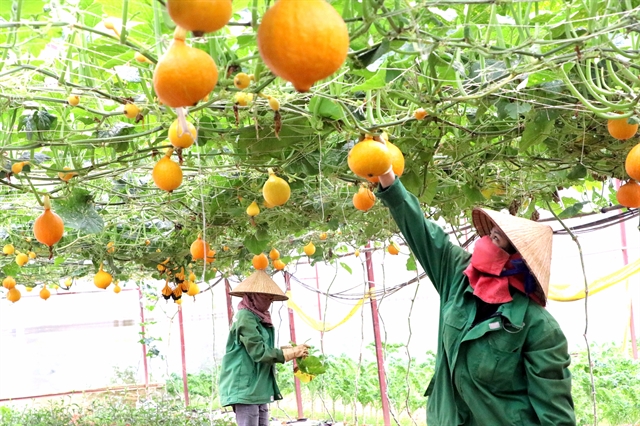
| A high-tech farm in Lâm Đồng Province’s Lâm Viên – Đà Lạt Ward. — VNA/VNS Photo |
LÂM ĐỒNG — Lâm Đồng Province is entering a new development phase as it seeks to leverage its mineral, agricultural and tourism strengths to achieve double-digit growth over 2026–30.
After merging with the former provinces of Bình Thuận and Đắk Nông in July last year, the new Lâm Đồng became the largest province in Việt Nam, covering 24,233 square kilometres and home to 3.87 million people.
Its development space now stretches from the red basalt highlands to the coast, with a 192-kilometre shoreline and fishing grounds of more than 52,000 square kilometres. It also has an international border gate with Cambodia.
Economic growth topped 6.42 per cent last year.
Hồ Văn Mười, deputy secretary of the province Party Committee and chairman of the People’s Committee, said Lâm Đồng’s potential is now substantial in minerals, marine resources, forests, and tourism.
Following the administrative merger, the province is recognised for 11 “largest” indicators, including natural area and forest coverage, reserves of titanium and alumina, and agricultural output such as dragon fruit, coffee, durian, vegetables and flowers.
It is also the country’s leading centre for sericulture and silk production.
Trade, services and tourism remained highlights in 2025.
The province welcomed more than 20 million visitors last year, over 15 per cent above the annual target.
Tourism revenues were estimated at more than VNĐ56 trillion (US$2.14 billion).
In 2025, Lâm Đồng licensed 48 non-budget investment projects with total registered capital exceeding VNĐ19.3 trillion ($737.5 million), six of them foreign-invested. The number of new enterprises rose by 114 per cent.
Healthcare, education and social welfare programmes were implemented effectively.
The programme to eliminate temporary and dilapidated housing was completed ahead of schedule.
The two-tier local government system operated stably.
Y Thanh Hà Niê Kđăm, secretary of the province Party Committee, said: “With the results achieved over the past year, especially the organisational restructuring that has opened up new development space, Lâm Đồng will continue to promote its strengths, overcome difficulties and strive to fulfil and exceed socio-economic targets in 2026, moving forward strongly in the nation’s new era.”
The province targets average economic growth of 10–10.5 per cent a year between 2026 and 2030, and to become a developed province and a dynamic growth pole in the region.
It plans to focus on bauxite and titanium mining, develop renewable energy from its strong solar and wind resources and expand high-tech agriculture in the former Đắk Nông Province.
It also plans to develop seaports and logistics services in the former Bình Thuận Province to support exports of farm produce, goods and minerals.
Local authorities are promoting stronger links between the province’s well-known destinations of Mũi Né, Đà Lạt and Tà Đùng to form a tourism triangle.
In agriculture, the province aims to achieve an output of more than VNĐ200 million ($7,650) per hectare this year, according to its Department of Agriculture and Environment.
Localities have been asked to select suitable crops and production schedules aligned with local conditions.
|
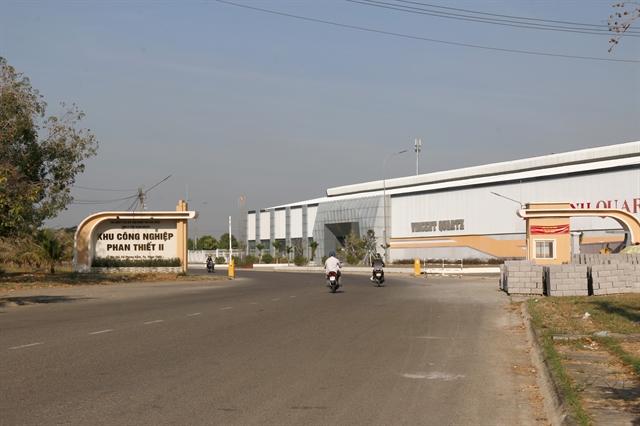
| Phan Thiết 2 Industrial Park in Lâm Đồng Province’s Bình Thuận Ward has leased out 70 per cent of its space. — VNA/VNS Photo |
Strategic breakthroughs
Lâm Đồng has identified three main breakthroughs for the 2026–30 period.
The first is to develop infrastructure, especially with strategic transport works.
These include the Tân Phú – Bảo Lộc, Bảo Lộc – Liên Khương and Gia Nghĩa – Chơn Thành expressways, along with upgrades to national highways, coastal roads and urban bypasses.
The province is accelerating upgrades to Liên Khương International Airport and Phan Thiết Airport, and investing in the Đức Trọng Inland Container Depot and Logistics Centre.
It is also studying the restoration of the Tháp Chàm – Đà Lạt railway and building new rail links connecting urban centres, industrial parks and seaports.
It is developing north–south and east–west transport corridors, including ring roads and bypasses, while upgrading rural roads and preparing land clearance for the North–South high-speed railway.
It plans to expand domestic and international routes from Liên Khương Airport to Southeast Asia and countries such as China, Japan, the Republic of Korea, and Russia, while building a green, affordable public transport system linking key economic and social hubs.
The second breakthrough focuses on administrative reform.
The province aims to remove bottlenecks in planning, compensation and land clearance, improve mechanisms to attract large private investors and enhance competitiveness and governance indicators.
It emphasises placing people and businesses at the centre of public service delivery.
The third is reform of personnel management, highlighting leadership accountability and measurable outcomes.
The province has called for a shift from “working by plan” to “working towards clear goals and outputs”, from “reporting progress” to “reporting effectiveness” and from “partial implementation” to “thorough completion”. — VNS
Society
 Society
 Society
 Society
 Society
 Society
 Society
 Society
 Society
 Society
 Society
 Society
 Society
 Society
 Society