 Life & Style


Market moves sideways after strong rebound
1.
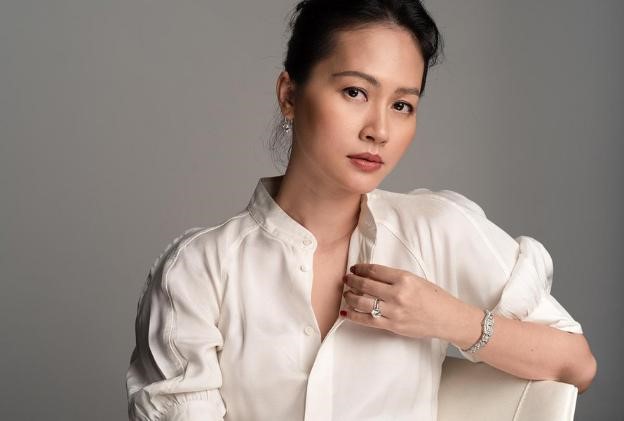 |
| Actress Đỗ Thị Hải Yến. — Photo suckhoedoisong.vn |
After more than a decade away from the silver screen, actress Đỗ Thị Hải Yến is making a notable return to cinema with three upcoming projects: Quán Kỳ Nam (Kỳ Nam Inn), Hộ Linh Tráng Sĩ – Bí Ẩn Mộ Vua Đinh (The Guardian Heroes: Mystery of King Đinh's Tomb) and 1982.
Yến, who gained international recognition for her role as Phượng in The Quiet American, directed by Phillip Noyce, spoke with Việt Nam News reporter Nguyễn Bình about her long-awaited return to acting.
Could you tell us what prompted your return to acting after your latest film Cha và con, và… (Big Father, Small Father and Other Stories) in 2015?
For me, returning to cinema is never a decision driven by timing or strategy. After Cha và con, và…, I chose to devote most of my time to my family. It was a period when I felt the need to fully embrace life’s most ordinary yet meaningful roles before stepping back into filmmaking.
Sustaining a long-term career is not simply about pushing ahead but also about knowing when to step away. Once my family life reached a greater sense of balance, and when I felt ready again, both mentally and emotionally, cinema found its way back to me.
This return, therefore, carries a deeper sense of calm and self-possession.
How did you prepare for roles in consecutive films, including the historical epic Hộ Linh Tráng Sĩ?
All three films exist in markedly different worlds, and I tailored my preparation accordingly. I always begin by reading the script carefully, followed by in-depth conversations with the director to gain a clear sense of the broader vision before fully exploring the role.
For the role of Empress Dương in Hộ Linh Tráng Sĩ, I did not approach the character as a historical figure to be merely reconstructed but as a woman navigating the crossroads of power, duty and deeply personal conflict.
When I connected with the tension between her external composure and her inner unrest, I began to discover her rhythm, her gaze and the restraint essential to the role. I think that when the emotional core is clearly defined, everything else, from vocal delivery and physicality to pacing, naturally falls into place.
Most of your films have not achieved substantial commercial success, yet they have been recognised at international film festivals. In your view, what do these films need to capture wider audience interest?
I think emotional resonance remains the most important element. The films I have been involved in often embrace a quieter, more deliberate mode of storytelling, leaving space for reflection and requiring patience from the audience.
When viewers recognise fragments of their own lives, their own questions and concerns within a film, it will find its audience even without the noise of commercial spectacle.
Are you interested in working with blockbuster directors?
I do not base my choice of project on that. What matters to me is how a director sees the world and how they engage in dialogue with their actors. If a filmmaker approaches their craft with seriousness, depth and genuine respect for the character, I am entirely open to collaboration.
Cinema offers many different paths, and I believe every encounter is worthwhile if it brings a truly meaningful professional experience.
What has it meant to you to be known for your role in The Quiet American?
Phượng remains a defining milestone in my career. Not only because The Quiet American is an international production, but because the role changed my perspective on acting, showing me how much can be expressed through restraint and stillness.
Every glance Phượng offered carried its own weight. It taught me that, at times, the true power of cinema lies in what is left unspoken.
How would you describe your current relationship with the team behind The Quiet American and director Phillip Noyce?
The Quiet American is where I found my first true kindred spirits in cinema. We do not meet often, but we have maintained a warm connection built on mutual respect.
Director Noyce has been a significant mentor in my journey. He taught me not only about acting but also about professional discipline and the attitude one must carry towards both life and filmmaking.
You were trained as a professional dancer before becoming an actress. What has had the greatest influence on your career in cinema? And how do reviews, both praise and criticism from film critics, affect you?
I listen, but I do not allow myself to be overly swayed. Both praise and criticism are part of cinema. What matters most to me is whether, after each role, I can honestly say that I have fully honoured the character and gone as far as I could with the journey.
Dance gave me a vital foundation in physical awareness, rhythm and discipline. When I entered the world of film, I realised that the body can be as powerful a storytelling instrument as dialogue itself.
Perhaps the greatest influence on my journey has been the ability to listen to the space, to my fellow actors and to my own emotions. Acting, for me, is ultimately about listening, perceiving and responding in the moment.
Do you have any hopes or aspirations for Vietnamese cinema?
I hope Vietnamese cinema will continue to create more space for diversity. It is diversity in genre, in storytelling approaches and in the individual voices of each artist.
I believe that when filmmakers are trusted to tell their stories with honesty and authenticity, audiences, too, will gradually become more open and receptive. — VNS
Life & Style
 Life & Style
 Life & Style
 Life & Style
 Life & Style
 Life & Style
 Life & Style
 Life & Style
 Life & Style
 Life & Style
 Life & Style
 Life & Style
 Life & Style
 Life & Style
 Life & Style