 Life & Style
84 individuals investigated for transnational online frauds
1.
 |
by Nguyễn Mỹ Hà
It's only the eve of the Lunar New Year, but we already seem to have had enough of boiled chicken after several consecutive meals -- enough to make even the finest dish feel monotonous.
"Mummy, can we have a roast chicken grandma style to offer to our ancestors instead of the boiled one?" asked my child, as we had been eating boiled chicken for a week since the ritual to send off our Kitchen Gods to the Jade Emperor to report on our home affairs.
Well, the answer I gave her is both yes and no. Yes, because a roast chicken can be part of a complete meal to offer to our ancestors. But nothing will ever replace the ultimate boiled rooster on the altar.
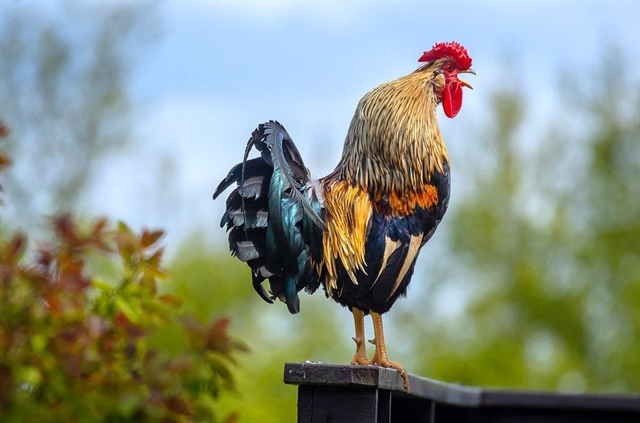
For Vietnamese people, including the Kinh, Tày, Nùng, Dao and Mông ethnic groups, the rooster serves as a bridge between the human world and the world of the Gods. It is chosen to represent the best wishes of the living for their departed ancestors.
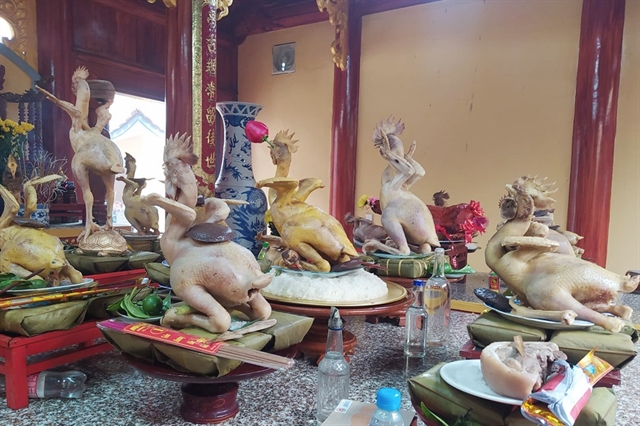 |
| CREATIVITY WITH FOOD: In Hà Tĩnh Province's Lộc Hà Ward, families carefully arranged boiled roosters boiled roosters in dynamic poses — as if taking flight, perched atop sticky rice, balanced on their feet or laid out ceremonially. — Photo courtesy of Hà Tĩnh Newspaper |
A sacred symbol
The rooster is a symbol of agriculture, which venerates the Sun. By offering a rooster, people in farming communities hope it will continue to wake the Sun each day, casting light over the crops and bringing timely rain and sunshine so harvests may flourish.
Researchers at the Oriental Centre for Ancient Studies say the rooster has long been chosen as an offering to the Gods because it possesses more beautiful and precious qualities than other domesticated poultry: humanity, bravery, wisdom and trustworthiness.
It symbolises humanity because a rooster may have 20–25 hens that produce many chicks. He stays close to the hens and young and, if he finds a worm, will give it to them. If a hawk approaches, he protects his flock with all his strength. In this way, the rooster also represents bravery. It bears a bright red comb, sharp claws like twin swords, colourful feathers like armour and carries itself tall and proud with its head held high.
The rooster is also associated with Wisdom. Some roosters may be smaller than their opponents, yet clever tactics and intelligence often bring them victory. It further symbolises faithfulness and credibility because, come rain or shine, at sunrise it leaps onto a high earthen mound to call in a new day.
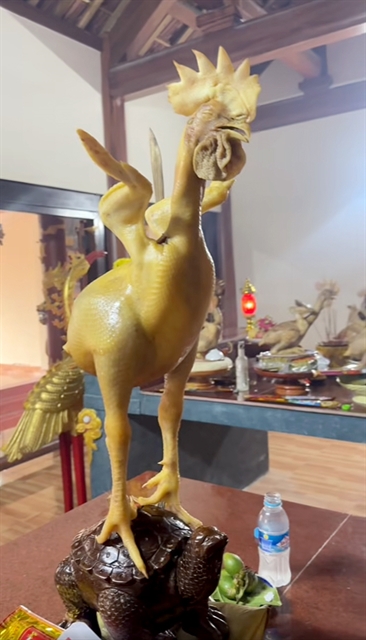 |
| RITUAL ROOSTER: A boiled 'flying rooster' is placed as an offering on the altar during special lunar-calendar rituals throughout the year. Only master chefs in Lộc Hà Ward, Hà Tĩnh Province, have perfected the craft of shaping a boiled rooster into a flight posture. — Photo courtesy of Hà Tĩnh newspaper |
Boiling the perfect rooster
A boiled rooster, complete with feet, intact intestines and boiled blood, is considered a full offering. It should be presented facing the altar. But perfectly boiling a rooster so that its head remains held high, its wings poised as if ready to fly and its feet firmly on the ground is a skill not every household cook possesses.
The bird should have golden, shining skin with no cracks or damage. Many believe that a perfectly boiled rooster will bring the family prosperity, luck and health in the Lunar New Year.
A large family may place the bird on a bed of sticky rice, red rice coloured with gấc fruit ( scientifically called Momordica cochinchinensis), or yellow rice made from mung beans. But our nuclear family is small, so I felt thankful when I found a special boat-shaped bowl to hold the boiled chicken upright on the altar. My cooking skills and utensils are limited and I can never shape a rooster as tall and beautifully upright as those seen in Hà Tĩnh ceremonies.
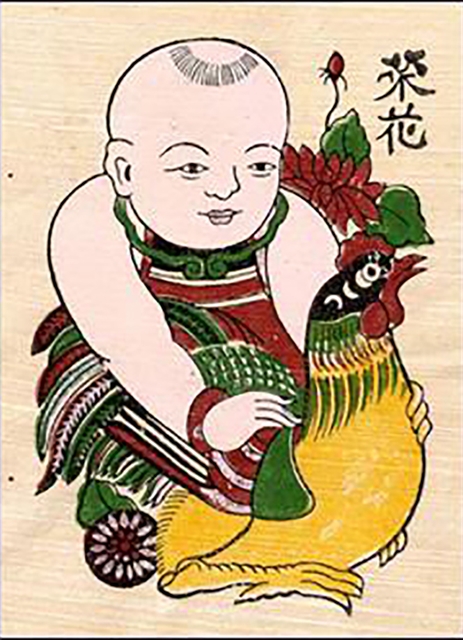 |
| 'The Boy with Rooster', a Đông Hồ folk painting featuring the words 'Vinh Hoa' (glory and prosperity) in the background, symbolises high social standing, success and wealth, and is traditionally displayed during Tết (Lunar New Year). |
Legends and local traditions
In Lộc Hà Ward in Hà Tĩnh Province, local people astonished even leading chefs by preparing tall, flying roosters for a ceremony commemorating King Mai Hắc Đế. The roosters were made to stand on the back of a wooden turtle resting on a bed of sticky rice.
Mai Hắc Đế, or the Black King Mai, was born Mai Thúc Loan in 670 and died in 723 in Hà Tĩnh. He grew up in neighbouring Nghệ An Province and is known for leading an uprising against the nortern Tang dynasty rule in the then protectorate of An Nam.
The Hoan Châu uprising was a struggle against Tang domination. In 713, Mai Thúc Loan declared himself lord, freed a large part of the Hoan and Châu regions and built his citadel in Vạn An, in what is now Nghệ An Province, for a brief period. He called himself Mai the Black King, placing himself on equal footing with rulers from the north.
King Mai Hắc Đế stands as a symbol of the will to win freedom and independence from northern rulers.
Elsewhere outside Hà Tĩnh Province, homemakers and cooks usually boil their roosters in the traditional way. According to an expert from the above-mentioned centre, a roasted, fried, stewed or simmered chicken can never replace the ultimate boiled rooster. Such dishes may form part of a larger meal presented on the altar on Lunar New Year’s Eve or at other important events.
If you do not know how to tie the wings, your local market vendor can help. At home, you will need a large casserole that can hold the chicken upright. Marinate it inside and out in salted water, then place it in boiling water seasoned with salt, roasted ginger, shallots and onion for flavour. Simmer for 10 to 15 minutes, no longer, then turn off the heat and leave it covered for half an hour to continue cooking.
Among ethnic communities in present-day Việt Nam, the Thai in the Mai Châu area refrain from offering the rooster and water buffalo to their ancestors.
As for our child’s innocent request, the roasted bird became an essential part of the meal we offered our ancestors and it tasted as delicious as we could make it.
As we say in our culture, sincerity makes up for any lack of skill or expertise. Our birds may not look as beautiful or as ready to fly as tradition suggests, but our sincere good will and honest offerings will make our ancestors satisfied. — VNS
Life & Style
 Life & Style
 Life & Style
 Life & Style
 Life & Style
 Life & Style
 Life & Style
 Life & Style
 Life & Style
 Life & Style
 Life & Style
 Life & Style
 Life & Style
 Life & Style
 Life & Style