Life & Style
Việt Nam to revise food safety law with risk-based, supply-chain approach
1.
|
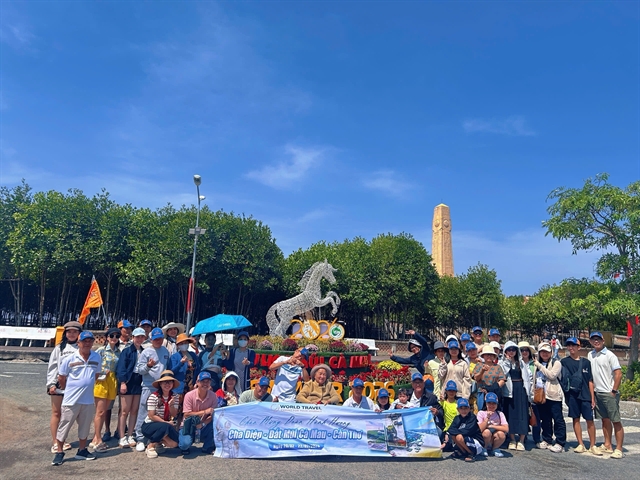
| Visitors take photos with the zodiac mascot of Tết Bính Ngọ 2026 (the Lunar New Year of the Horse), beautifully displayed at the Cà Mau Cape Tourist Area in Cà Mau Province’s Đất Mũi Commune. — VNA/VNS Photo |
CÀ MAU — Cà Mau Province welcomed hundreds of thousands of visitors during Tết Bính Ngọ 2026 (the Lunar New Year of the Horse), reaffirming its growing appeal as an eco-cultural destination.
In the first days of the holiday, major attractions such as Cà Mau Cape Tourist Area and U Minh Hạ National Park were crowded with spring travellers.
The rising popularity of experiential travel has enabled tour operators to develop distinctive products. Among them are “Tran-Việt Nam” tours linking Hà Nội, central provinces, HCM City and Cần Thơ before reaching Đất Mũi (Cà Mau Cape), which have become a favoured option for families during Tết.
Nguyễn Văn Sự, director of the Management Board of Cà Mau Cape Tourist Area, said, “the site welcomed more than 10,000 domestic and international visitors on the fourth and fifth days of Tết, bringing the total so far to over 22,500 spring travellers.
“This Tết holiday, the management board introduced several new facilities. A symbolic structure representing the Lunar New Year of the Horse was installed at the main entrance. Prices were strictly controlled and unchanged from 2025,” he said.
|
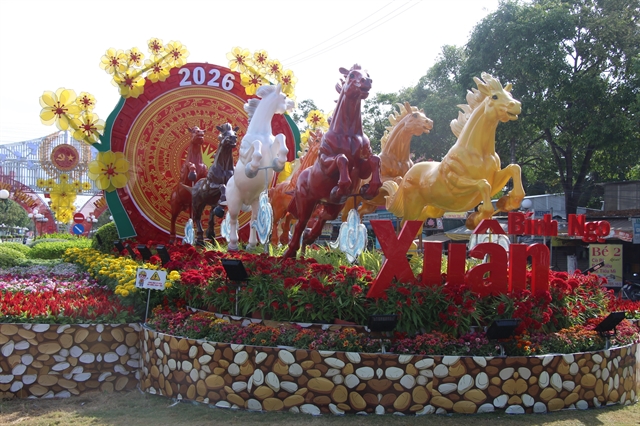
| Public spaces in Cà Mau Province are brightly decorated during Tết Bính Ngọ 2026. — VNA/VNS Photo |
For many tourists, setting foot on Việt Nam’s southernmost point evokes a sense of pride.
Trương Cẩm Trúc, a visitor from Cần Thơ, said it was her first visit to Đất Mũi.
“I feel a deep sense of warmth and pride. The air was fresh and the natural surroundings were unspoilt. All visitors’ needs were met in a careful and professional way,” she said.
A distinctive feature of this year’s tourism season is the integration of renewable energy and eco-tourism.
Hòa Bình 1 Wind Power Tourist Area demonstrates how a wind power project can become an environmentally friendly attraction.
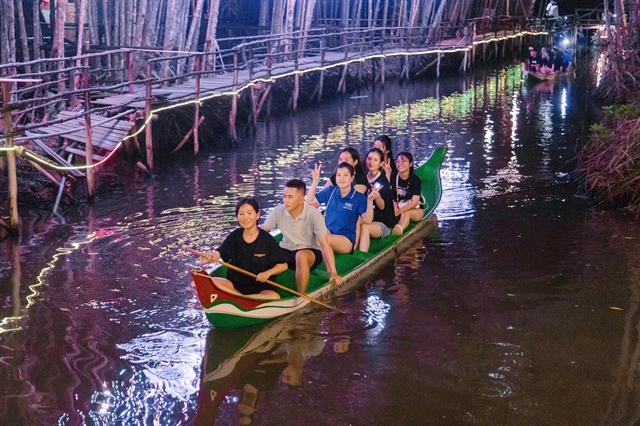
With no fewer than 5,000 visitors a day, it offers experiences such as rowing boats through mangrove forests beneath giant wind turbines, fishing and cycling along forest trails.
The model not only diversifies tourism products but also underscores the message of balanced economic and environmental development.
|
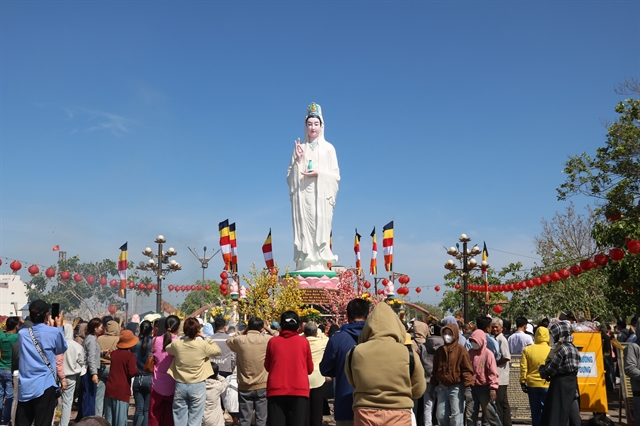
| Cà Mau Province’s appeal also lies in its well-known religious and spiritual sites, including Quán Âm Phật Đài (the Avalokiteshvara Bodhisattva statue) in Phường Hiệp Thành, which has drawn large crowds of locals and visitors during Tết. — VNA/VNS Photo |
Cà Mau’s appeal also lies in its religious and spiritual landmarks, including Quan Âm Phật Đài (the Avalokiteshvara Bodhisattva statue), Giác Hoa Pagoda, Hưng Thiện Pagoda and Tắc Sậy Church. During the early days of Tết, streams of visitors came to pray for luck and peace, creating a lively yet reverent atmosphere.
Public spaces such as Hùng Vương Square, marked by a traditional đàn kìm (a traditional Vietnamese two-stringed lute) symbol, and Phan Ngọc Hiển Square, home to Việt Nam’s largest shrimp symbol, were attractively decorated, enhancing the festive mood.
Beyond its scenery, the province’s local hospitality and cuisine remain strong attractions.
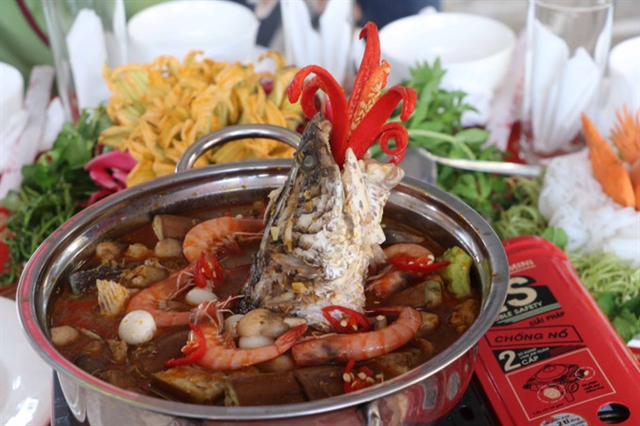
At community-based and eco-tourism sites including Hoàng Hôn, Hương Tràm and Hoa Rừng U Minh, visitors enjoy forest and sea specialities such as steamed crab, grilled snakehead fish and fermented fish hotpot.
|
| Lẩu mắm, a local fermented fish hotpot, is a speciality dish in Cà Mau Province. — VNA/VNS Photo |
Attentive service at reasonable prices has reinforced the image of a safe and welcoming destination.
Phạm Hồng Lắm, manager of Hương Tràm Eco-tourism Site, said the site welcomed more than 3,300 visitors on the fifth day of Tết alone.
The site increased staffing and upgraded services to ensure that every visitor experienced a warm countryside Tết and the sincere hospitality of people from the legendary U Minh Hạ forest region, she said.
The nine-day Tết holiday, from February 14 to 22, provided a significant boost to local tourism.
Lý Vỹ Triều Dương, deputy director of the province Department of Culture, Sports and Tourism, said authorities paid special attention to destinations expected to attract large numbers of pilgrims and eco-tourists.
Service providers were urged to offer suitable promotional packages while maintaining transparent pricing and public order, he said.
|
| Visitors enjoy a boat trip through the mangrove forest at Cà Mau Cape in Cà Mau Province’s Đất Mũi Commune. — VNA/VNS Photo |
Digital transformation
Digital transformation has emerged as another strategic driver.
Cà Mau has deployed a smart tourism system that enables businesses and visitors to connect more efficiently, overcoming geographical barriers.
Through the province’s Tourism Information Portal and virtual assistant functions, users can access itineraries, services and cultural events.
Digitalisation has also improved management and enabled data sharing with the Vietnam National Authority of Tourism, expanding international promotion of the Đất Mũi brand.
Travel companies are increasingly applying artificial intelligence, including chatbots offering round-the-clock support and cashless payment systems, to personalise tourism services.
Ngô Vũ Thăng, Deputy Chairman of the Province People’s Committee, said digital transformation was a requirement for the next stage of development.
“Technology will help build tourism products that reflect the distinctive identity of the country’s southernmost region,” he said.
|
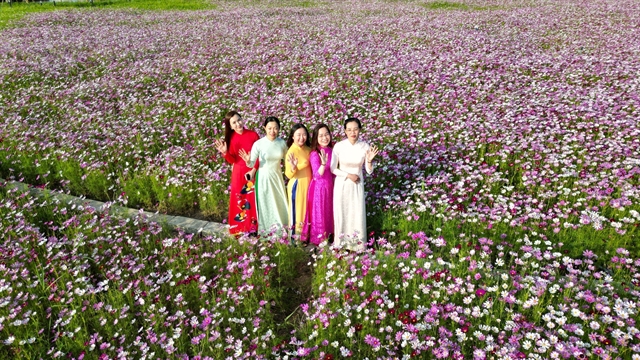
| A cosmos flower garden covering more than 2.5ha in Cà Mau Province’s Tân Thành Ward attracts large numbers of visitors for Tết sightseeing. — VNA/VNS Photo |
According to the province’s official statistics, the number of visitors to the province during Tết reached 407,313 as of the morning of the fifth day of Tết, up 19.4 per cent year-on-year.
The province aims to welcome 8.5 million visitors and earn tourism revenue of VNĐ9.5 trillion (US$366 million) this year.
It is reviewing its tourism development plan for 2021–30, with a vision to 2045.
Tourism promotion will be strengthened on digital platforms and through multimedia channels in line with global trends.
The regular organisation of major cultural events, tourism fairs, farm trips and press trips is expected to further bring the image of Đất Mũi closer to international visitors. — VNS
Life & Style
 Life & Style
 Life & Style
 Life & Style
 Life & Style
 Life & Style
 Life & Style
 Life & Style
 Life & Style
 Life & Style
 Life & Style
 Life & Style
 Life & Style
 Life & Style
 Life & Style