 Society
84 individuals investigated for transnational online frauds
1.
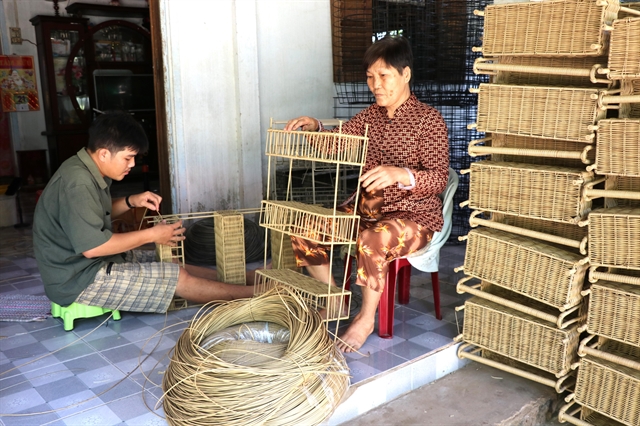 |
| Craftsmen in Phú Thọ 2 Hamlet in Vĩnh Long Province’s Tiểu Cần Commune weave products for export. — VNA/VNS Photo Thanh Hòa |
VĨNH LONG — Vĩnh Long Province is reshaping its rural economy by promoting diversification of livelihoods beyond traditional farming, creating jobs, raising incomes, and improving rural living standards.
Alongside agriculture, the Cửu Long (Mekong) Delta province has expanded non-farm activities, including rural trades linked to exports and community-based tourism.
Phú Thọ 2 Hamlet in Tiểu Cần Commune is one example, developing small-scale production models, mainly of export-oriented handbags and traditional handicrafts.
One such initiative is a handbag workshop organised by Nguyễn Thị Thanh Thúy in cooperation with a business partner. Drawing on links with an export manufacturer, she introduced the model to the hamlet two years ago and set up a workshop that now provides regular employment for more than 10 people with monthly incomes of VNĐ4–6 million (US$154–230).
Nguyễn Thị Ngọc Giàu, one of the workers, said her family owns no farmland and previously depended largely on her husband’s seasonal labour.
Since 2024, she has taken on sewing work at home in her spare time earning an extra VNĐ100,000–150,000 ($3.9–5.8) a day.
“Even though the income is modest, having money coming in every day helps my family manage expenses and support our children’s education.”
Phú Thọ 2 Hamlet has 390 households and once relied almost entirely on farming of around 260 hectares.
With the expansion of non-farm activities suited to local conditions, living standards have improved and the hamlet no longer has poverty.
Huỳnh Bảo Kỳ, head of the local People’s Committee, said models for processing products have been particularly effective for middle-aged women and underemployed workers.
They allow families to continue farming while earning additional incomes, reducing the need to seek work elsewhere.
Elsewhere in the province, farmers are restructuring crop production to improve returns.
Thạch Ra of Đại Mong Hamlet in Tiểu Cần Commune converted a 2,500-sq.m low-yield rice paddy into a coconut orchard that intercropped sawtooth coriander.
His family now supplies nearly 3,000kg of the herb every month, getting around VNĐ7,000 (26 US cents) per kilogramme.
“It’s easy to grow, has few pests and can be harvested year-round,” he said.
According to the provincial Department of Agriculture and Environment, Vĩnh Long has 89 recognised traditional occupations and craft villages, involving nearly 14,000 households and more than 41,800 workers.
These activities contribute to growing rural incomes while also preserving traditional skills and making use of idle labour.
Many handicraft and processed agricultural products have also entered export supply chains.
As a result of diversified livelihoods, the average rural income in the province has risen to around VNĐ62 million ($2,390) per person per year, more than VNĐ20 million ($770) up from 2020.
This year the province plans to expand vocational training linked directly to job creation and household economic activities, while tightening oversight to ensure training leads to actual employment.
OCOP products
Trần Trường Giang, deputy director of the Department of Agriculture and Environment, said rural occupations and the national one commune–one product (OCOP) programme are central to the province’s strategy to move rural production up the value chain.
The province plans to support both traditional and new occupations with growth potential, including agro-processing, handicrafts, agricultural machinery, logistics services and rural tourism.
Efforts will focus on building complete value chains, from raw materials and processing to packaging, branding and distribution, while applying technology and digital tools to improve quality, traceability and market access.
By 2030 rural areas are expected to account for 10–15 per cent of the province’s industrial output.
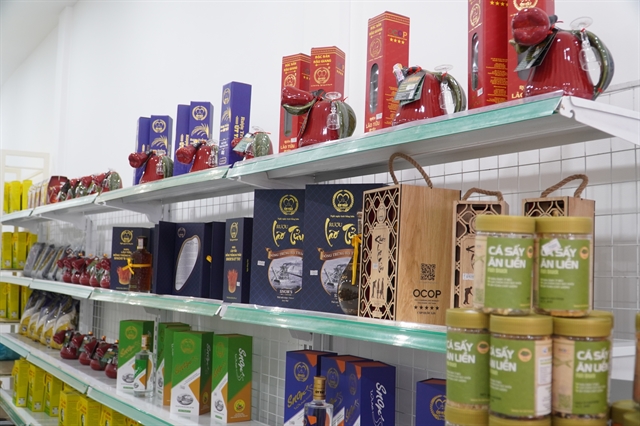
Vĩnh Long has 1,137 OCOP products, including 13 with five stars, 202 with four stars and 916 with three stars.
The province is drafting a plan for 2026–30 targeting an addition of 50 new OCOP products rated three stars or higher each year, alongside stronger support for quality improvement, trade promotion and market expansion. — VNS
Society
 Society
 Society
 Society
 Society
 Society
 Society
 Society
 Society
 Society
 Society
.jpg) Society
Society
 Society
 Society
 Society