 Opinion

Hà Nội weighs relocating milk flower trees after complaints over strong scent
1.
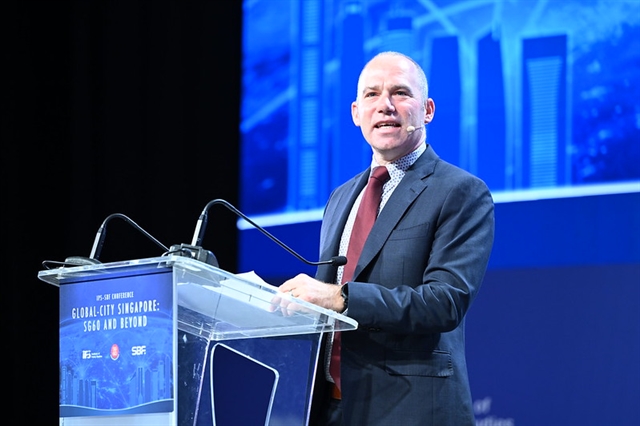 |
| Edmund Malesky, Professor of Political Economy at Duke University, North Carolina in the US. — Photo courtesy of Professor Edmund Malesky |
Edmund Malesky, Professor of Political Economy at Duke University in the US, has long followed Việt Nam’s development. He talks to Việt Nam News reporter Nguyễn Hằng about assessments on Việt Nam’s preparation for the elections of deputies to the 16th National Assembly and the People’s Councils at all levels for the 2026-31 tenure as well as the importance of the elections to the National Assembly’s history.
Việt Nam has expanded the use of digital tools in the preparation for the elections of deputies to the 16th National Assembly and the People’s Councils at all levels for the 2026-31 tenure. How do you evaluate Việt Nam’s preparations for the elections?
Việt Nam’s preparations for the 2026 elections of deputies to the 16th National Assembly and People’s Councils appear to be on track, with election bodies at national and local levels completing key procedural steps and strengthening training, logistics, and legal compliance ahead of the March 15 vote.
Officials have highlighted expanded use of digital tools, from integrating the national population database with digital ID systems to improved election management software across nearly all communes, which should make voter list updates and administration more modern, efficient and accurate.
 |
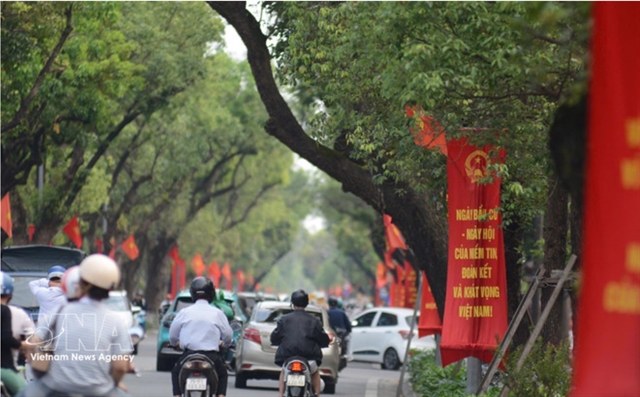
| Chu Văn An Secondary School, polling station No. 1 is decorated ahead the elections in Tây Hồ Ward, Hà Nội. — VNA/VNS Photo Hoàng Hiếu |
What significance will the election have in maintaining Việt Nam's reform momentum in the future and what expectations do you have for the forthcoming election, particularly given that nearly 22 per cent of the candidates are young people?
The forthcoming National Assembly election may usher in one of the most consequential terms in the National Assembly’s history. The new legislature will be responsible for translating the most recent Party Congress priorities into law, including major administrative streamlining reforms such as mergers and the possible removal of the district level of government as well as ambitious private sector development initiatives that require a clear and coherent legal framework.
In the context of Việt Nam’s short-and long-term socio-economic goals set out at the 14th National Congress of the Communist Party of Việt Nam, I would expect the upcoming elections to play an important role in strengthening institutional reform and sustaining economic modernisation. Việt Nam’s current reform agenda, spanning administrative restructuring, digital transformation, green growth and global economic integration, requires a higher level of technical expertise and governance capacity than earlier reform periods. I am hopeful that the new legislature will include a younger and highly qualified cohort with the education, professional experience, and policy skills needed not only to design ambitious reforms but also to oversee their effective implementation.
As Việt Nam advances toward high-income status, institutional reform must support innovation, productivity, and private sector dynamism while also addressing climate resilience, environmental degradation and energy transition. A forward-looking National Assembly can help ensure that economic expansion continues to improve citizens’ livelihoods while embedding sustainability, social inclusion and environmental responsibility at the core of Việt Nam’s long-term development strategy.
 |
| A polling station No.16, Hoàn Kiến Ward in Hà Nội. — VNA/VNS Photo Tuấn Anh |
How do you assess the role of Việt Nam’s National Assembly in translating the broad policy directions set out by the Party Congresses into concrete legislation and institutional reforms?
Việt Nam’s National Assembly plays a critical role in putting meat on the bone of the key economic and incentive initiatives set out at Party Congresses and subsequent Central Committee plenums. While those Party forums debate general policy direction, the specifics of how reforms will be implemented, and which ministries or actors will be responsible, are worked out through National Assembly legislation.
Last year, for example, the National Assembly delivered a substantial legislative output that concretely enacted and institutionalised major policy priorities, closing its 10th session of the 15th legislature with the adoption of 51 laws and 39 resolutions, nearly 30 per cent of all legal documents passed during the entire term, demonstrating its central role in fleshing out strategic national agendas into binding law.
These measures spanned justice, taxation, cybersecurity, education, health, administration, social policy and digital governance, establishing clearer regulatory frameworks to support economic modernisation and social development.
At the same time, accompanying resolutions advanced healthcare reform, expanded social protections, streamlined administrative procedures and supported infrastructure and investment planning, illustrating how the Assembly translates broad policy direction into detailed, enforceable legislation. — VNS
Opinion
 Opinion
 Opinion
 Opinion
 Opinion
 Opinion
 Opinion
 Opinion
 Opinion
 Opinion
 Opinion
 Opinion
 Opinion
 Opinion
 Opinion