 Opinion
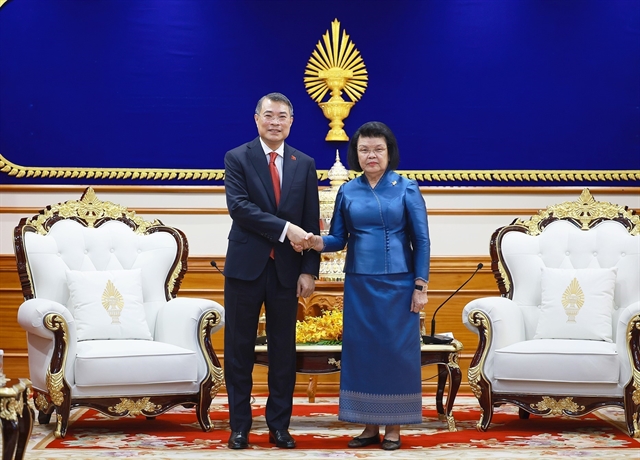
Vietnamese Prime Minister meets Cambodian National Assembly President
1.
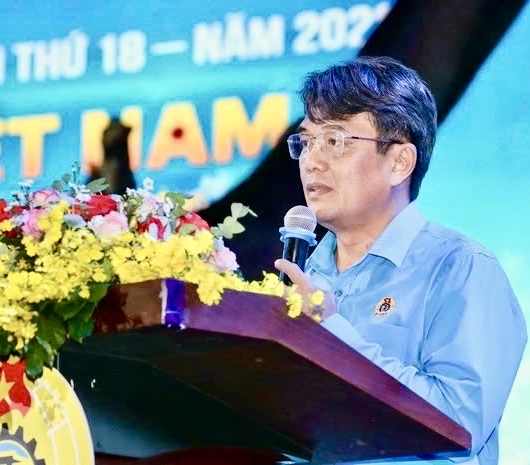 |
| Bùi Thanh Nhân, deputy chairman of the Việt Nam Fatherland Front Committee of HCM City and chairman of the city’s Labour Federation.— VNS Photo |
For years, Workers’ Month has been a cornerstone of trade union activities in HCM City. But as labour pressures intensify and workers’ needs evolve, the campaign is shifting beyond short-term support towards longer-term solutions focused on housing, healthcare, skills development and the protection of workers’ rights. Việt Nam News reporter Thu Hằng spoke with Bùi Thanh Nhân, deputy chairman of the Việt Nam Fatherland Front Committee of HCM City and chairman of the city’s Labour Federation.
What principles guided the HCM City Labour Federation in developing activities for the 2026 Workers' Month to ensure they meet the practical needs of workers?
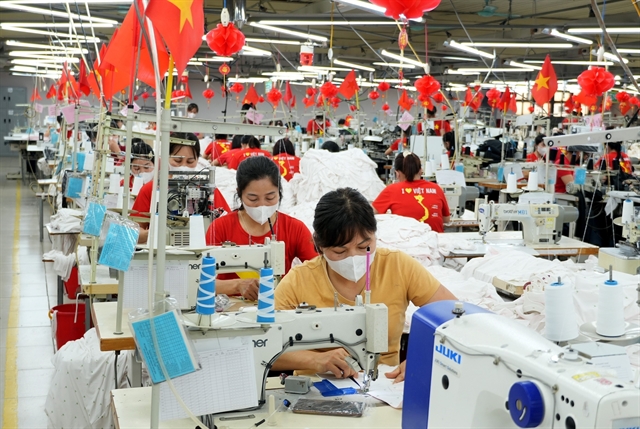
Around 17 million people are employed within enterprises and cooperatives across the country. In HCM City, more than 60 per cent of the workforce comes from other cities and provinces. These workers face severe pressures due to sky-high living costs, housing shortages, and lack of savings, which are compounded by lack of formal vocational training.
The 2026 Workers' Month, with the theme “Vietnamese Workers: Innovation and Enhancing Labour Productivity”, focuses on seven key programmes to be carried out throughout May.
The highlight is the "May Dialogue" programme. This features meetings and consultations between business leaders and their employees to address pressing concerns related to wages, benefits and working conditions.
Housing is also a priority.
We are using this month to fast-track social housing and rent-to-own schemes. To date, the federation has secured strategic partnerships to build 120,000 social housing units for workers in the next five years.
Our health programme aims to screen 50,000 women workers and provide occupational disease check-ups for another 30,000, supported by agreements with the city’s leading hospitals.
The federation has also signed agreements with universities and the city’s Cadre Academy to provide training in management skills and legal knowledge for trade union officials and workers.
Other programmes have been organised during May, including “Creative Workers Movement”, “Thank You to Workers” and "Trade Union Shelters" in addition to sports, cultural and art performances to enhance the spiritual life and improve the living conditions of workers.
We expect 80 per cent of businesses with more than 100 employees to roll out at least one tangible welfare programme this month.
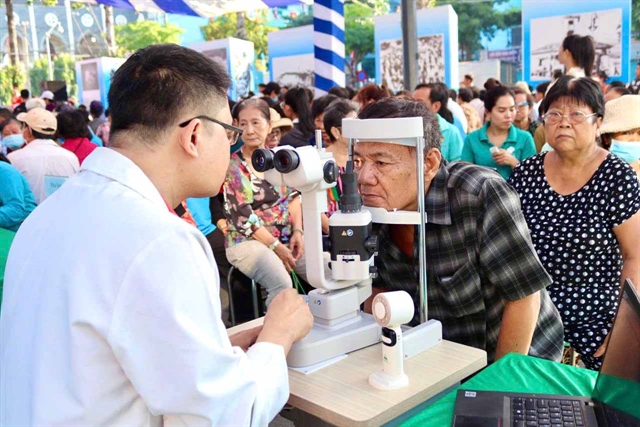 |
| Workers in HCM City’s Thủ Dầu Một Ward receive free eye examinations on May 10. — Photo courtesy of the Thủ Dầu Một Ward Trade Union |
Following the city’s merger with Bình Dương and Bà Rịa Vũng Tàu provinces, its workforce is now larger and more diverse. How is the federation adapting its management and care strategies?
The major function of trade unions is to represent and protect workers’ legitimate and legal rights and interests.
Following the merger, the city has the largest workforce in the country of more than seven million working people.
Our strategy is to put workers at the centre, with grassroots trade unions as the foundation, digital transformation as the tool, and high effectiveness as the measure of success.
We are shifting from seasonal support toward continued and year-round care. This involves strengthening grassroots unions in non-state enterprises, embracing digital transformation, and mobilising social resources.
In a city of 14 million people, we must focus on the most vulnerable – those who have suffered industrial accidents, female workers, and those on reduced incomes.
Digital tools are helping us identify these groups with greater precision, ensuring transparency.
We are linking welfare to productivity. By encouraging technical innovation, we can drive up incomes and ensure long-term stability.
It is undeniable that some workers seem unenthusiastic about trade unions. Could it be because they have failed to address the needs of these individuals?
This is indeed a major concern for us. In some places, activities are not closely aligned with needs, and the methods are rigid.
Workers are increasingly concerned about incomes, professional skills, development opportunities, and even the quality of cultural life in the digital space.
If trade unions don't keep up, it will be difficult to attract them.
We now work based on what workers need us to do. Trade unions must be present where the workers are; not just where it is convenient for officials.
We are also focusing on enhancing the role of grassroots trade unions and designing appropriate policies and activities for different demographics.
How has the trade union’s organisational structure been adjusted to meet new requirements?
Grassroots trade unions play a crucial role, acting as a bridge for the workforce. Therefore, in May, we will implement a large-scale restructuring of the trade union system to strengthen ties with the grassroots.
To be specific, we will launch the trade union of the HCM City Export Processing Zones and Industrial Parks supported by a network of 300 collaborators, including retired trade union officials.
We will deploy 40 per cent of full-time trade union officials from the city level to directly support trade unions in wards, communes and special zones.
We want our leadership to have their ears to the ground.
In terms of upskilling, what specific solutions are being offered to union members?
Boosting productivity is a priority task. We are partnering with various institutions to provide training in digital literacy and artificial intelligence (AI) for both workers and union officials.
Throughout Workers' Month, we are also pushing for a culture of innovation. We have set a target of 10 per cent of our members suggesting technical improvements or productivity-linked solutions.
These should not just be paper ideas, but must be directly tied to better efficiency and, ultimately, better rewards for workers and enterprises alike. — VNS
Opinion
 Opinion
 Opinion
 Opinion
 Opinion
 Opinion
 Opinion
 Opinion
 Opinion
 Opinion
 Opinion
 Opinion
 Opinion
 Opinion
 Opinion