 Opinion
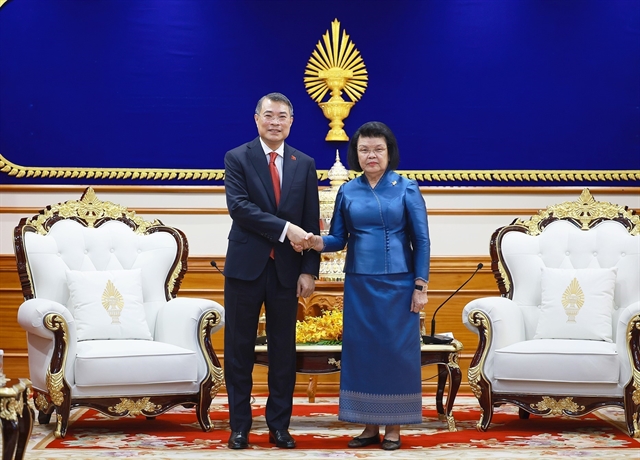
Vietnamese Prime Minister meets Cambodian National Assembly President
1.
|
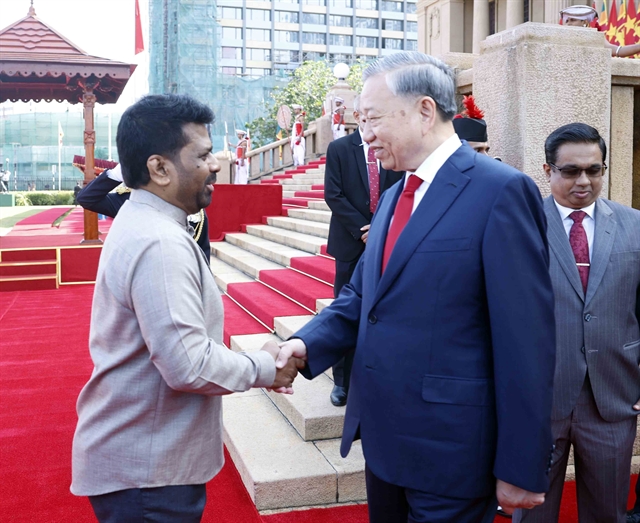
| General Secretary of the Communist Party of Việt Nam Central Committee and State President Tô Lâm (right) and Sri Lankan President Anura Kumara Dissanayake on May 8. — VNA/VNS Photo |
HÀ NỘI — Dhananath Fernando, Chief Executive Officer of the Colombo-based Advocata Institute, has described the state visit to Sri Lanka by General Secretary of the Communist Party of Việt Nam Central Committee and State President Tô Lâm from May 7–8 as an important catalyst for elevating bilateral ties and expanding cooperation in the years ahead.
Fernando assessed that the visit demonstrated Việt Nam’s strong commitment to deepening relations with Sri Lanka and created new opportunities for Sri Lanka to strengthen its engagement with Việt Nam and the broader Southeast Asian region. He noted that Sri Lanka, including its private sector, should capitalise on the momentum generated by the visit to foster broader economic and strategic partnerships with Việt Nam.
Among the most anticipated outcomes, Fernando highlighted the announcement of direct flights between the two countries, an initiative long-awaited by businesses and tourism stakeholders on both sides. According to him, improved air connectivity will significantly enhance people-to-people exchanges, trade and tourism cooperation.
The Advocata Institute CEO also stressed that the visit offered valuable lessons for Sri Lanka’s ongoing economic reform process. He described Việt Nam’s Đổi Mới (Renewal) policy as a compelling example of how market-oriented reforms and trade integration can transform the economy and strengthen national competitiveness.
Referring to the numerous cooperation agreements signed during the visit, Fernando said the main challenge lies not in the signing process itself, but in effective implementation. He observed that Sri Lanka has concluded many memoranda of understanding with foreign partners, including Việt Nam, yet translating commitments into tangible outcomes remains crucial. In this regard, he welcomed General Secretary and President Lâm’s emphasis on ensuring the effective realisation of the signed agreements.
The expert underlined the need for closer coordination between the two countries’ private sectors and relevant agencies to implement cooperation in trade, digital transformation, science and technology, and education. At a time when Sri Lanka continues to face economic difficulties, expanding access to the Vietnamese and wider East Asian markets is particularly important, he added.
He also pointed to Việt Nam’s achievements in export-led growth and social development as valuable references for Sri Lanka. Unlike Việt Nam, he noted, Sri Lanka still maintains relatively high import tariffs and various trade barriers, while having fewer free trade agreements, limiting the international competitiveness of many domestic enterprises.
Citing data from Việt Nam’s National Statistics Office, Fernando noted that Việt Nam’s exports reached over US$475 billion in 2025, up 17 per cent year-on-year, while imports rose 19.4 per cent to $455 billion. These figures, he said, illustrate that strong economic relations and sustainable development cannot be achieved without free trade and deeper international integration.
The expert particularly welcomed the top Vietnamese leader’s proposal to establish a new framework for bilateral trade and investment cooperation. He said Sri Lanka should seriously study and promote the initiative, and gradually remove trade and investment barriers.
He also praised the leader’s assessment that Sri Lanka has the potential to become a logistics hub for Vietnamese enterprises seeking access to the South Asian market. To realise this vision, Fernando suggested Sri Lanka consider easing restrictions on foreign investment in the shipping and logistics sectors, potentially beginning with pilot policies for Vietnamese businesses.
In addition, he identified agriculture as another promising area of cooperation. He said Việt Nam has built a highly competitive agricultural sector with effective technological applications, including the growing use of drones in farming, offering practical experience that Sri Lanka can draw upon in modernising its own agricultural industry. — VNA/VNS
Opinion
 Opinion
 Opinion
 Opinion
 Opinion
 Opinion
 Opinion
 Opinion
 Opinion
 Opinion
 Opinion
 Opinion
 Opinion
 Opinion
 Opinion