 Opinion
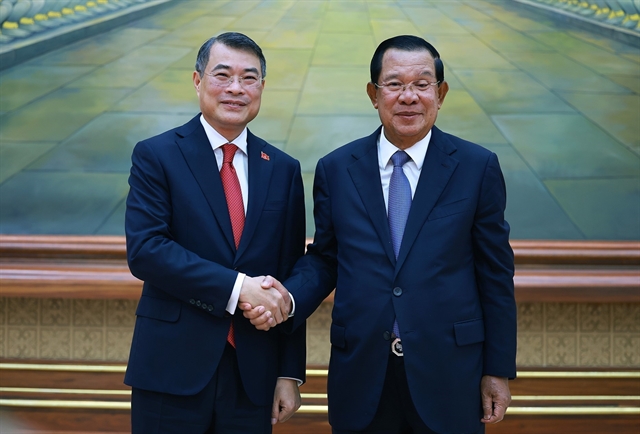
Vietnamese Prime Minister meets Cambodian National Assembly President
1.
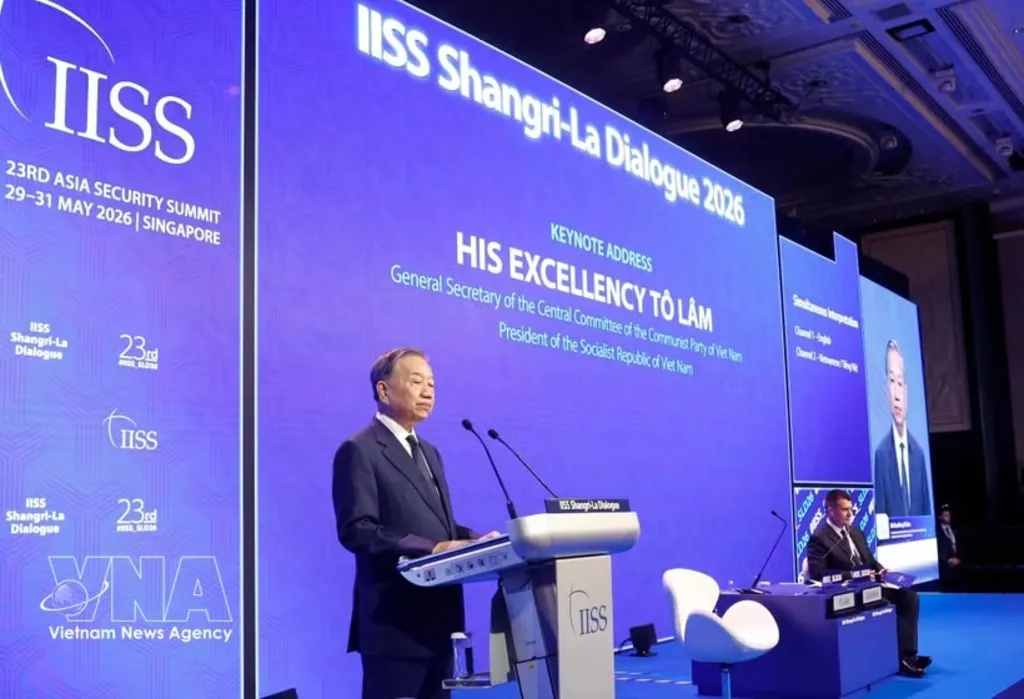 |
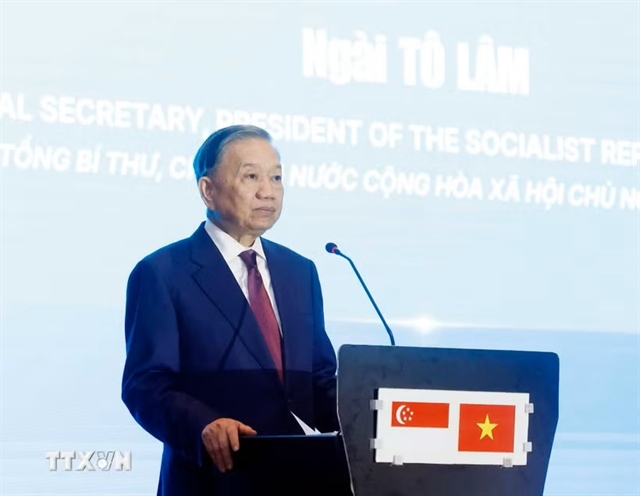
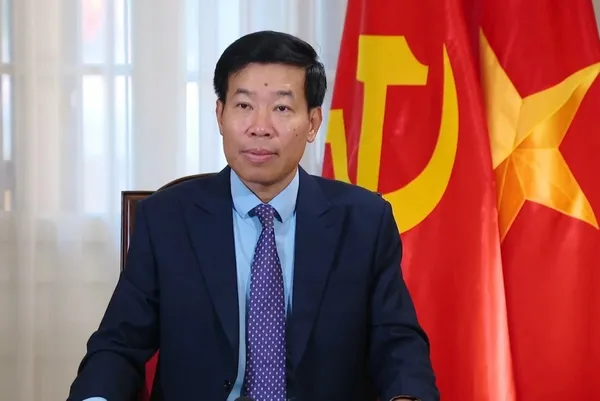
| General Secretary of the Communist Party of Vietnam (CPV) Central Committee and State President To Lam delivers a keynote address at the 23rd Shangri-La Dialogue. Photo VNA |
SINGAPORE — The development philosophy pursued by Việt Nam is gaining increasing international recognition as countries seek new approaches to navigate a rapidly changing global landscape, according to a Singapore-based scholar.
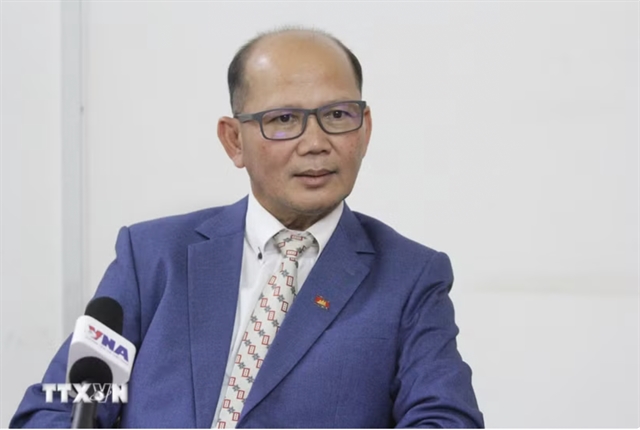
Speaking to the Vietnam News Agency following General Secretary of the Communist Party of Vietnam (CPV) Central Committee and State President Tô Lâm’s keynote address at the 23rd Shangri-La Dialogue, Prof. Vũ Minh Khương of the Lee Kuan Yew School of Public Policy said the Vietnamese leader’s remarks resonated strongly because they addressed pressing global challenges with candour, responsibility and a forward-looking vision.
According to Khương, the world is undergoing profound transformations driven by technological advances, geopolitical shifts and geoeconomic realignments, creating conditions for the emergence of a new international order.
While legacies of the Cold War remain, opportunities associated with artificial intelligence (AI), green transition and space exploration are encouraging countries to adopt a more pragmatic mindset and work together for a shared future.
“Việt Nam’s development philosophy is being increasingly validated,” he said, adding that this was one of the reasons Party General Secretary and President Tô Lâm was invited to address this year’s Shangri-La Dialogue.
The scholar stressed that countries, particularly smaller nations, should focus on creating value not only for themselves but also for the broader international community.
Khương also highlighted the challenges posed by AI and automation, describing them as both a source of unprecedented productivity and a potential threat to employment. He argued that governments should prioritise protecting workers rather than specific jobs by promoting economic restructuring, lifelong learning and workforce adaptation.
He also cited the relationship between Việt Nam and Singapore as an example of how strategic partnerships can contribute to regional stability and mutual understanding, adding that General Secretary and State President Lâm’s visit to Singapore carries particular significance in this regard.
The professor also warned that disinformation and information warfare are increasingly undermining trust between countries and between governments and citizens. Combating fake news, he said, will require stronger verification mechanisms, greater public awareness and regular exchanges among stakeholders to strengthen resilience against misinformation.
According to Khương, strategic trust rests on three pillars: a shared vision for the future, mutually beneficial cooperation and effective mechanisms for communication and information-sharing.
Building such trust is no less important than addressing global challenges such as climate change, he said, praising Việt Nam’s proactive diplomacy, which he considered the best way to ensure long-term prosperity.
Sharing a similar view, Dr Mohamed Effendy B Abdul Hamid from National University of Singapore said Việt Nam’s consistency in implementing its foreign policy has won widespread respect. Through the messages delivered by General Secretary and President Lâm, Việt Nam has further clarified its vision for regional and international issues, he noted.
From a Southeast Asian studies perspective, Abdul Hamid said the current period is particularly significant as the international community places growing expectations on Việt Nam amid evolving geopolitical uncertainties. He added that Việt Nam’s approach is increasingly regarded as a valuable reference for countries seeking effective ways to navigate emerging global challenges.
Ei Sun Oh from Pacific Research Centre of Malaysia, referring to Việt Nam’s presence at this year’s Shangri-La Dialogue, said the country has stepped onto the regional stage with a renewed posture, positioning itself as a constructive diplomatic player committed to promoting peace and stability.
The keynote address delivered by the top leader at the dialogue was not only a routine speech but also an affirmation of Việt Nam’s rising international standing, he said, stressing Việt Nam is determined itself as a responsible stakeholder in addressing issues of common concern to ASEAN and the world. This role that has been warmly welcomed and supported by fellow ASEAN member states.
One of the key messages conveyed by Việt Nam is its commitment to a rules-based international order and respect for international law. Oh stressed that this stance carries particular significance and has received broad support from many countries, especially those with interests in the East Sea (internationally known as the South China Sea).
Amid intensifying strategic competition, Việt Nam has consistently underscored the importance of dialogue in reducing the risk of conflict. According to the scholar, prioritising peaceful solutions is especially important at a time when the region has witnessed real confrontations among some countries.
Commenting on the issue of strategic trust, Oh said Việt Nam has not only advocated these principles in international forums but has also demonstrated them through concrete actions. He cited the country’s successful hosting of the 2019 summit between the US and the Democratic People's Republic of Korea in Hanoi as evidence of its ability to serve as a trusted and neutral diplomatic host.
The expert also pointed to Việt Nam’s peaceful rise as one of Southeast Asia’s largest economies as a vivid example of the importance of building an inclusive security architecture.
He expressed confidence that Việt Nam’s development model and approach to security would make a meaningful contribution to fostering a sustainable regional environment in which the interests of all neighbouring countries are respected and taken into account.— VNA/VNS
Opinion
 Opinion
 Opinion
 Opinion
 Opinion
 Opinion
 Opinion
 Opinion
 Opinion
 Opinion
 Opinion
 Opinion
 Opinion
 Opinion
 Opinion