 Opinion
Việt Nam, China seek stronger substantive parliamentary cooperation
1.
HÀ NỘI — As Việt Nam pursues ambitious double-digit economic growth, infrastructure investment is increasingly being viewed as more than a tool for boosting short-term expansion. From expressways and urban railways to regional transport corridors, major projects are expected to reshape development space, strengthen national competitiveness and unlock new economic momentum.
Government officials, business leaders and experts share their perspectives on how strategic infrastructure can become the backbone of Việt Nam’s next phase of growth and integration.
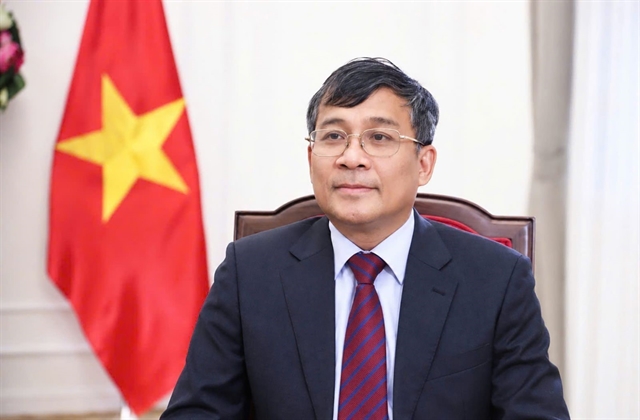
Minister of Construction Trần Hồng Minh
 |
| Minister of Construction Trần Hồng Minh. — VNA/VNS Photo Doãn Tấn |
The Ministry of Construction views double-digit growth as a strategic requirement to usher Việt Nam into a period of rapid and sustainable development. The ministry is focusing on reviewing the 2026-30 medium-term public investment portfolio and formulating a double-digit growth scenario. Although urgent, both tasks require careful implementation supported by clear, comparable data that are easy to understand.
The 2026-30 medium-term public investment portfolio must be developed in a clear and detailed manner, with projects prioritised from ongoing works to new strategic projects. They should be grouped into categories, including projects under action programmes linked to the resolution of the 14th National Party Congress, key projects under the national master plan scheduled for completion during 2026-30, projects with spillover effects, regional connectivity and the potential to drive local economic growth in line with directives from Party and State leaders, along with urgent projects in other specialised sectors.
Project reviews and assessments must also be linked to specific indicators measuring contributions to socio-economic development, including increased budget revenues, job creation and social welfare protection.
The construction sector’s double-digit growth scenario will clearly define the sector’s contribution to overall national growth, with a focus on key drivers such as investment. These include public investment, public-private partnership (PPP) models, private investment and sectors such as transport, warehousing, logistics and real estate, providing a foundation for developing an appropriate growth scenario.
Đèo Cả Group’s Chairman Hồ Minh Hoàng
 |
| Hồ Minh Hoàng, chairman of the infrastructure developer Đèo Cả Group. — Photo deoca.vn |
The double-digit GDP growth target represents a major development goal for both the country and its business community, particularly the private sector. To achieve this target, transport infrastructure must take the lead, as it not only improves connectivity and mobility but also opens up new development space, reduces logistics costs and strengthens national competitiveness.
For domestic firms to be capable of undertaking major projects in the future, they must now be assigned work suited to their capabilities. Once the State has completed transport network planning and identified key projects, domestic infrastructure companies should be given opportunities to participate from the pre-feasibility study stage. This would allow them to fully demonstrate initiative and innovation in proposing investment plans, technical solutions, construction methods and cost and quality control measures.
The State also needs to remove bottlenecks related to resources, particularly human resources, materials and credit. If infrastructure firms cannot retain workers, access medium- and long-term financing or secure material supplies, sustainable development will remain difficult.
In addition, policies are needed to link project assignments with technology transfer and human resource development. For example, the Đồng Đăng–Trà Lĩnh Expressway project was initially planned with a total investment of more than VNĐ47 trillion (US$1.8 billion). However, through the early involvement of businesses in the research and proposal process, including optimising route alignments, phasing investment and selecting appropriate technical solutions, the projected capital requirement was reduced to just over VNĐ20 trillion ($760 million) across implementation scenarios and phases.
This case demonstrates that when businesses are involved from the outset, empowered to propose solutions and held accountable for them, costs can be effectively controlled while still ensuring investment objectives are met.
Nguyễn Minh Long, lecturer at the University of Transport and Communications
 |
| Nguyễn Minh Long, lecturer at the University of Transport and Communications in Hà Nội. — VNA/VNS Photo |
Across the country, key projects such as the North–South Expressway, national railway projects, urban ring roads, interregional expressways and links connecting seaports, airports, international border gates and growth poles are being accelerated. The implementation and operation of these infrastructure projects are serving as strategic drivers of growth, creating breakthroughs in modern infrastructure development and promoting regional and interregional connectivity, particularly in key economic zones.
More importantly, each project not only helps reshape development space in a more modern and integrated direction but also creates conditions for cities and provinces to capitalise on their comparative advantages, establish economic corridors and regional value chains and strengthen competitiveness and international integration.
In the future, if disbursement progress continues to be maintained, investment procedures are substantially improved and projects are implemented on schedule, Việt Nam’s ambitious growth targets will have a solid foundation to turn goals into reality, creating room for a new cycle of economic development.
To achieve this, mechanisms for attracting investment must continue to improve, while procurement and bidding processes should be reformed to become more transparent and efficient, with decentralisation further strengthened. These are considered key solutions to unlock social resources, improve investment efficiency and create momentum for rapid and sustainable growth in the coming period. — VNS
Opinion
 Opinion
 Opinion
 Opinion
 Opinion
 Opinion
 Opinion
 Opinion
 Opinion
 Opinion
 Opinion
 Opinion
 Opinion
 Opinion
 Opinion