 Opinion

Vietnamese Prime Minister meets Cambodian National Assembly President
1.
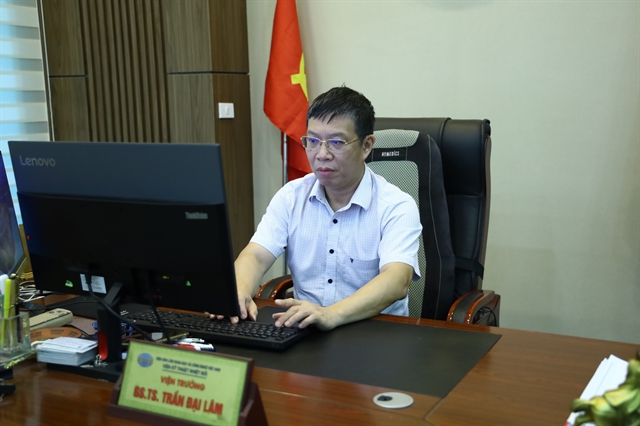 |
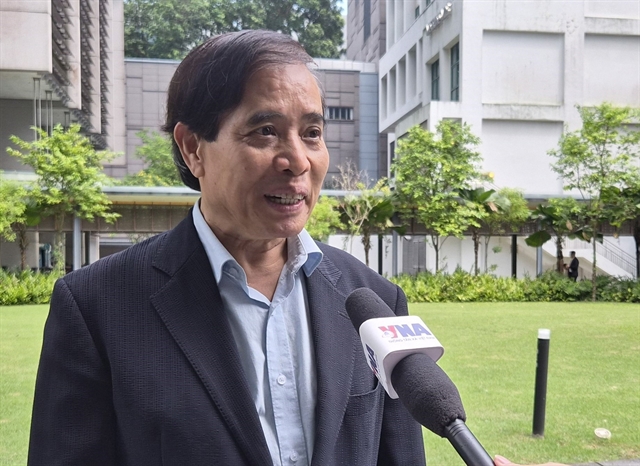
| Professor Dr Trần Đại Lâm, Director of the Institute of Materials Science at the Vietnam Academy of Science and Technology. VNA/VNS Photo |
Professor Dr Trần Đại Lâm, Director of the Institute of Materials Science at the Vietnam Academy of Science and Technology, spoke to the Vietnam News Agency about the challenges facing investment, commercialisation and talent development in materials science, a field increasingly viewed as critical to Việt Nam's technological ambitions.
Party General Secretary and President Tô Lâm recently issued strong directives on the development of basic sciences and the materials industry. In your view, has investment in materials science in Việt Nam kept pace with the strategic importance of the field? What are the biggest challenges facing its development today?
Looking at the issue objectively, it is clear that investment in materials science in Việt Nam has yet to match the field's strategic importance to the country's technological development.
While developed economies regard materials science as the "industry behind industries" and the foundation for semiconductors, artificial intelligence, new energy, high-tech defence and the green transition, investment in Việt Nam remains fragmented, short-term and insufficient to foster robust research ecosystems.
A particularly noteworthy point is that, in his conclusions at the working session on May 25, 2026, Party General Secretary and President Tô Lâm emphasised that: “Fields that are shaping the future of the world today, such as artificial intelligence, semiconductors, quantum technology, biotechnology, new materials, data technology and new energy, all originate from basic research that has been continuously invested in over many decades.”
This is a strategically important observation because materials science is a field that requires sustained investment over long periods, involves significant risks and plays a critical role in strengthening a nation's technological self-reliance.
At present, our biggest challenge is not a lack of funding, but the absence of financial mechanisms that reflect the nature of materials science and basic research.
Research into semiconductor materials, quantum materials and advanced energy materials cannot be assessed through short-term administrative cycles or conventional budgetary procedures. Around the world, many technological breakthroughs have required continuous investment over one or even two decades before delivering transformative results.
Meanwhile, our investment system remains heavily focused on administrative oversight, procedural requirements, detailed annual budgeting and risk avoidance, while lacking effective mechanisms for post-project evaluation. As a result, many scientists spend more time dealing with paperwork than conducting research.
The Party General Secretary and President highlighted this issue when he called for a shift "from administrative management to innovation governance, from pre-approval to post-evaluation, and towards greater acceptance of scientific risk."
In materials science, research infrastructure requires particularly substantial investment. Thin-film fabrication systems, epitaxy equipment, high-resolution electron microscopes, PPMS systems and semiconductor materials analysis facilities often cost tens or even hundreds of billions of đồng. In a field such as this, fragmented and uncoordinated investment is unlikely to generate meaningful competitive advantages.
Therefore, I believe the most important task is to change the way we think about investment. Funding for materials science should not be viewed as an expenditure, but as a strategic investment in the country's technological self-reliance.
Prime Ministerial Decision No. 21/2026/QĐ-TTg on strategic technologies and strategic technology products clearly identifies semiconductors, artificial intelligence, advanced materials, new energy, quantum technologies and biotechnology as national priorities. However, mastering these technologies must begin with strong capabilities in basic research and materials science.
How do you assess the gap between materials science research and the commercialisation of research outcomes in Việt Nam today? What mechanisms are needed to build an innovation ecosystem and foster deep-tech enterprises in this field?
The gap between research and commercialisation remains one of the biggest challenges facing materials science in Việt Nam.
We have produced many promising research outcomes at the laboratory level, but we still lack industrial-scale pilot facilities and sufficient venture capital to support deep-tech development. This is the so-called "valley of death", where many promising materials technologies fail to make the transition from the laboratory to the marketplace.
In this regard, Politburo Resolution No. 68-NQ/TW on private sector development is particularly important. If Việt Nam is to build strategic materials industries, private enterprises must become a driving force for innovation.
The State should play the role of a market creator by using technology procurement, public purchasing and risk-sharing mechanisms to support the emergence and growth of deep-tech enterprises during their early stages of development.
International experience shows that no country has successfully developed an advanced materials industry without close collaboration among the State, research institutions, universities and businesses.
The State provides investment for foundational research; universities and research institutes generate knowledge and cultivate talent; and businesses commercialise innovations and scale them up for industrial production. This is precisely the ecosystem that Việt Nam needs to build in the years ahead.
In my view, over the next 10 to 20 years, countries that master strategic materials will enjoy advantages comparable to those once held by oil-producing powers in the twentieth century. However, the greatest value will lie not in natural resources, but in scientific knowledge, technological capabilities and innovation capacity.
As global technological competition intensifies, many experts believe that the shortage of science and technology talent is becoming a major challenge for Việt Nam. How do you view this issue, particularly in relation to materials science and basic research?
I believe the shortage of scientific talent is emerging as one of the most pressing challenges facing Việt Nam as it enters a new stage of development, where national competitiveness increasingly depends on the strength of its science and technology workforce.
In the era of the knowledge economy and artificial intelligence, the most valuable resource is no longer minerals or low-cost labour, but people capable of generating new knowledge and developing core technologies.
Party General Secretary and President Tô Lâm rightly noted that: "To build a strong scientific foundation, we must first build a strong community of scientists." He also pointed out that Việt Nam has yet to establish a comprehensive ecosystem for identifying, nurturing, developing, utilising and protecting scientific talent.
The challenge is particularly acute in materials science and basic research, where researchers require years of specialised training, deep interdisciplinary expertise and access to advanced research infrastructure.
A leading materials scientist must possess knowledge spanning physics, chemistry, manufacturing technologies, artificial intelligence, materials modelling and industrial applications. Training a top-tier expert can take 15 to 20 years.
At present, however, three key factors continue to hinder our ability to attract and retain top talent.
First, our research environment is not yet sufficiently competitive by international standards. Many young scientists who return to Việt Nam after studying abroad continue to face challenges related to laboratory facilities, equipment, funding mechanisms and opportunities to pursue long-term research projects. In materials science, world-class research is difficult to achieve without access to modern infrastructure.
Second, evaluation systems in some cases remain overly administrative and focused on short-term outcomes. Basic research requires academic freedom, experimentation and a willingness to accept failure as part of the scientific process. Yet many researchers still spend considerable time dealing with paperwork, reporting requirements and administrative procedures, reducing both productivity and creative capacity.
Third, Việt Nam has yet to establish a sufficiently attractive career pathway for young scientists. Outstanding students today have a wide range of opportunities in finance, information technology and multinational corporations, where salaries are often higher and working conditions more attractive. By contrast, a career in basic science is long, demanding and still lacks policies that provide researchers with long-term confidence and stability.
In this regard, Politburo Resolution No. 71-NQ/TW on breakthroughs in education and training reform is particularly significant. The resolution calls for the development of a talent cultivation ecosystem, the advancement of elite education, and stronger links between education and the country's strategic science and technology priorities. This provides an important foundation for nurturing a new generation of Vietnamese scientists.
In my view, attracting scientific talent begins with giving researchers confidence in their future prospects. Scientists need to see that they can be entrusted with major national missions, gain access to modern infrastructure, enjoy academic autonomy and turn their ideas into reality.
For materials science in particular, Việt Nam should establish centres of excellence and long-term national research programmes in semiconductors, energy materials, quantum materials, biomaterials and defence materials. Only by tackling major national challenges can we attract leading scientists and encourage them to contribute.
Another important issue is changing perceptions of basic research. Many people still view it as being disconnected from practical needs. In reality, however, virtually all modern core technologies originate from fundamental scientific discoveries.
Google, OpenAI, semiconductor technologies, graphene and lithium-ion batteries all emerged from foundational research conducted decades earlier. Investing in scientists, therefore, is not simply an investment in individuals; it is an investment in the country's future technological capabilities and its capacity for technological self-reliance.
I believe that, guided by Resolutions 57, 68 and 71, together with the country's emerging technology strategies, Việt Nam has a valuable opportunity to cultivate a new generation of scientists with global perspectives, interdisciplinary expertise and the ambition to master core technologies.
If we can build an academic environment that is open, transparent and modern, while providing strong long-term investment mechanisms, Vietnamese materials science can develop world-class research centres and internationally recognised research communities, making a direct contribution to the country's strategic technological capabilities in the years ahead. VNS
Opinion
 Opinion
 Opinion
 Opinion
 Opinion
 Opinion
 Opinion
 Opinion
 Opinion
 Opinion
 Opinion
.jpg) Opinion
Opinion
 Opinion
.jpg) Opinion
Opinion
.JPG) Opinion
Opinion