 Opinion
Air transport market forecast to grow 13% in 2026 desspite fuel price volatility
1.
.JPG) |
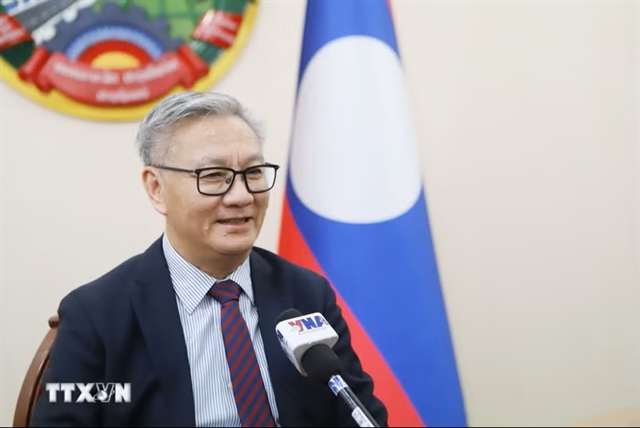
| Thai scholar Kavi Chongkittavorn, a leading expert on regional affairs. — VNA/VNS Photo |
Ties between Thailand and Việt Nam have become increasingly dynamic and strategic over the past two decades as the region navigates mounting geopolitical challenges, according to Thai scholar Kavi Chongkittavorn, a leading expert on regional affairs.
Speaking to a Vietnam News Agency correspondent based in Bangkok ahead of the official visit by Việt Nam's Party General Secretary and President Tô Lâm and his wife to Thailand, Kavi said the relationship between the two countries continues to deepen across multiple sectors at a pivotal time for the region.
Thailand and Việt Nam mark 50 years of diplomatic relations this year. How do you assess the development of bilateral relations between the two countries over the past five decades?
Thailand-Việt Nam ties are highly dynamic and have become increasingly strategic, particularly over the past two decades, as the geopolitical landscape has faced new challenges.
The two countries established a Strategic Partnership in 2013, which was later upgraded to a Strengthened Strategic Partnership in 2019. In 2025, ties received another major boost with the establishment of a Comprehensive Strategic Partnership.
Ahead of the much-anticipated official visit to Thailand by Party General Secretary and President Tô Lâm, the two countries are exploring new areas of cooperation to further deepen bilateral relations. They are also aiming to reach a bilateral trade target of US$25 billion by the end of this year.
Furthermore, as both countries have enshrined economic sustainability in their development philosophies, they are working to align Thailand’s Bio-Circular-Green Economy Model with Việt Nam’s Green Growth Strategy. This cooperation has become increasingly important amid the current energy transition.
Việt Nam and Thailand share many similarities in economic and social development, as well as in culture and people-to-people ties. In your opinion, what are the areas where the two countries have the greatest potential for cooperation, and what should they prioritise to maximise that potential?
The most important aspect of Thailand-Việt Nam cooperation is their joint effort to navigate superpower rivalry, especially in mainland Southeast Asia. Each country has its own version of bamboo diplomacy and distinct strategic characteristics.
Together, they can help manage ties with major powers, as both oppose attempts to establish regional hegemony. When the two countries speak with one voice, it could strengthen ASEAN centrality.
In economic terms, the two countries are important parts of regional and global supply chains. They should further strengthen connectivity and expand links with other regional frameworks. Thailand is Việt Nam’s seventh-largest trading partner globally and its largest trading partner within ASEAN.
In addition, both countries must implement the Three Connects strategy, which can promote investment and connectivity at all levels.
People-to-people exchanges remain another important area of cooperation. The 100,000-strong Việt Kiều community has played an important role in boosting the economy of Thailand’s northeastern region. More than one million tourists from the two countries travelled between them last year.
How do you assess the role of the Việt Nam-Thailand relationship in the context of the Indo-Pacific region, which is facing many changes and significant challenges? Given this context, what is the significance of the upcoming official visit to Thailand by Việt Nam's top leader in upgrading this relationship?
The visit by General Secretary and President Tô Lâm is considered timely for three reasons. First, Việt Nam’s steady economic growth of around 8 per cent has strengthened the country’s reputation as a major economic driver in Southeast Asia. His visit to Bangkok is expected to further promote the Comprehensive Strategic Partnership with Thailand.
Second, as mainland Southeast Asia’s two largest economies, closer ties between the two countries are expected to contribute to peace and stability in the Indo-Pacific region. Thailand-Việt Nam maritime security cooperation has become increasingly sophisticated and diversified through regular port visits and joint training exercises.
Finally, both countries are implementing the ASEAN Outlook on the Indo-Pacific across priority areas. Strengthening regional supply chain architecture, including initiatives under Mekong cooperation and ASEAN frameworks, has also been prioritised. — VNA/VNS
Opinion
 Opinion
 Opinion
 Opinion
 Opinion
 Opinion
 Opinion
 Opinion
 Opinion
 Opinion
 Opinion
 Opinion
 Opinion
 Opinion
 Opinion