 Society
Int’l cooperation helps address nuclear power workforce shortages
1.

|
| Durians are checked before exporting. — VNA/VNS Photo |
HÀ NỘI — As Việt Nam pushes ahead with green growth and digital transformation, data and digital infrastructure are increasingly being viewed as the new backbone of the agriculture and environment sector, helping reshape development models and strengthen the country’s competitiveness in the global economy.
They not only help optimise costs, save energy, control environmental pollution and increase supply chain transparency but are also considered strategic assets, creating competitive advantages for businesses and the nation in the process of sustainable development and deeper international integration.
This is also in line with the country's orientation towards science and technology development, innovation and national digital transformation.
Strategic asset
Previously, growth in the agriculture and environment sector relied primarily on resources, labour and the expansion of production scale. However, the development model is now shifting strongly towards technology and data-driven approaches.
In this trend, digital infrastructure and new technologies such as artificial intelligence (AI), the Internet of Things (IoT), blockchain, digital twins and cloud computing are playing a fundamental role in driving green transformation.
In reality, green and digital transformation in the agriculture and environment sector are no longer two separate processes but are directly complementary.
While green transformation aims to reduce emissions, develop a circular economy and protect ecosystems, digital infrastructure and data are the tools used to measure, monitor and optimise the entire process.
The core point is that data is no longer merely a management support tool but has become a strategic asset.
Thanks to data, production activities can be monitored in real time, thereby optimising the efficient use of resources, energy and input materials.
At the same time, digital infrastructure helps control the entire product lifecycle, meeting increasingly stringent requirements for environmental protection, traceability and sustainable development.
Vũ Ngọc Tuấn, deputy head of the Digital Technology Division under the Ministry of Agriculture and Environment, said that data brings obvious benefits for businesses, especially those involved in processing and trade.
The application of digital technologies not only helps reduce costs and investment by 20-25 per cent but also saves energy and labour, Tuấn said.
“More importantly, data helps make the entire supply chain transparent from production to consumption with digitalised and easily accessible information that becomes a passport for agricultural products to access demanding markets such as the EU or Japan”, Tuấn said.
“For example, in production, the IoT allows for continuous monitoring of farming conditions, helping to optimise processes and reduce material costs by 15-25 per cent. AI supports early disease detection, yield forecasting and supply chain optimisation. Blockchain technology ensures traceability while Monitoring, Reporting and Verification (MRV) systems help measure emissions and connect to carbon markets.”
However, to make digital infrastructure and data truly become a driving force for growth, synchronised institutional and policy conditions are needed, he said.
According to the expert, digital transformation cannot be separated from the legal framework.
At present, policies relating to data, digital transactions and technology are being gradually completed.
Specifically, the digital transformation strategy for the agriculture and environment sector aims to increase the proportion of the digital economy to 10 per cent by 2030 and 20 per cent by 2035, while also moving towards real-time, data-driven resource management.
Furthermore, the sector’s digital architecture is being developed towards a unified and interconnected system linked to the National Data Centre.
Besides institutional reforms, data standardisation and human resource development are also key factors.
When data is standardised and shared effectively, systems can connect, forming a complete digital ecosystem.
In the long term, data will become a decisive factor in the competitiveness and position of the agriculture and environment sector in the global supply chain.
Building a unified data ecosystem
According to Lê Phú Hà, director of the Digital Transformation Department, the completion of institutions and policies has been identified as a key task of the agriculture and environment sector since the beginning of this year.
Accordingly, several documents have been issued, including digital transformation plans for 2026 and the 2026-2030 period, the establishment of a steering committee for data under the Ministry of Agriculture and Environment and other related regulations, Hà said.
At the same time, the sector is also developing a data governance framework, data dictionary and industry-wide data catalogue to form a unified governance system, the core foundation of digital transformation.
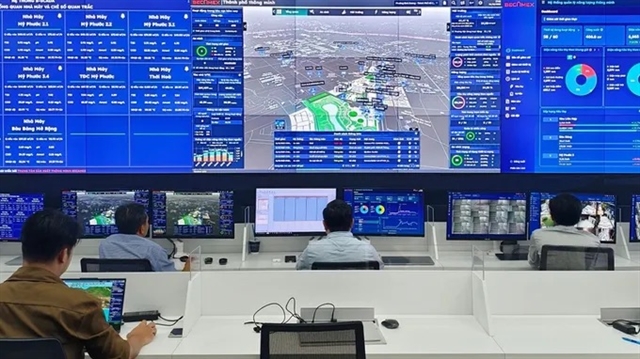
In fact, the Ministry of Agriculture and Environment is implementing 25 industry-wide information systems and databases, of which four have already been put into operation, while the remainder continue to be developed under the orientation of ensuring data is accurate, complete, clean, active, unified and shared.
This is considered an important criterion to ensure high-quality data that effectively serves management and administration.
“One of the highlights is the connection and sharing of data with the National Data Centre. The ministry has completed the synchronisation of 12 national and specialised databases, creating a foundation for an interconnected digital data ecosystem,” Hà said.
“In particular, the connection with the Ministry of Public Security in April is considered a significant step in building a unified data system for data-driven governance.
“In addition, shared digital platforms such as electronic document management, official email, online meetings and user identification and authentication are also being maintained stably.”
However, according to Deputy Minister of Agriculture and Environment Hoàng Trung, implementation has revealed many difficulties, not only in external connectivity but also in internal issues.
Diverse management areas, numerous participating units and high data demands have made coordination and information sharing more complex. Therefore, related units need to change both their thinking and working methods.
“The overarching principle is to build a synchronised, shared system, avoiding a situation where each place does things differently, leading to data fragmentation,” Trung said.
“Clearly identifying a single point of responsibility for coordination and guidance is a key factor in creating uniformity throughout the industry.
“Besides, completion of institution, standards and technical regulations must be considered a foundation to ensure data is effectively connecting, sharing and using.
"Connections with national systems must be implemented systematically. Infrastructure and technology investment are needed in key areas to avoid scattered efforts.
"New technologies such as AI, big data, the IoT and digital twins need to be researched and applied appropriately to practical needs, ensuring investment efficiency.
“Digital transformation cannot be done overnight but once implemented, it must be done thoroughly, with concrete and measurable results.” — VNS
Society
 Society
 Society
 Society
 Society
 Society
 Society
 Society
 Society
 Society
 Society
 Society
 Society
 Society
 Society